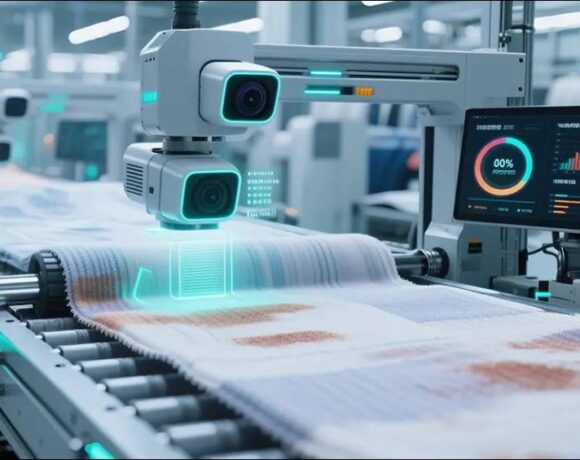
Can India Become A Textile Machinery Hub? Industry Leaders Discuss At Bharat Tex 2025
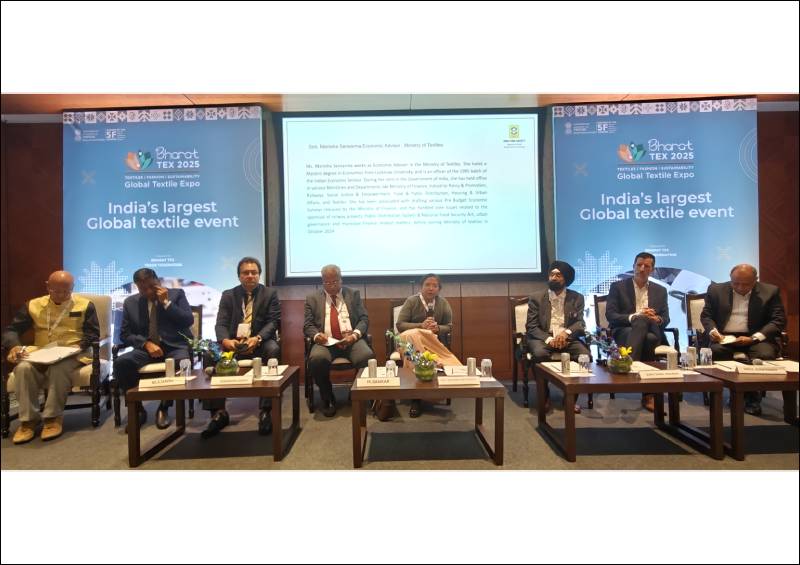
India ITME Society organized an insightful panel discussion at Bharat Tex 2025, focusing on the theme: “Textile Machinery: Can India Become a Machine Manufacturing Hub?” The session brought together industry leaders and government representatives to discuss India’s capabilities, challenges and the roadmap for developing a self-reliant textile machinery sector.
The panel featured distinguished speakers, including M. Sankar, Director (Operations) of LMW Limited, Surjit Singh Mahajan, Managing Director of Staubli India, Navin Agarwal, Sr. VP, of A.T.E Enterprises Pvt. Ltd., M. S. Dadu, Chairman of Colorjet India Limited, Swen Schwenkner, Area Sales Manager of Andritz Küsters and Debabrata Ghosh, VP & Sales Director, of Oerlikon Textile India. The session was moderated by Avinash Mayenkar, Managing Director, Suvin Expo LLP. Government representatives, including Manisha Sensarma, Economic Advisor, Ministry of Textiles, and Roop Rashi Mahapatra, Textile Commissioner, Govt. of India, also participated, adding valuable insights to the discussion.
Manisha Sensarma highlighted that while the textile sector contributes 2% to India’s GDP and 11% to manufacturing GVA, nearly 60% of the country’s textile machinery demand is met through imports. She emphasized the need for a strong domestic manufacturing ecosystem by reducing import dependence, strengthening R&D and innovation and promoting sustainability.

Industry leaders pointed out key challenges and opportunities for India’s textile machinery sector. M. Sankar (LMW Ltd) stressed the need to enhance capabilities in weaving, processing and garmenting equipment, while improving cost competitiveness, technology and supply chain ecosystems. Surjit Singh Mahajan (Staubli India) highlighted the reliance on imported high-tech components and called for local collaborations to develop indigenous alternatives. Navin Agarwal (A.T.E Enterprises Pvt. Ltd.) advocated for a holistic approach, including policy support, skill enhancement and financial incentives. M. S. Dadu (Colorjet India Ltd) emphasized India’s potential in digital textile printing and sustainable printing technologies. Swen Schwenkner (Andritz Küsters) underlined the need for automation and AI-driven process controls in textile finishing and processing. Debabrata Ghosh (Oerlikon Textile India) pointed to the importance of investing in polymer processing and filament production technologies for the MMF sector.
The panel outlined key recommendations, including the introduction of a Production-Linked Incentive (PLI) scheme for textile machinery, streamlined regulatory processes, increased investment in AI and automation, indigenous development of critical components, and stronger industry-academia collaborations for skill development. Sustainability was also a major focus, with calls for energy-efficient and eco-friendly textile machinery and circular economy models.
The discussion highlighted India’s potential to become a global textile machinery manufacturing hub. With strategic government policies, industry collaboration and technological advancements, India can reduce import dependence and strengthen its global position. The panel concluded that a collective effort is essential to propel India’s textile machinery sector towards a self-reliant, innovative and sustainable future.