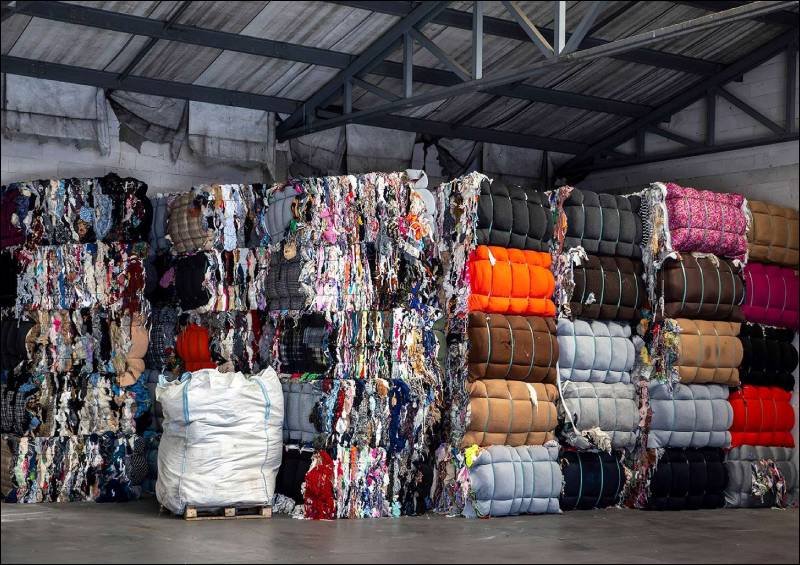
The Coimbatore Corporation has launched a pilot initiative to collect textile waste separately from households in Ward 33 of the West Zone, aiming to prevent the dumping and burning of discarded textiles while promoting recycling and reuse. Corporation Commissioner Katta Ravi Teja launched the
OEKO-TEX is strengthening its governance structure and independence ahead of stricter European Union rules on greenwashing and sustainability labels, which take effect from 27 September 2026. The changes are aimed at aligning the OEKO-TEX certification system with the EU Directive on Empowering Consumers for the Green Transition (EmpCo, EU 2024/825), while also preparing
A new report by Earth Action, developed in partnership with The Nature Conservancy, has revealed that global textile production generates approximately 92,000 tonnes of microfibre losses annually, while highlighting that coordinated industry action could reduce production-phase microfibre leakage by as much as 95 per cent by 2032. The study titled ‘From Shedding to
Sustainability is no longer a niche agenda for India’s textile industry. As global markets demand greater transparency, traceability and environmental responsibility, circularity is emerging as a strategic imperative for the sector’s next phase of growth. India’s textile and apparel industry has long been one of the country’s most important economic pillars.
CHT Group has strengthened the integration of sustainability into its business operations, according to its 2025 Sustainability Report, which highlights progress in climate action, transparency and social responsibility. A major achievement during the year was the German Sustainability Award 2026 for the company’s Pigmentura dyeing process, recognised for combining
The global fashion industry is entering a new era of climate accountability, with measurable emissions reductions replacing sustainability pledges as the benchmark for corporate performance. As stricter regulations such as the European Union’s Ecodesign for Sustainable Products Regulation (ESPR) and California’s Climate Corporate Data Accountability Act (SB
Germany, France and the Netherlands have called for coordinated European action to curb the environmental impact of ultra-fast fashion, urging the European Commission to strengthen existing and upcoming regulations governing the textile sector. The proposal was presented during the EU Environment Council meeting in Luxembourg, where the three member states called for more
The European Anti-Fraud Office (OLAF) has uncovered an illegal trafficking operation involving more than 4,200 tonnes of textile waste shipped from Italy to Türkiye after being falsely labelled to evade strict recycling regulations. Working with the Italian Carabinieri and Turkish customs authorities, OLAF identified shipments containing high levels of non-biodegradable
China has unveiled an ambitious roadmap to establish a clean, low-carbon, secure and efficient energy system by 2030, reinforcing its commitment to accelerate the green transition while strengthening energy security and technological self-reliance. The plan, jointly released by the National Development and Reform Commission (NDRC) and the National Energy Administration
The Estonian government is moving to make producers of textiles, footwear and food products responsible for financing the collection, recycling and reduction of waste under proposed amendments to the country’s Waste Act. The draft legislation, submitted by the Ministry of Climate for approval, aims to curb textile and food waste by introducing an extended producer