
Navapur’s Looming Leap: Maharashtra’s Emerging Textile Cluster Steps Into The Spotlight

Tucked in the northernmost part of Maharashtra’s Nandurbar district, Navapur is rapidly evolving from a quiet tribal taluka into one of the state’s most promising textile clusters. Nestled at the foothills of the Satpura range and bordering Gujarat, this once-agrarian region now buzzes with the rhythm of looms, trucks carrying polyester yarn and construction of new industrial sheds. The transformation has been remarkable, driven by location, policy, affordability and the tenacity of first-generation entrepreneurs.
Navapur’s biggest geographic advantage is its proximity to Surat, India’s man-made fabric capital. Located just 100–120 kms away and now connected via improved highways, Navapur offers Surat-based investors a cost-effective alternative without compromising access to Gujarat’s supply chain. With land prices in Surat rising steeply and infrastructure saturation kicking in, several weaving unit owners have chosen Navapur for diversification and expansion.
The town’s textile journey began nearly 17–18 years ago with Fatka looms (traditional powerloom) units set up under Maharashtra’s earlier industrial and textile policies. Back then, entrepreneurs invested Rs 70–80 lakh per unit, often receiving up to Rs 35 lakh as subsidies. Currently, the MIDC textile park is spread across 200 hectares in Navapur. Under tribal and deep-zone development categories, schemes offered capital subsidies, machine cost reimbursements of 40–45% and even project cost coverage under select cluster schemes. These incentives laid the foundation for grassroots entrepreneurship.

“Navapur is a miracle town,” said one senior investor. “Fifteen years ago, no one wanted to come here. Now, textile units are mushrooming.”
As Surat became more expensive, the exodus began. Roads improved, land was available at a very low rate (now Rs 500-600 per sq. ft.) and stamp duty cost is negligible. “We’ve seen growing interest from Surat-based investors. Some are shifting machinery here; others are sending families. Navapur offers the same Gujarat supply chain with better margins,” noted an industry observer.
The impact of this shift has been profound. Entrepreneurs from Gujarat, often previously job workers, found in Navapur an opportunity to become owners. “I came from Surat and set up a small loom unit here. My family now lives here. My goal is to build a house and scale up. We see a future here,” shared a young weaver who currently operates six air jet looms and is in the process of expanding his business with six more.
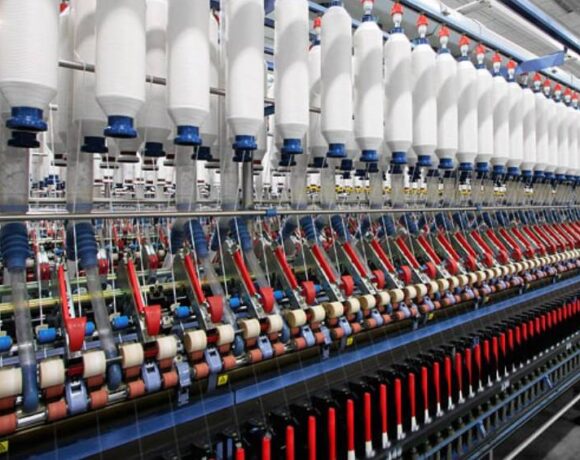
Today, Navapur hosts more than 70–80 weaving units, including a growing number of air jet and water jet machines. Around 7–8 circular knitting units have also come up. Notably, large players such as the Madhusudhan Group, Siddhipriya Ecotextile Park (with a zero-discharge dyeing facility) and General Polyfilms have invested heavily, reinforcing Navapur’s emerging cluster status. Total investments in the region are estimated to have crossed Rs 2,000–3,000 crore.
Policy Support
The Maharashtra government’s policy support continues to be central to this growth story. The Rs 4.25 per unit electricity subsidy is a game-changer, especially for energy-intensive air jet looms. Capital subsidies of up to 45% on machinery, annual reimbursements under the Package Scheme of Incentives scheme and SGST refunds all contribute to making the region financially attractive. “If you invest Rs 1 crore in machinery, you can get Rs 40–45 lakh back in 24 months,” explained a local consultant. “That’s why so many Surat-based firms are opening branches or second units here.”
Employment Generation
This textile-led growth is also reshaping the socio-economic fabric of the region. The cluster has generated over 6,000–7,000 direct jobs and an estimated 10,000–15,000 indirect jobs. Importantly, tribal youth, who once migrated as unskilled labour, are now operating machines and supervising production lines. “They grasp so fast. What takes me 6 months to learn, they learn in one month,” noted a factory supervisor overseeing Two-for-One (TFO) twisters. Another unit head proudly added, “Our tribal workers now run machines. From unskilled to skilled in months.”
These developments are triggering ripple effects. Villages in surrounding talukas such as Shahada and Dhadgaon are witnessing land sales, rising demand for housing, and increasing interest in job work facilities and transport services. A local textile trader remarked, “Fifteen years ago, no one was ready to come to Navapur. Even three years back, it was quiet. Now, new units are opening every month. Nandurbar could be next.”
Mitigating Risk Through Integration
However, despite the optimism, industry veterans warn that the weaving business remains inherently risky. Margins are often razor-thin and demand fluctuations can wipe out entire seasons. Yet, for those who stay put, the long-term vision is growing clearer. A number of entrepreneurs are now looking to expand into garmenting and stitching, aiming to move up the value chain. Several units are planning integrated setups with in-house sizing, twisting and potentially finishing. “Until you go to the international level in marketing, you will not earn real money,” said one investor, who plans to add a stitching unit in 2025.
Navapur’s evolution is now a template of how cluster development can work, not through mega corporate projects, but through the collective determination of small and mid-scale entrepreneurs. It is a unique combination of policy-led incentive, logistical proximity, tribal workforce integration and deep emotional investment.
No longer a satellite to Surat, Navapur is emerging as a destination in its own right. With sustained policy push and vision, it could become Maharashtra’s next textile powerhouse and potentially an export-focused hub for greige polyester and nylon fabrics.
In a state seeking decentralized industrialization and grassroots employment, Navapur’s moment is not just coming, it has already arrived!
(Article by Henry Dsouza, Associate Editor of Textile Insights)