AAFA Urges Long-Term Renewal Of AGOA To Safeguard U.S. And African Jobs
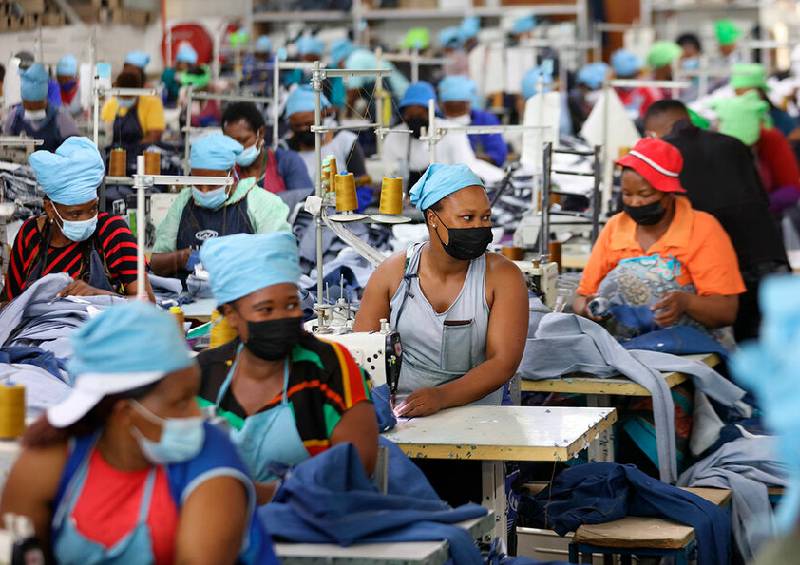
The American Apparel & Footwear Association (AAFA) has strongly urged Congress and the Administration to renew the African Growth and Opportunity Act (AGOA) well ahead of its September 30 expiry, warning that failure to do so would derail billions in U.S. private-sector investment across Africa and threaten thousands of jobs both in the U.S. and abroad.
Testifying before the Office of the U.S. Trade Representative (USTR) during its annual review of AGOA country eligibility, Beth Hughes, AAFA’s Vice President of Trade and Customs Policy, shared testimonials from member companies that highlighted the programme’s transformative impact.
One AAFA member, she noted, recently opened a garment factory in Togo, employing over 250 local workers trained in just eight months, with plans to expand the workforce to 500. Its first shipment left for the United States earlier this month, with goods destined for a new U.S. warehouse employing more than 100 Americans.

Another U.S.-based apparel company has purchased land in Madagascar to establish a new factory and shift nearly 50 per cent of its production from Asia. Hughes cautioned that without AGOA’s duty-free benefits, the project would collapse before construction begins, keeping production in China, Vietnam, and Indonesia, instead of Africa.
In Ghana, a U.S. apparel company has become the largest private-sector employer, with over 6,000 workers and another factory is underway that will double employment. Hughes stressed that this investment hinged on AGOA’s third-country fabric provision, which enables African manufacturers to remain competitive while local textile capacity is still developing.
She also highlighted a long-standing U.S. firm that, since 2007, has shifted all production from China to Madagascar and Tanzania. Today, it produces over 50 million garments annually, employs more than 10,000 workers, mostly women, and supports 60,000 U.S. small businesses and 3 million U.S. jobs.
“AGOA has been a success story for both the U.S. and Africa,” Hughes said, noting that the programme’s flexible rules of origin and duty-free benefits have been critical to building competitive supply chains. She emphasized that while Africa’s cotton and textile industry is growing, it currently supplies only about 10 per cent of the fabric needs of apparel manufacturers, making third-country sourcing essential in the near term.
AAFA also proposed targeted reforms to strengthen AGOA’s effectiveness, including:
- shifting eligibility reviews from an annual to a triennial process;
- allowing cumulation from all African Union members that have ratified the AfCFTA;
- replacing outdated textile visa rules with modern Customs cooperation agreements;
- adjusting apparel quota sizes; and
- modifying graduation criteria for eligible countries.
Hughes concluded by calling for the longest possible renewal period to create certainty and attract vertical investments in Africa’s textile sector. “Without a long-term extension, the momentum of shifting production from Asia to Africa will stall,” she warned.