
India’s Textile Ministry Pushes MSME Exporters Toward Global Market Diversification

Domestic reforms, fiscal support and innovation to boost competitiveness
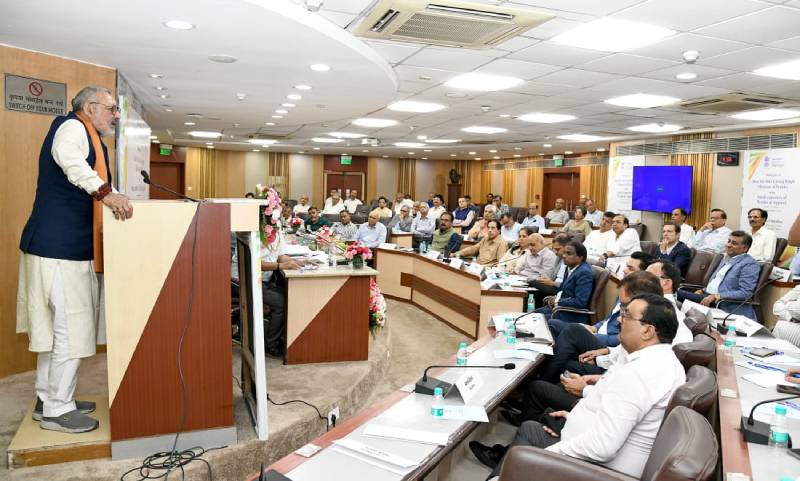
India’s Ministry of Textiles on September 8, convened a high-level consultation with micro, small and medium (MSME) textile exporters, focusing on expanding global market reach and enhancing domestic competitiveness. The meeting, chaired by Textile Minister Giriraj Singh, follows a similar national-level consultation with top exporters on 13 August 2025.
The minister emphasised strategic diversification into 40 key global markets alongside domestic demand expansion and highlighted the 56th GST Council’s reforms, which rationalised the textile value chain under second-generation GST measures to reduce cost distortions, boost demand and strengthen export competitiveness.

MSME exporters urged continued fiscal support, simplified compliance and stronger branding for handlooms, handicrafts and GI-tagged products. Valued at US$ 179 billion, India’s textile sector contributes nearly 2% to GDP, with exports of US$ 37.75 billion, ranking as the sixth-largest global exporter with a 4.1% share of world trade. Its products reach over 220 countries, spanning more than 520 districts.
Despite global volatility and rising tariffs from certain partners, the sector remains resilient. July 2025 exports rose 5.37% to US$ 3.10 billion, while cumulative exports for April–July 2025 reached US$ 12.18 billion, up 3.87% year-on-year. Readymade garments (+7.87%), carpets (+3.57%), and jute products (+15.78%) led segment growth, while handicrafts and man-made fibre textiles maintained steady performance. Key export markets such as Japan (+17.9%), the UK (+7.39%), UAE (+9.62%), and Australia (+1.74%) demonstrated India’s potential to capture a larger share of the US$ 590 billion global textile market.
To strengthen market reach, the minister recommended establishing warehouses in key international markets and promoting direct-to-consumer e-commerce sales. Government measures include import duty exemptions on cotton until 31 December 2025, extension of export obligations under Advance Authorisation from six to 18 months, and expansion of the PLI scheme application window.
Additionally, four industry-led committees have been constituted to advise on market diversification, fiscal support, structural reforms and innovation. Singh underscored that these initiatives, coupled with a strengthened Swadeshi movement, would empower artisans, weavers, MSMEs and women entrepreneurs, positioning India as a global leader across the textile value chain from farm to fibre, factory to fashion, and fashion to foreign markets.