
Textile Industry Struggles To Dodge Headwinds As Uncertainties Loom Large
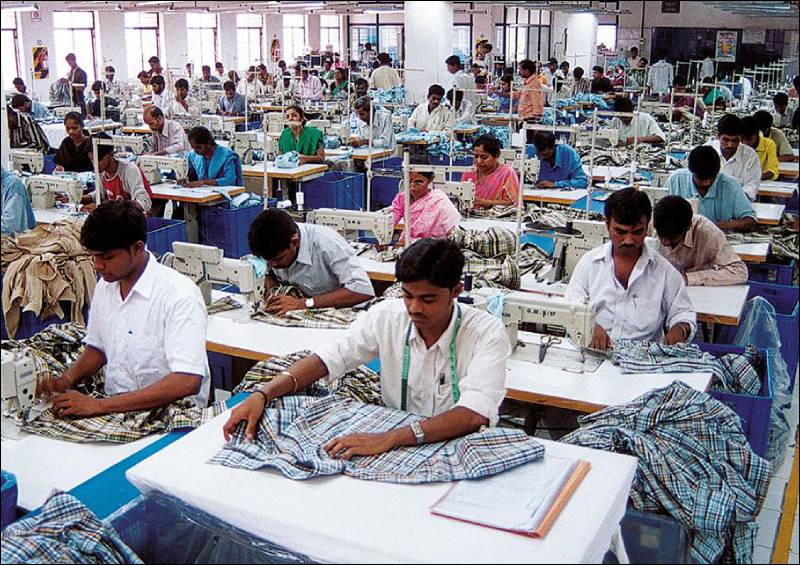
The domestic textiles and apparel sector is facing severe disruptions following the imposition of 50 per cent tariff by the U.S. on Indian exports. A nationwide survey conducted recently by the Confederation of Indian Textile Industry (CITI) has revealed that around 33 per cent of businesses have reported more than 50 per cent decline in their sales revenue. The pan-India survey was conducted among different types of business entities (69 per cent MSMEs and 31 per cent large corporates) catering to the US market directly or indirectly.
The major contributing factors to this dip in turnover, include requests for price discounts from US buyers (30 per cent), order cancellations or postponements (25 per cent) and a reduction in order volumes (20 per cent). As per the CITI survey, about 85 per cent of the respondents have reported an inventory build-up due to the reduction in orders, while about two-third of the respondents have to offer a discount to their buyers, majority of which are offering discount to the tune of 25 per cent to remain competitive. The Indian textile goods suffer a distinct tariff disadvantage of 30-31 per cent in the US market as compared to the major competing countries like Bangladesh, Vietnam, Sri Lanka, Cambodia and Indonesia.
“The US is the top exporting destination for India’s T&A products, accounting for about 28 per cent of India’s global T&A exports. The recent imposition of 50 per cent tariff by the US has significantly undermined the competitiveness of our exports. To understand the magnitude and nature of the economic and operational impact and to identify priority policy interventions needed to mitigate adverse effects and restore competitiveness, we recently commissioned the survey across all segments of the T&A industry,” says Chandrima Chatterjee, Secretary General, CITI.

“The industry is passing through a very difficult phase. The situation is quite uncertain and units are struggling for their survival. What we need is an urgent redressal. We have urged the government for a financial relief package as also export incentives to help the industry in this dire situation. Unable to do so will lead to closure of a large number of units. Many of these units have already been in stressful state in the past and now, with this kind of disruption, it is a matter of their survival,” says Durai Palanisamy, Chairman, Southern India Mills Association (SIMA).
As per the CITI survey, a significant 82 per cent of the respondents (businesses) have experienced an extended credit cycle across the supply chain as a result of the recent impact, over half of them indicated that the credit period has increased by 3 to 6 months, reflecting a substantial strain on liquidity. Additionally, around 40 per cent of respondents reported a rise in working capital requirements by more than 30 per cent, further highlighting the growing financial stress within the sector.
“If you talk about the apparel sector, the domestic sector has heavily underperformed during the recent festive season. On the export front too, we have already witnessed de-growth during July-September quarter of FY2026. Now, with the US market posing a sanction like situation, things will only deteriorate going forward if the US issue is not resolved quickly. The whole situation is quite uncertain,” states Rahul Mehta, Chief Mentor, Clothing Manufacturers Association of India (CMAI)
Meanwhile, the apex industry body, CITI, has suggested a slew of measures to surmount the ongoing challenges arising out of the imposition of hefty tariffs by the US. These policy interventions include, among others, providing support for export diversification and market development initiatives; expediting FTAs with key major markets like the EU and others; increasing RoDTEP and RoSCTL rates and enhancing duty drawback benefits and offering interest subvention and other financial relief measures to ease liquidity constraints. Besides, it has also sought support in form of Focus Market Incentive Scheme for US bound shipments and reduction of corporate income tax or granting tax holidays (to reduce financial crisis).
Meanwhile, the commerce ministry sources say that India-EU Free Trade Agreement (FTA) negotiations are in their final stage and progressing well. Officials have expressed optimism for a conclusion soon, following the recent round of talks in Brussels. So far as the India-US bilateral trade negotiation is concerned, officials claim that talks are moving in the right direction, after several rounds of dialogues. Both nations have reported convergence on core issues, with officials confirming that the legal framework is now under review. However, uncertainties over high US tariffs on Indian goods continue to challenge discussions.
“We all are eagerly awaiting favourable conclusion of this bilateral trade negotiation with the US. It remains to be seen how quickly the ongoing impasse gets over,” says Sanjay Jain, Chairman, Indian Chamber of Commerce, National Expert Committee on Textiles.
India’s garment exports declined 14.8 per cent in July-September quarter to $3.1 billion amid global demand slowdown as against modest 3.42 per cent growth in first half of FY2025-26.
During Sept. ’25, the textiles exports registered a de-growth of 10.45 per cent over the previous year, while apparel exports registered a degrowth of 10.14 per cent during the same time period. The cumulative exports of T&A during Sept. ’25 have registered a degrowth of 10.34 per cent over Sept. ’24.