
Rice University Startup Turns Everyday Fabrics Into Silent Communication Devices
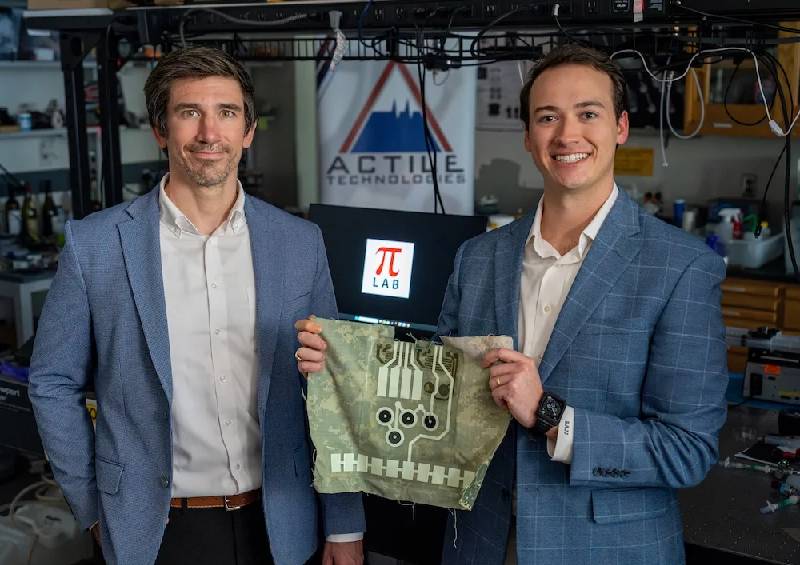
What began as a high school bow tie business has evolved into a breakthrough in wearable technology. Rice University doctoral candidate Barclay Jumet, alongside his adviser Daniel J. Preston, has co-founded Actile Technologies, a startup that transforms regular fabrics into smart textiles capable of delivering touch-based signals, enabling a new, silent form of communication.
“Screens and audio alerts are constantly competing for our attention,” Jumet said. “We wanted a way to communicate that doesn’t distract. Touch is already a natural human language, now it can be seamlessly embedded in what we wear.”
The innovation emerged from the Preston Innovation Laboratory at Rice, where researchers explore materials and soft robotics. Jumet’s work focuses on embedding haptic cues such as taps, squeezes or temperature changes into lightweight, flexible textiles. A core technology driving Actile’s platform is fluidic logic, which uses tiny channels and air pressure instead of electronics, increasing durability and adaptability.

Actile’s garments resemble ordinary uniforms or athletic wear, but deliver precise, discreet signals that can guide users without requiring sight or sound. The technology is initially being tailored for defence applications, where soldiers often need silent communication in high-risk environments.
“This reduces cognitive overload,” Preston explained. “By shifting some information to touch, we free up warfighters’ eyes and ears for what matters most.”
The startup is gaining momentum. Actile is a finalist in NATO’s DIANA accelerator, a competitor in the U.S. Army’s xTechSearch 9 programme and has secured funding through Rice’s One Small Step Grant and the NSF I-Corps programme. The company is also working with Rice Athletics to explore sports performance and rehabilitation applications from posture training to recovery therapy.
Beyond defence and athletics, Actile sees opportunities in emergency response, industrial safety and medical rehabilitation, as well as textile-based heating and cooling for workers in extreme environments.
The company credits Rice’s innovation ecosystem including Lilie, the Office of Technology Transfer and collaborations with research labs, for accelerating its path from lab discovery to commercial launch.
“Rice has given us the resources to turn research into real-world solutions,” Preston said. “Now we’re focused on scaling this technology to where it can make the greatest impact.”