Shein Exposed Again: Greenpeace Finds Hazardous Chemicals In Fast Fashion Giant’s Clothing

A new investigation by Greenpeace has once again exposed serious concerns around the chemical safety of garments sold by global fast-fashion giant Shein. Despite the company’s pledge in 2022 to improve its chemical management systems, laboratory testing conducted this year across eight countries reveals that Shein continues to sell clothing containing hazardous substances, many of which exceed European Union safety limits.
The findings raise significant questions about the integrity of Shein’s supply chain oversight and its rapidly expanding ultra-fast-fashion model.
Shein, now the world’s largest online fashion retailer, has built its empire on extremely low prices, an enormous product range and an unprecedented production pace. Powered by algorithm-driven trend forecasting and a vast network of suppliers under intense pressure, the platform uploads thousands of new items per day, sometimes as many as 10,000.

At any moment, consumers can browse more than half a million products over 20 times the offering of major competitors like H&M. This scale, combined with aggressive marketing through influencers, TikTok haul culture and app-based incentives, has made Shein a dominant player attracting more than 360 million visitors each month.
But this volume comes at a high environmental and social cost, from excessive synthetic fibre use to surging greenhouse gas emissions.
In its latest study, Greenpeace purchased 56 Shein garments from eight countries and subjected them to independent laboratory analysis. The results were troubling. Nearly one-third of the products exceeded EU REACH chemical safety limits. Some jackets contained levels of PFAS, known as forever chemicals, up to more than 3,000 times higher than accepted thresholds.
Several items, including children’s clothing, contained phthalates far above legal limits, with some samples exceeding them by 100 times or more. Heavy metals such as lead and cadmium were found in two products, while others showed traces of formaldehyde and APEOs, all substances linked to serious health and environmental risks.
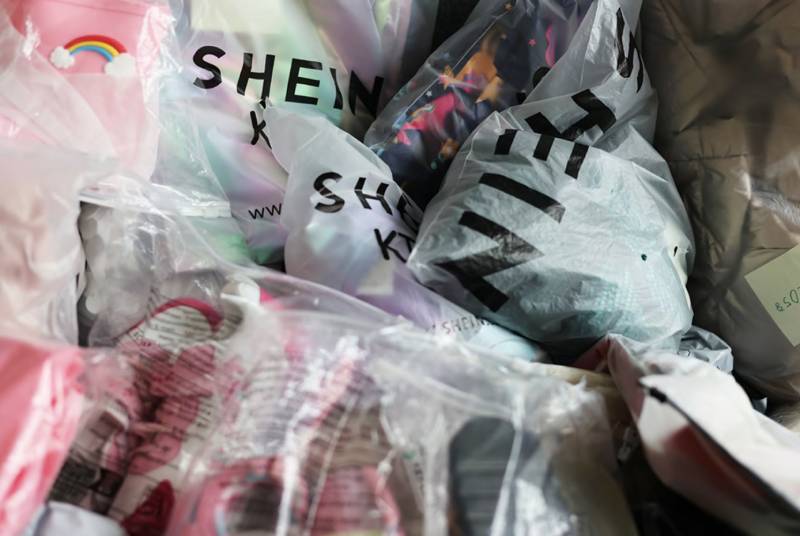
Greenpeace purchased a total of 56 garments from Shein in eight countries and had them tested for hazardous chemicals.
Greenpeace notes that these chemicals can leach out through skin contact, inhalation or routine washing, posing dangers not only to consumers but also to workers and surrounding ecosystems. The persistence of these hazardous substances suggests systemic weaknesses in Shein’s chemical management system.
Although the company claims to conduct millions of tests annually and has published a Manufacturing Restricted Substances List, Greenpeace found that similar non-compliant items were repeatedly sold even after earlier warnings. This pattern indicates that Shein’s sprawling, fast-moving supply chain is extremely difficult to control and that the company’s current compliance mechanisms are not working effectively.
A major factor enabling these products to reach European consumers is a regulatory loophole. Shein ships directly from China to individual buyers, bypassing customs inspections and sidestepping many of the obligations that brands with EU-based warehouses must follow.
Greenpeace argues this loophole allows non-compliant and potentially dangerous products to enter the European market with little oversight. The issue extends beyond chemical contamination. Shein’s business model is built around overproduction, synthetic fibres derived from oil and the rapid disposal of clothing.
Globally, up to 40% of manufactured garments go unsold and a truckload of textile waste is dumped every second. These environmental impacts, combined with exploitative labour conditions across supply chains, illustrate the systemic harm associated with ultra-fast fashion.
The Greenpeace report concludes that voluntary commitments by brands are insufficient and calls for strong government intervention. The organisation recommends measures such as a fast-fashion levy, bans on environmentally harmful advertising, stricter liability rules for online retailers and incentives for repair, reuse and circular systems.
France has already taken a pioneering step with the world’s first anti–fast fashion legislation, introducing taxes and advertising restrictions targeted at ultra-fast-fashion platforms. Greenpeace urges other countries to adopt similar frameworks to curb the industry’s growing social and environmental toll.
As Shein continues to expand globally, the investigation underlines a harsh reality, the ultra-fast-fashion model is fundamentally incompatible with environmental protection and public health. Without binding regulations to rein in overproduction, supply chain opacity and toxic chemical use, millions of garments containing hazardous substances will continue to enter homes, ecosystems and landfills around the world.