
Geopolitical Instability Is Now India Inc.’s No. 1 Future Risk: MGC Report
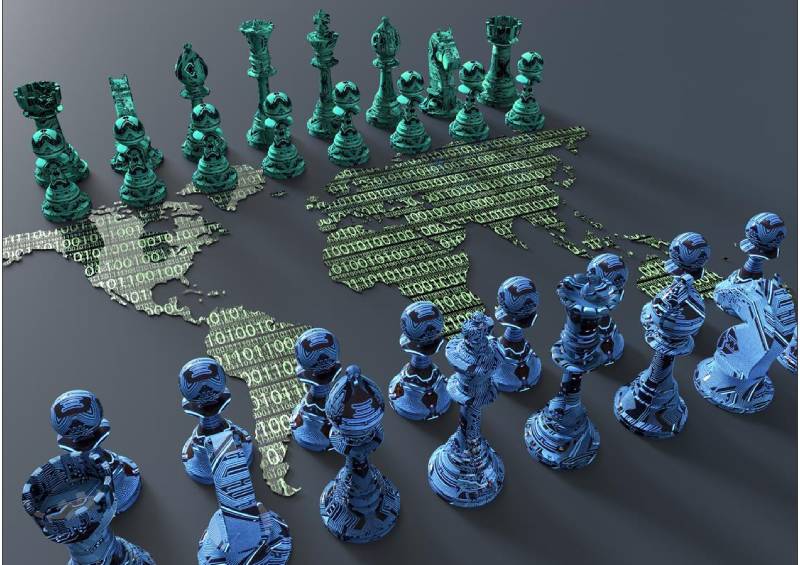
Geopolitical uncertainty has emerged as India Inc.’s most severe strategic risk, with nearly half of business leaders ranking it above other potential threats over the next five years. These findings form a core dimension of the ‘The Global Risk Atlas – New Realities’, released recently by MGC Global Risk Advisory, which maps evolving risk trajectories across 45 economies spanning five regions.
For each country, the analysis highlights key emerging five-year risks, maps sectoral vulnerabilities and outlines potential mitigation pathways. Beyond risk, the Atlas offers a holistic view of each jurisdiction’s economic and investment landscape within an increasingly interconnected and volatile global environment. These insights are further anchored by a comprehensive executive survey, ensuring that each theme reflects both global signals and on-the-ground sentiment.
Drawing on insights from over 125 CXOs across manufacturing, services, digital, BFSI, consumer and infrastructure sectors, the Atlas examines six critical dimensions of enterprise risk: cybersecurity maturity, ESG transition, policy predictability, supply-chain fragility, risk preparedness and workforce transformation. The Atlas ultimately sets out a forward-looking call-to-action for leadership and boards, emphasising the need to shift from episodic crisis response toward systematic risk governance, resilience-building and future readiness.

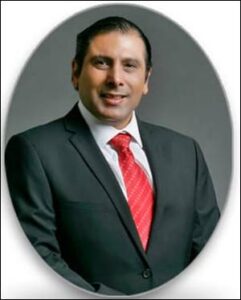
Monish Gaurav Chatrath, Managing Partner, MGC Global Risk Advisory and APAC Board
Member, Allinial Global
Monish Gaurav Chatrath, Managing Partner, MGC Global Risk Advisory and APAC Board Member, Allinial Global, says, “We are at a decisive inflection point where geopolitical shifts, technological disruption and macroeconomic realignment are converging into a new risk architecture. The Global Risk Atlas captures not only this structural change, but the mindset with which Indian business leaders are responding to it. It reflects a transformative shift from reacting to crises toward institutionalising resilience. It recognises that volatility is no longer episodic but persistent.”
Chatrath adds, “The Atlas provides the bridge between sentiment and evidence to understand how risks are interacting, compounding and accelerating. It brings forth the central truth that resilience is not a defensive posture, but a strategic capability. As leaders look to the decade ahead, the quality of foresight, governance maturity and digital preparedness will be the defining determinants of business continuity and competitive advantage.”
The report notes that India Inc. has entered an era of “permacrisis,” marked not by isolated shocks but by a chronic and converging risk spectrum. Most CXOs expect simultaneous intensification across geopolitical, macroeconomic, talent, digital and regulatory pressures, significantly changing the nature of enterprise planning.
Geopolitics stands out as the most concentrated future risk. Exposure is highest for MNCs, manufacturers and B2B enterprises reliant on cross-border capital, energy and supply chains. Domestic firms experience transmission through currency, commodity and demand channels, reinforcing the systemic nature of geopolitical shocks.
The report further highlights material shifts in risk governance. CXOs report that AI is no longer viewed as a technology adoption challenge but as a governance imperative, driven by concerns around model bias, misinformation and regulatory ambiguity. Cybersecurity has overtaken physical security, with 59% indicating cyber defences as their most active risk-control mechanism, reflecting the rising threat of systemic cyber incidents.
The report also identifies capability gaps that could amplify future shocks, with two-thirds of companies acknowledging structural weakness in digital readiness, R&D depth and future workforce skills. While governance structures and board oversight have matured, capability maturity remains uneven, which is a defining vulnerability in a volatile external landscape.
At a global level, the report notes that CXOs favour trade and investment treaties as the most critical pillars of future cooperation, ahead of military or political alliances. Meanwhile, Western markets, including Europe and North America, are perceived as the most vulnerable, driven by policy volatility, regulatory strain and energy risks.
As risks grow increasingly interconnected, chronic and systemic, ‘The Global Risk Atlas – New Realities’ provides India Inc. with the contextual foresight, comparative intelligence and scenario-based clarity needed to navigate the business evolution in the decade ahead.