
Tamil Nadu Announces Rs 30-Crore Annual Subsidy To Modernise Textile Units
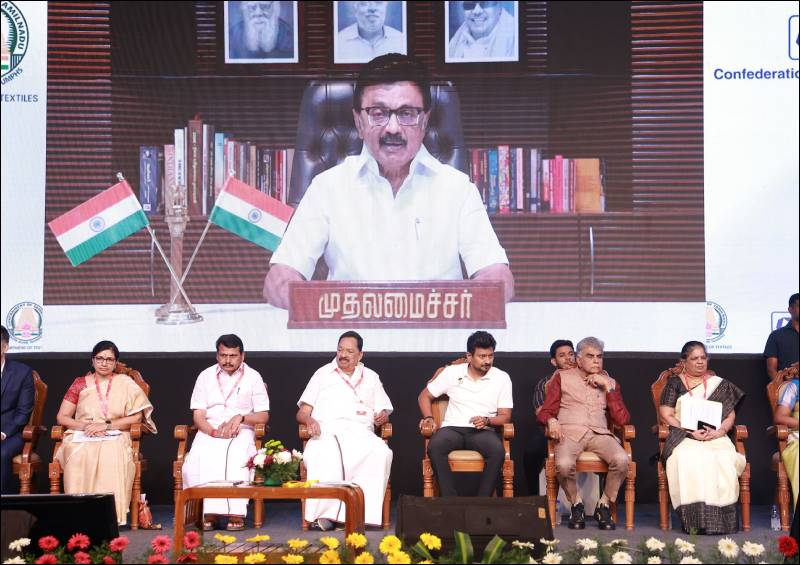
The Tamil Nadu government will allocate Rs 30 crore every year to provide a 20% capital subsidy for investments aimed at modernising weaving and knitwear units, Chief Minister M.K. Stalin announced on January 29. Addressing the International Textile Summit 360 in Coimbatore via video conference, the Chief Minister reiterated the state’s commitment to strengthening the textile sector amid global trade disruptions and rising cost pressures.
Stalin said Tamil Nadu has remained India’s largest exporter of ready-made garments for the last five years, accounting for nearly 33% of the country’s textile business. The sector provides employment to approximately 3.1 million people in the state, with women constituting over 60% of the workforce, underlining textiles as both an economic and social cornerstone for Tamil Nadu.
 Acknowledging the impact of the recently imposed 50% U.S. tariffs on India’s textile and apparel exports, the Chief Minister said the state government is working closely with the Centre to support the industry through market diversification initiatives. These include identifying alternative export destinations, facilitating buyer-seller meets, and seeking the removal of the existing 11% import duty on cotton to ease raw material costs for domestic manufacturers.

Highlighting recent investment momentum, Stalin said Memoranda of Understanding worth Rs 9,764 crore were signed at investment conclaves held in Coimbatore, Madurai and Thoothukudi. On Thursday alone, 55 additional agreements worth Rs 915 crore were signed, reflecting continued investor confidence in the state’s textile ecosystem.
Earlier, inaugurating the summit jointly organised by the Confederation of Indian Industry and the Government of Tamil Nadu, Deputy Chief Minister Udhayanidhi Stalin said the state would ensure the continuation of the 6% interest subvention scheme for spinning mills. The scheme is intended to support both pre-spinning and post-spinning activities, providing relief to mills facing liquidity and margin pressures.
Udhayanidhi described textiles as a key pillar in Tamil Nadu’s roadmap to becoming a $1 trillion economy and expressed confidence in the industry’s ability to adapt to changing global demand, sustainability requirements and technology-led transformation.
Minister for Handlooms and Textiles R. Gandhi said the DMK government has taken several corrective steps to revive investment sentiment in the sector, including the removal of the earlier 1% cess on cotton. He noted that the Mini Textile Park Scheme announced in 2015 had failed to attract interest under the previous administration. After the current government relaxed norms and offered a Rs 2.5-crore subsidy for investments in textile parks, the scheme received 101 applications, of which 19 have been approved and six parks are already operational.
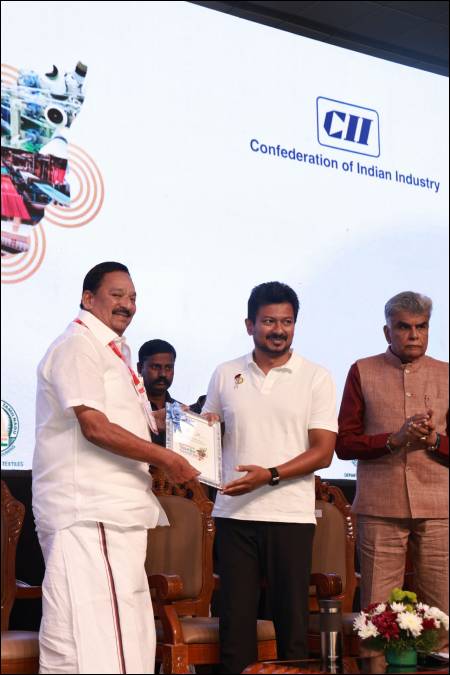
The Tamil Nadu New Integrated Textile Policy 2025–2026 places strong emphasis on modernising the entire textile value chain, from spinning and weaving to processing, garmenting and technical textiles. As part of the event, Udhayanidhi disbursed subsidies under the interest subvention scheme for the spinning sector, capital investment subsidies for the processing segment, and support for wider-width fabric printing machines in the cut-and-sew sector. He also presented awards to the top textile exporters from the state.