
Women Leadership Emerging As A Strategic Imperative For India’s T&A Sector
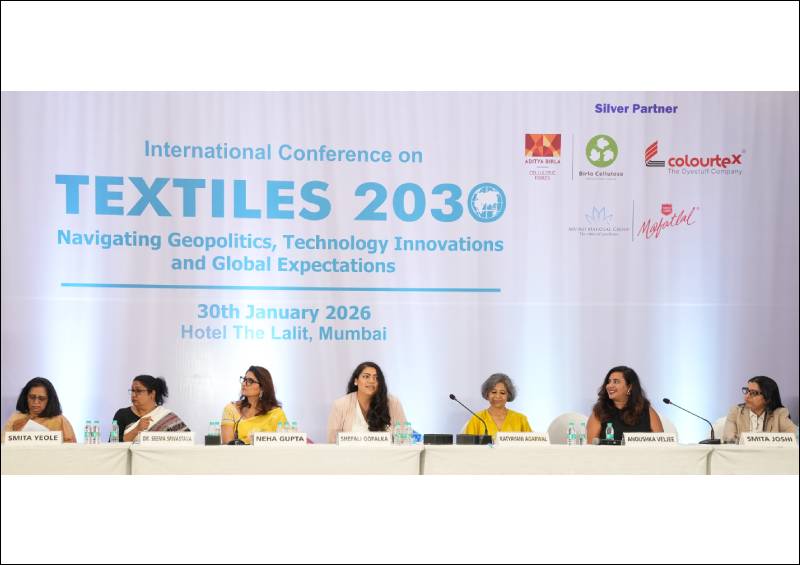
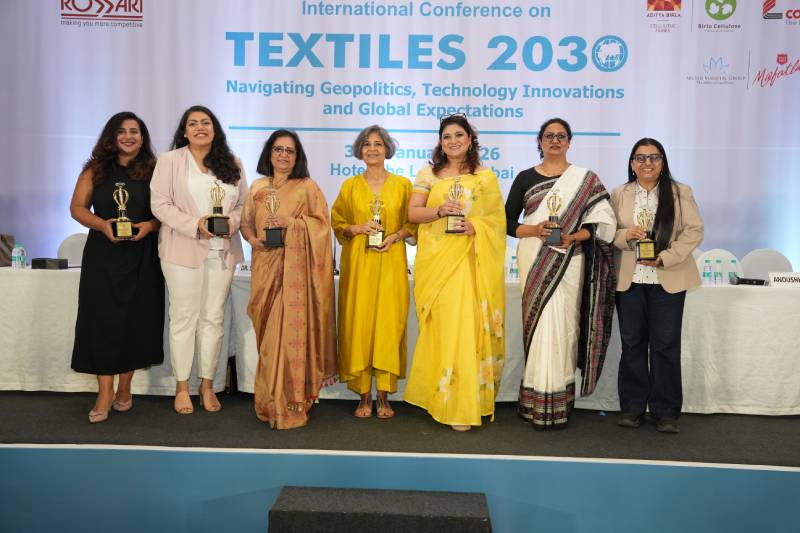
At the International Conference on TEXTILE 2030, organised by The Textile Association (India) Mumbai unit, on January 30, 2026, a compelling panel discussion titled ‘Women Leadership Driving a Change in the Textile & Apparel Sector’ brought into focus the evolving role of women in shaping the future of India’s textile and apparel industry. Moderated by Neha Gupta, Founder of the International Fashion Business Exchange Council (IFBEC), the session examined leadership through the lenses of manufacturing, exports, technology, sustainability, heritage, policy and global trade, positioning women not as peripheral participants but as strategic drivers of change across the value chain.
The discussion opened with a broader reflection on the transformation underway in the textile sector as it moves toward 2030, navigating geopolitics, regulatory pressures, technological innovation and shifting global supply chains. While women form nearly 70–80 per cent of the textile workforce from handloom and handicrafts to garmenting, processing and quality control, their representation in senior leadership remains limited to roughly 10–15 per cent. This disconnect, the panel noted, is not rooted in capability but in systems, mindsets and access. Rather than framing the conversation around struggle or symbolic celebration, the panel emphasised responsibility, safety, dignity and continuity as the foundations of sustainable leadership.
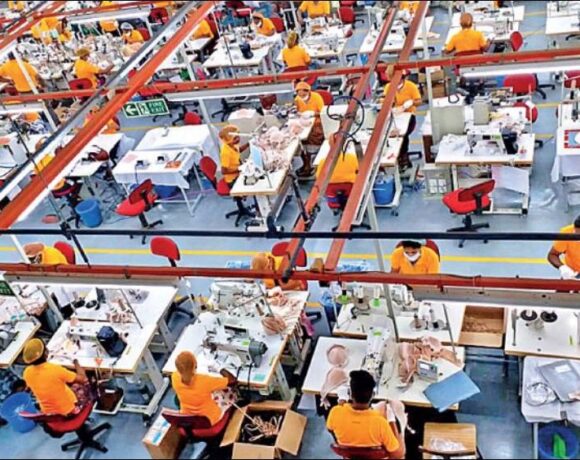
Drawing from hands-on manufacturing experience, Smita Yeole, Managing Director of Oriental Weaving & Processing Mills Pvt. Ltd., shared how deliberate inclusion at the operational level can fundamentally alter factory ecosystems. In a sector traditionally dominated by men, her processing facility today employs a majority of women across laboratory operations, machine handling, quality inspection, despatch and shop-floor management. She highlighted that such outcomes are achieved not through quotas but through practical interventions, sensitisation of the workforce, appropriate hygiene infrastructure, maternity support and, most importantly, confidence in women’s technical abilities. Her journey in the defence textiles segment further illustrated how gender bias often persists in institutional systems, where domestic acceptance followed only after international validation, highlighting the uneven credibility women leaders still face in India’s industrial landscape.

From a large, integrated corporate perspective, Smita Joshi, Vice President – Home Textiles and Exports at Sutlej Textiles & Industries Ltd., argued that women in leadership roles are not seeking preferential treatment, but equal opportunity within transparent, merit-based frameworks. In organisations with decades of legacy, she noted, women have steadily risen across design, sales and export functions through fair evaluation processes. The continued emphasis on women leadership as a separate category, she suggested, should eventually give way to a more mature stage where leadership is assessed purely on competence and outcomes, regardless of gender.
The panel also addressed the often-overlooked intersection of leadership with craft, culture and heritage. Katyayani Agarwal, a consultant and cultural heritage specialist, highlighted that women are the primary carriers of intergenerational craft knowledge, yet their contributions are frequently undervalued and classified as informal or passion-driven. This perception, she noted, limits economic viability and professional recognition, despite crafts forming a critical link between sustainability, identity and community livelihoods.
Complementing this perspective, Dr. Seema Srivastava, Executive Director of India ITME Society, challenged the notion that craft-led enterprises lack scale or commercial relevance. Citing examples such as Fabindia, she demonstrated how traditional skills, when combined with modern business strategy, branding and institutional support, can evolve into globally competitive enterprises. The distinction, she emphasised, lies not in the product itself but in how it is positioned, structured and taken to market.
Technology and sustainability emerged as critical enablers of new leadership opportunities. Anoushka Veljee, Chief Revenue Officer at California-based Frontier.cool Inc., highlighted how AI-driven platforms and data transparency are becoming essential as global brands respond to regulatory and sustainability pressures, particularly in the European Union. She positioned technology as a neutral equaliser, allowing women to leverage inherent strengths such as empathy, systems thinking and long-term problem-solving to address supply chain inefficiencies. At the same time, she cautioned against superficial sustainability narratives, pointing to challenges in fibre traceability, blended materials and false claims that complicate recycling and circularity, calling for greater honesty and rigour across the value chain.
Adding the perspective of the dyes and chemicals segment, Shefali Gopalka, Partner at National Dyechem Industries, drew attention to the persistent underrepresentation of women in management roles within family-owned textile chemical businesses. She noted that despite women’s strong capabilities in process discipline, compliance management and multitasking, leadership opportunities often default to male successors, resulting in a loss of managerial depth for the industry. As sustainability regulations and circularity demands intensify, she cautioned that women professionals risk being overwhelmed unless systems are redesigned to be more inclusive, transparent and support-led, arguing that stronger female representation in decision-making would enhance both environmental compliance and operational efficiency.
A recurring theme throughout the discussion was access to finance and institutional support. Panelists highlighted how women-led enterprises, particularly in family-owned textile businesses, often face structural barriers in lending due to shareholding norms and collateral requirements, even when women are the operational heads driving growth. The panel stressed the need for financial institutions, policymakers and corporates to move beyond ownership percentages and instead recognise actual leadership and decision-making roles. Similarly, the use of CSR funds was critiqued for being overly concentrated on welfare and skill development, with limited focus on seed capital and entrepreneurship support that could enable long-term economic independence for women.
Equally significant was the emphasis on mindset change within workplaces and society. Creating a safe and inclusive environment, the panel argued, extends far beyond formal policies and compliance checklists. It requires addressing everyday behaviours, language, assumptions and biases that influence how women experience professional spaces. True inclusion, the panel noted, is reflected not only in hiring numbers but in retention, growth, respect and shared responsibility, including the need to normalise caregiving responsibilities for both men and women.
As the session concluded, the overarching message was clear: integrating women into leadership should not be treated as a corporate social initiative but as a core business strategy. In an industry facing intense pressure from sustainability mandates, global competition and technological disruption, the strengths women bring, emotional intelligence, continuity, adaptability and holistic thinking, are increasingly aligned with the sector’s future needs. As India charts its textile roadmap toward 2030, the panel underlined that inclusive leadership is not merely an ethical imperative, but a strategic advantage critical to long-term competitiveness and resilience.