Union Budget 2026–27: Integrated Textile Push, Export Incentives And MSME Support Take Centrestage
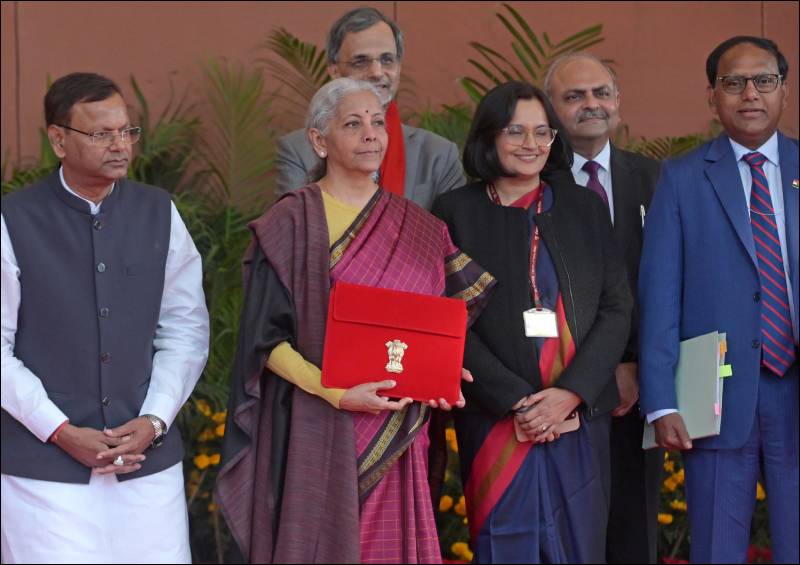
Union Finance Minister Nirmala Sitharaman, while presenting the Union Budget 2026–27, outlined an expansive reform and investment roadmap for India’s labour-intensive textile and apparel sector, positioning it as a key pillar for employment generation, export growth and sustainable manufacturing.
The budget proposes an Integrated Programme for the textile sector comprising five components, including a National Fibre Scheme to promote self-reliance in natural fibres such as silk, wool and jute, man-made fibres and new-age fibres, a Textile Expansion and Employment Scheme to modernise traditional clusters through capital support for machinery, technology upgradation and common testing and certification facilities, a National Handloom and Handicraft Programme to integrate existing schemes and ensure targeted support for weavers and artisans, a Tex-Eco Initiative to promote globally competitive and sustainable textiles and apparel and Samarth 2.0 to upgrade the textile skilling ecosystem through closer collaboration between industry and academic institutions.
The Finance Minister also announced the setting up of Mega Textile Parks in challenge mode, with a specific focus on strengthening value addition in technical textiles. In a move aimed at revitalising rural and traditional industries, the government will launch the Mahatma Gandhi Gram Swaraj initiative to strengthen khadi, handloom and handicrafts through global market linkage, branding, streamlined training, skilling and quality improvement in processes and production. The initiative is expected to benefit weavers, village industries, the ‘One District, One Product’ programme and rural youth.

To improve export competitiveness, the budget introduces measures for textile and leather product exporters. The time period for export of final products by exporters of textile and leather garments, footwear and other leather products has been extended from six months to one year, providing greater operational flexibility and easing working capital pressures.
The budget also strengthens the cooperative sector linked to agriculture and textiles by extending profit deduction benefits to primary cooperative societies engaged in supplying cattle feed and cotton seed produced by their members. These deductions will now apply when supplies are made to federal cooperatives or government organisations, a move expected to support the cotton value chain and allied rural industries.
To reduce import dependency in chemicals and strengthen domestic manufacturing, the government will support states in establishing three dedicated Chemical Parks through a challenge-based, cluster-driven, plug-and-play model.
Alongside this, a new scheme will be introduced to rejuvenate 200 legacy industrial clusters across the country by improving cost competitiveness and efficiency through targeted infrastructure development and technology upgradation, which is expected to benefit several traditional textile and manufacturing hubs.
Recognising MSMEs as a vital engine of economic growth, the budget proposes a three-pronged strategy to create Champion SMEs. A dedicated Rs 10,000-crore SME Growth Fund will be launched to support scalable enterprises based on select performance criteria, while the Self-Reliant India Fund will be topped up with Rs 2,000 crore to ensure continued access to risk capital for micro enterprises.
The budget places strong emphasis on logistics and sustainable cargo movement, proposing new Dedicated Freight Corridors connecting Dankuni in the East to Surat in the West, the operationalisation of 20 new National Waterways over the next five years beginning with NW-5 in Odisha, and the establishment of Regional Centres of Excellence to train manpower for inland waterways.
On ease of doing business, the Finance Minister announced that Persons Resident Outside India (PROIs) will be permitted to invest in equity instruments of listed Indian companies through the Portfolio Investment Scheme. The investment limit for individual PROIs has been increased from 5 per cent to 10 per cent, while the aggregate investment limit for all individual PROIs has been raised from 10 per cent to 24 per cent.
Budget Allocation for Ministry of Textiles for FY2026-27
For FY2026–27, the Ministry of Textiles has been allocated Rs 5,279.01 crore, marginally lower than the revised estimate of Rs 5,766.68 crore in FY 2025–26. While the overall outlay reflects rationalisation of select schemes, the budget prioritises infrastructure creation, skilling, cluster development and sustainability-linked initiatives. The Production Linked Incentive (PLI) scheme for textiles continues with enhanced support, alongside higher funding for the Integrated Skill Development Scheme, Textile Cluster Development Scheme and Tex-RAMPS. Outlays for silk and jute development have also been raised, signaling continued support for natural fibre-based industries. However, allocations for Amended Technology Upgradation Fund Scheme (ATUFS) and national handloom and handicraft programmes have been reduced, indicating a strategic shift towards consolidation, capacity building and long-term competitiveness.
| (In Rs Crore) | Revised 2025-26 Budget | 2026-27
Budget |
| Total Budget Allocation | 5766.68 | 5279.01 |
| Amended Technology Upgradation Fund Scheme (ATUFS) | 449.99 | 0.03 |
| National Handloom Development Programme | 534.84 | 205.00 |
| National Handicraft Development Programme | 265 | 205 |
| Development of Woollen Textiles | 25.80 | 20.00 |
| Development of Silk Textiles | 854.34 | 960.00 |
| Development of Jute Industries | 107.10 | 135.00 |
| Textile Infrastructure | 10 | 16 |
| Research and Capacity Building | 1010.01 | 1060.97 |
| · Production Linked Incentive (PLI) Scheme for Textiles | 400.00 | 405.00 |
| · Integrated Scheme for Skill Development | 260.00 | 299.96 |
| · R & D Textiles | 0.01 | 0.01 |
| · National Technical Textiles Mission. | 300.00 | 256.00 |
| · Textile Cluster Development Scheme | 50 | 100 |
| PM – MITRA | 200 | 300 |
| Scheme for Protection of the Handlooms and Implementation of the Handlooms | 7 | 7 |
| Raw Material Supply Scheme | 193.00 | 200.00 |
| Textiles Focused Research, Assessment, Monitoring and Promotion Scheme (Tex-RAMPS) | 25 | 50 |
Overall, Budget 2026–27 signals a strategic focus on modernisation, sustainability and export competitiveness, with the textile sector positioned as a cornerstone of India’s manufacturing and employment growth agenda.
(Article by Henry Dsouza, Associate Editor Of Textile Insights)