Cambodia’s Garment Sector Faces Uncertainty Amid US Tariff Impact
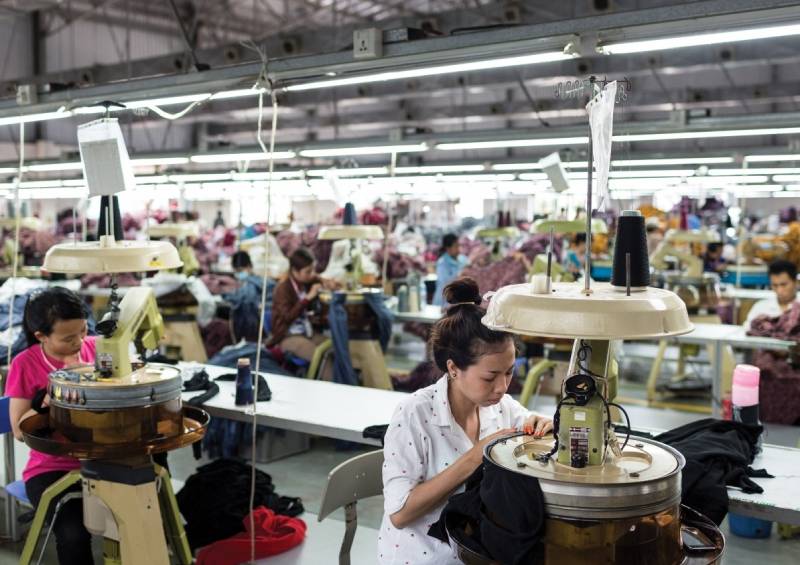
A recent survey conducted by Better Factories Cambodia (BFC), in collaboration with the International Labour Organization (ILO) and International Finance Corporation (IFC), reveals significant concerns for Cambodia’s garment, footwear, and travel goods sector, following the announcement of reciprocal tariffs by US President Donald Trump on April 2.
According to the survey, which included 203 out of 756 factories registered with BFC, half of the country’s garment, footwear, and travel goods exports are directly affected by the new tariffs. Notably, 15% of garment factories face operational uncertainty or the risk of closure, with confirmed orders only for the next few weeks.
On a more stable front, 55% of factories have confirmed orders for up to six months, and 30% have secured orders beyond that period. However, 15% of surveyed factories reported having no confirmed orders at all.
The survey also found that 44% of participating factories are likely to remain operational for at least three months, based on current raw material availability and order status.
Buyer confidence has been dented, with many avoiding placing orders for the latter part of the year. Ken Loo, Secretary General of the Textile, Apparel, Footwear and Travel Goods Association of Cambodia (TAFTAC), confirmed that tariff-related uncertainties are prompting buyers to hold back on future commitments.
Adding to the pressure, 27% of factories indicated that buyers are demanding lower prices for 2025 orders, while 26% reported securing new buyers to mitigate the order gap. Many buyers are reportedly trying to pass on additional tariff-related costs to suppliers.
To cope with these challenges, factories are actively working to diversify their customer base beyond the US, investing in automation, expanding recruitment, and enhancing worker training.
Yang Sophorn, President of the Cambodian Alliance of Trade Unions (CATU), warned that if tariff negotiations end unfavorably, factory closures or relocations could severely affect workers.
The United States accounted for 37.19% of Cambodia’s textile and garment exports in 2024, followed by the European Union at 16.5%, underscoring the Kingdom’s vulnerability to shifting trade dynamics.