‘Don’t Let Our Fields Go Silent’
Why tariff-free trade with a giant like the United States feels unsafe to India’s 6.5 million cotton farmers
By Cottonguru – from the villages that grow India’s cotton
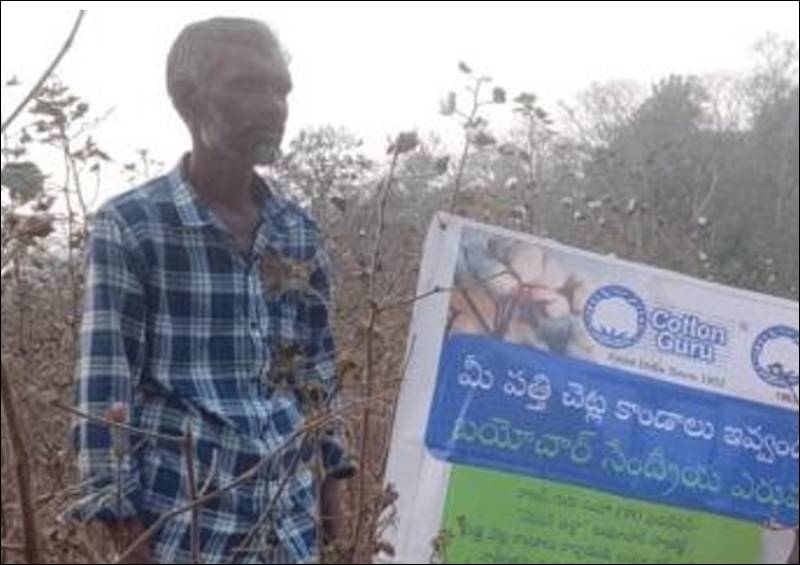
At first light in Chincholi village in Adilabad, Telangana, Dhurva Laluram (Patel) steps into a field that tells the story of a year most small landholders know too well. The rains arrived heavily and then disappeared. Cotton bolls burst open and were later soaked by an untimely spell. The picking crew he had relied on left for city work. Bills for seed, fertiliser and sprays sit folded in a polythene envelope in his shirt pocket, creased like the lines on his palm.
At home, the harvest is not just a crop but a calculation of survival. His daughter wonders whether there will be enough to pay her college fee. His mother worries about another loan. His wife carries the strain of fieldwork and housework alike, her hands marked by labour that rarely shows up in farm accounts. The soil is thinner than it was a decade ago, prices are lower than last year, and the moneylender’s call could come at any moment.
In this fragile reality, the prospect of tariff-free trade with a global cotton powerhouse raises an unsettling question. When cheaper and faster shipments arrive from heavily capitalised farms with deep financial cushions and large-scale mechanisation, what happens to cotton grown on two or three acres in villages like Chincholi? Farmers are not afraid of markets; they already sell into them through ginners, traders and mills. What they fear is becoming the shock-absorber of sudden policy shifts yet again.
The imbalance is structural. Cotton in the United States is produced at large scale, supported by long-standing systems of risk management and infrastructure, while India’s cotton economy rests largely on small landholders working with narrow margins and high exposure to weather and price volatility. A sudden removal of tariffs can shift the contest from efficiency to sheer survival, and the smallest producers are often the first to bear the fall.
Timing makes the risk sharper. Cotton prices are most vulnerable during peak arrivals, when farmers must sell to repay loans, pay labour and clear transport costs. Even a modest wave of tariff-free imports at this moment can push farm-gate prices below viable levels, locking families into another season of debt. What appears as a marginal price movement in market charts can become a severe cash-flow crisis across entire villages.
Such shocks ripple through the rural economy. When cheaper imports arrive, mills may delay or trim domestic purchases, ginners run below capacity, rural wages weaken and farm incomes fall further. Trust in the system erodes as well. Farmers can endure low prices or high prices, but sudden, policy-driven volatility makes planning impossible. When rules change faster than a crop cycle, many begin to leave cotton or agriculture altogether.
There are environmental consequences too. Price shocks often push farmers toward short-term measures: heavier chemical use, residue burning and reduced investment in soil health. The long-term costs emerge later in declining yields, poorer soil structure and weaker resilience to erratic weather.
For many growers, the ledger of cotton farming is already stretched. Thin margins, rising input costs and delayed payments mean that even a drop of Rs 300–500 per quintal at harvest can wipe out earnings on a small holding. Social effects follow quickly, school fees are deferred, healthcare postponed and migration intensifies. Women, who carry much of the burden of picking and household care, shoulder the heaviest strain with the least protection. Environmental stresses from unpredictable rainfall to pest flare-ups and declining soil fertility, compound the uncertainty. Dhurva’s story is not unusual, it reflects the median experience across India’s cotton belt, from Punjab to Tamil Nadu.
Yet farmers are not opposed to trade itself. When exports are strong, mills operate steadily and demand for Indian cotton rises. Trade can bring longer-term orders for textiles and home products, improved technology and investment in ginning and spinning, and premiums for responsibly produced fibre that is traceable and lower in carbon impact. These benefits, however, reach villages only when safeguards protect farmers during the transition.
A farmer-first approach to any India–US market opening would therefore require predictable seasonal safeguards, clear communication in accessible language, and reliable monitoring of import volumes and mandi prices so that temporary measures can be triggered if markets destabilise. Independent assessments and regular reviews tied to the crop calendar would help ensure that policy corrections happen quickly rather than after damage is done. Just as importantly, farmers need local points of contact where they can understand what changes mean for them in practical terms.
Industry and brands also have a role to play. Earlier purchase signals and steadier buying through structured programmes or FPO-led contracts can reduce harvest-time volatility. If sustainability premiums are earned in global markets, sharing even a small portion upstream can keep farmers invested in responsible practices. Co-investment in soil health, water efficiency and integrated pest management strengthens both resilience and fibre quality. Initiatives linked to regenerative agriculture, biochar and carbon credits can provide supplementary income streams while improving long-term productivity.
India’s strongest hedge in a changing trade landscape lies in building resilience at the farm level and adding value within the country. Practices that return carbon to the soil improve water retention and nutrient efficiency, stabilising yields and reducing input costs. Regenerative cotton systems, diversified rotations and reduced tillage can lower pesticide use and strengthen farm economics over time. Expanding domestic spinning, processing and garment manufacturing increases offtake for Indian cotton regardless of global price swings, creating jobs and anchoring demand closer to the farm.
For many in the cotton sector, three principles remain essential, imports should never destabilise markets at harvest time; agreements must acknowledge the subsidy and scale asymmetry between large industrial farms and smallholders and transparency must be strong enough to prevent rumours from driving markets while farmers bear the losses.
Success, a year after any new trade framework, would be visible in simple ways. Farmers would sell within a stable price band at harvest instead of in distress months later. Mills would buy earlier and more predictably. Imports would complement genuine supply gaps rather than displace domestic cotton. Reliable local information systems would replace uncertainty, and regular public data would calm markets more effectively than speculation.
Standing beside a faded poster on good picking practices, Dhurva expresses a hope that echoes across thousands of villages: that rules remain clear and do not ruin the harvest day. That, in essence, is the case for a farmer-first design of trade engaging with the world while protecting the field. The world may buy more from India, but the price of that ambition cannot be the future of the farmers who grow its cotton.