Industry Confidence And Continuity Define Heimtextil 2026

With 3,000 exhibitors and buyers from 148 nations, the fair emerged as a trusted platform navigating AI, design evolution and shifting global supply chains.
Heimtextil 2026 concluded with a strong restatement of its position as the world’s leading platform for home and contract textiles, drawing 3,000 exhibitors from 66 countries and welcoming over 48,000 buyers from 148 nations. Despite a volatile global economic and geopolitical backdrop, the fair demonstrated stability, confidence and growing international relevance for the textile and interior design industry.
The world’s largest home textiles fair maintained exhibitor strength while becoming even more international in scope, with exhibitor internationality reaching 96 per cent and visitor internationality standing at 86 per cent. The share of top-level decision-makers rose to 78 per cent, underlining Heimtextil’s importance as a strategic sourcing and networking platform. Senior executives from global retailers and hospitality groups such as Harrods, IKEA, Marriott Hotels, Sainsbury’s and XXXLutz were among the attendees.
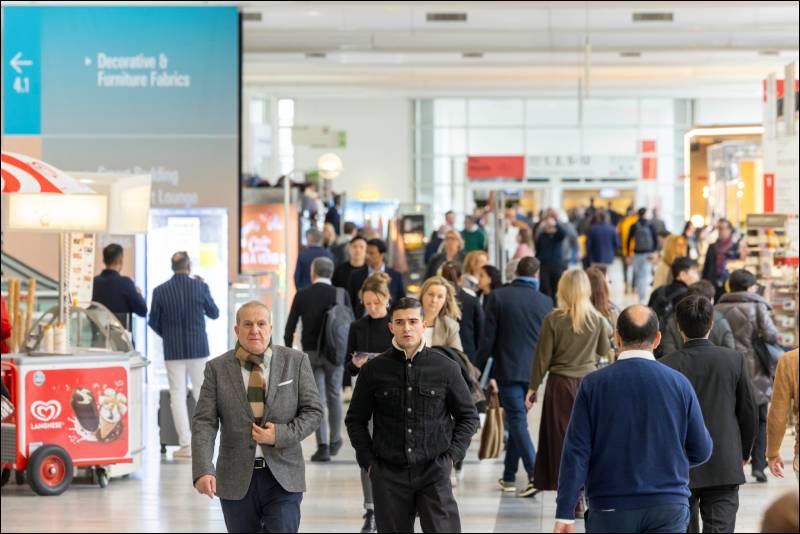
Heimtextil 2026 unfolded against a backdrop of economic uncertainty, geopolitical tensions, shifting sourcing patterns and rapid digital transformation. The fair provided orientation and strategic clarity through best-practice examples, expert-led knowledge formats and future-focused product showcases spanning textile and non-textile interior solutions, including bedding, upholstery, carpets, wallpaper and innovative décor materials.
“In a dynamic market environment marked by volatile tariff policies and geopolitical uncertainties, the need for transparency and reliable partners is increasing. Especially now, a dependable platform such as Heimtextil is indispensable,” said Detlef Braun, Member of the Executive Board of Messe Frankfurt.
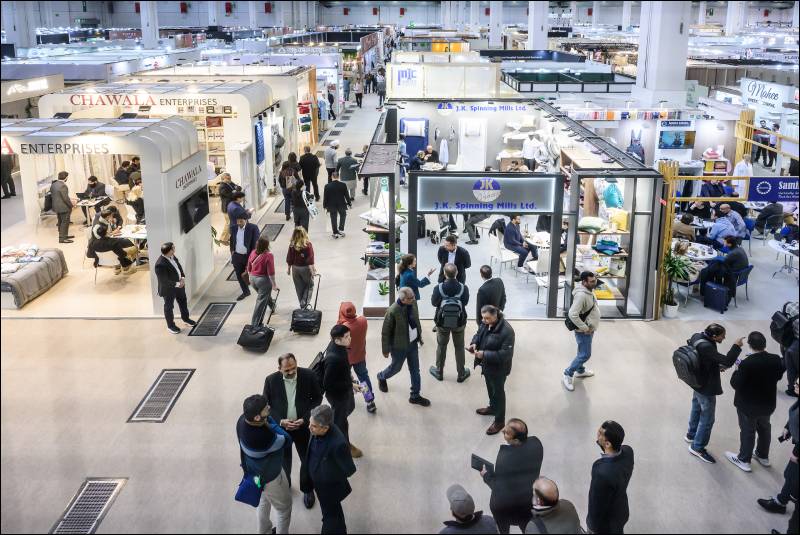
A redesigned hall layout across 17 levels enhanced market clarity and commercial matchmaking by grouping related segments closer together. Textile and non-textile interior design were positioned in Halls 3.0, 3.1 and 4.1, while Bed, Bath & Living occupied Halls 5.0, 5.1, 6.0 and 6.1, adjacent to Smart Bedding in Hall 4.0. The Smart Bedding segment featured the new Sleep & Meet hub, serving as a central meeting point for the mattress and sleep industry, including leading brands and the German Mattress Industry Association.
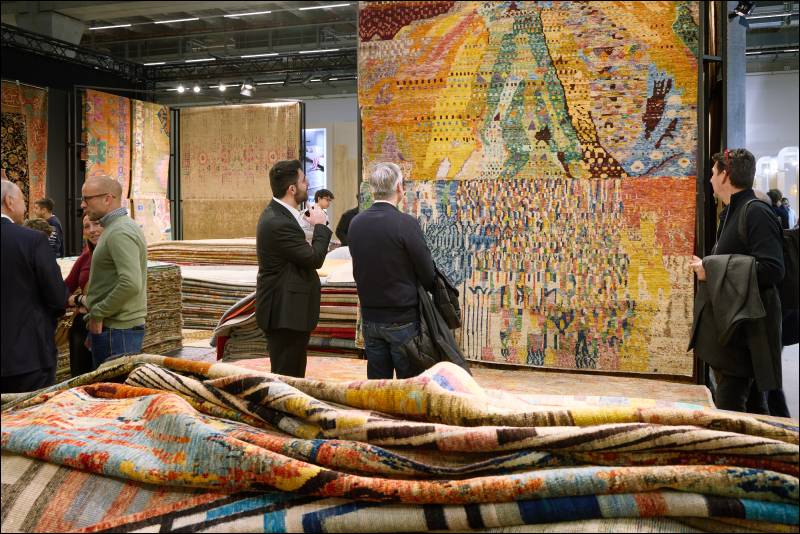
The Carpets & Rugs segment expanded significantly, spanning Halls 11.0, 12.0, 12.1 and 3.0, showcasing both machine-made and handwoven carpets, exclusive one-off pieces and, for the first time, non-textile floor coverings, signaling a strategic broadening of Heimtextil’s product portfolio.
Design, AI and sustainability emerged as defining themes of the fair. Renowned designer and architect Patricia Urquiola drew strong attention with her immersive installation ‘Among-all’, which explored the intersection of textiles, AI, materials and spatial experimentation. The installation incorporated regenerated nylon, textile waste and bio-based materials, positioning textiles as intelligent interfaces connecting people, materials and machines. Urquiola also participated in discussions on how AI and new materials are reshaping future living and hospitality spaces.
Heimtextil Trends 26/27, presented in Hall 6.1 under the theme ‘Craft is a verb’, illustrated how artificial intelligence and traditional craftsmanship can complement each other through forward-looking materials, techniques and creative technologies. Knowledge and networking formats were distributed across the fairgrounds, including the Texpertise Stage in Hall 6.0 and dedicated Talk Spots for architects, designers and hospitality professionals.
AI featured prominently across the exhibition under the initiative ‘Texpertise Focus AI’, demonstrating its growing role as a practical business enabler in design workflows, data management and customer engagement. “Artificial intelligence is already part of economic reality, both as a creative partner in design and as an efficient tool for workflows and personalisation,” said Olaf Schmidt, Vice President – Textiles & Textile Technologies.
Interior design, contract textiles and hospitality solutions emerged as strong growth drivers, supported by the expanded Interior Architecture Hospitality programme. Heimtextil also announced a new partnership with Hospitality Interiors Europe (HINT) from 2027, further strengthening Frankfurt’s role as a central hub for hospitality sourcing and design.
Heimtextil 2026 closed with a tangible sense of confidence across the industry, reinforcing its role as a stable, future-oriented global marketplace supporting the textile sector’s transition toward digitalisation, sustainability and new business models.