
OECD-FAO Cotton Forecast: India To Lead, Brazil To Expand, China To Stabilize
The cotton industry is poised for a decade of measured growth, technological transformation and evolving market dynamics, according to the OECD-FAO Agricultural Outlook 2025–2034. As a critical input for the global textile industry, cotton continues to face both opportunities and structural challenges, from sustainability imperatives to shifting geopolitical trade routes.

Global Consumption: Steady Growth Amid Synthetic Fibre Competition
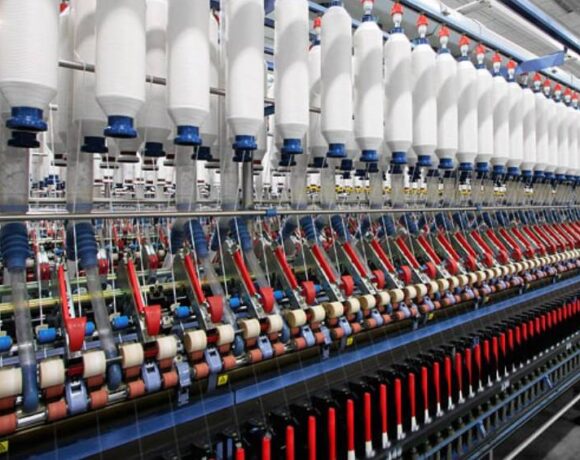
Cotton consumption is projected to grow at an annual rate of 1.2%, primarily driven by rising textile demand in developing economies. The processing of raw cotton will continue to be concentrated in Asia, especially in countries like Vietnam, Bangladesh and India, which benefit from lower labour and production costs. Although China’s dominance in the cotton-spinning sector is set to decline, it will remain the largest global processor through 2034.
The global textile landscape is increasingly dominated by synthetic fibres, which now account for nearly 78% of fibre consumption, compared to 22% for cotton. This disparity is expected to widen unless cotton’s sustainability advantage becomes a more dominant purchasing criterion. Notably, per capita cotton consumption has stagnated while synthetic fibre use per person has climbed steadily.

India and China are forecast to remain the top two consumers of cotton, though mill use is set to rise faster in Vietnam (2.7% per annum) and Bangladesh (2.1% per annum) due to rapid industrialisation, trade agreements and government incentives.
Production: India to Overtake China Amid Technological Gains
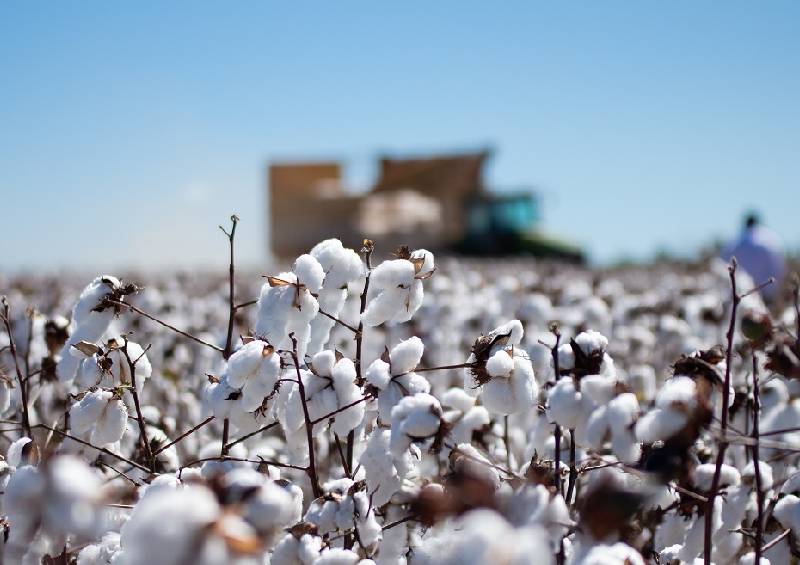
Global cotton production is expected to grow by 1.3% annually, reaching 29.5 million tonnes (mt) by 2034. This increase will be largely driven by yield improvements stemming from advanced genetics, digital agriculture and sustainable practices such as high-density planting and pest-resistant varieties.
India is projected to become the world’s largest cotton producer by 2034, overtaking China, thanks to improvements in yield rather than area expansion. This shift is enabled by technology adoption and better farm practices, including mechanised harvesting and government-backed research initiatives.
Brazil and the United States will also remain major producers. Brazil’s expansion is facilitated by cotton’s rotation with soybean and maize, combined with significant private investment in infrastructure and machinery. Meanwhile, China will maintain high productivity levels despite a slight contraction in cultivation area.

Yields are expected to increase by 15% globally over the decade. However, a persistent yield gap will remain between countries, with China and Brazil achieving yields more than double the world average of 0.8 tonnes per hectare.
Sustainability: A Defining Factor for the Future
Sustainability is increasingly influencing the cotton value chain. In the 2022/23 season, 29% of global cotton production was certified under sustainability programmes. Better Cotton leads these efforts, accounting for 22% of total production. Organic cotton, while still a niche segment, has shown promise, reaching 3.2% of global output in 2022/23.
Brazil, with its entire cotton output meeting sustainability criteria, is expected to benefit the most from this trend. In India and Pakistan, certified cotton accounted for 28% and 40% of their respective outputs. Sub-Saharan Africa, supported by initiatives like Cotton Made in Africa (CMIA) and the newly launched Regenerative Cotton Standard (RCS), is poised to increase its role in sustainable production.
With growing brand commitments and consumer awareness—especially among younger populations—sustainability will be a key driver in shaping demand and market access in the coming decade.
Trade: Steady Expansion with Asia as the Growth Driver
Global trade in cotton is expected to rise at 1.6% annually, reaching 12.3 mt by 2034. This increase is largely attributed to growing mill consumption in Asian economies, especially Vietnam and Bangladesh, whose imports are projected to grow by 2.8% and 2.4% annually, respectively. While China will remain the largest importer with nearly 3 mt annually, its imports are expected to remain stable.
Brazil is anticipated to maintain its lead as the world’s top cotton exporter, a position it seized from the United States in 2023/24. By 2034, both Brazil and the United States are expected to account for approximately 30% each of global exports. Sub-Saharan Africa, despite smaller production volumes, will remain a significant exporter, contributing 14% of global exports, with most of its output destined for Asia.

However, some African nations like Ethiopia and Benin are now beginning to invest in domestic textile industries. As local processing expands, their dependence on raw cotton exports could decline.
Prices: Real-Term Decline Expected
Cotton prices are expected to decline slightly in real terms over the outlook period, largely due to continued competition from synthetic fibres and productivity gains in cotton farming. Historically, cotton prices have tracked closely with polyester prices, though in recent years cotton has traded at a significant premium.
Despite this, cotton’s environmental and sustainability advantages may help to support prices if consumer preferences shift decisively toward natural fibres.
Risks and Uncertainties: A Complex Web of Economic and Environmental Factors
Several factors could alter the trajectory of the cotton market over the next decade. On the demand side, a global economic slowdown, shifts in fashion preferences (e.g., the rise of athleisure), and increased adoption of recycled fibres could limit growth. In 2023, recycled cotton production stood at just 0.3 mt, but the sector is poised for rapid expansion, especially through pre-consumer textile waste.
On the supply side, climate variability, pest outbreaks, and water scarcity remain persistent threats. Trade policy and regulations also introduce uncertainties. Initiatives like the EU’s Ecodesign for Sustainable Products Regulation and restrictions under the U.S. Uyghur Forced Labour Prevention Act could reshape sourcing decisions.
Furthermore, policies in some African countries aimed at curbing second-hand clothing imports to promote local industries could drive regional mill growth and increase domestic cotton use.
Conclusion: Cotton’s Future Hinges on Innovation and Sustainability
The cotton sector stands at a critical juncture. While demand and production are expected to rise modestly, cotton must navigate a landscape shaped by synthetic fibre competition, sustainability expectations and regulatory shifts. Technological innovation, investment in sustainable farming practices, and a focus on traceability and environmental standards will be key to ensuring long-term resilience and competitiveness.
The decade ahead offers the cotton industry an opportunity to redefine its role within the textile ecosystem—not only as a fibre but as a catalyst for sustainable development, economic opportunity and responsible global trade.