
Scalability Is A Critical Determinant Of Cost Competitiveness In Fibres: Manmohan Singh
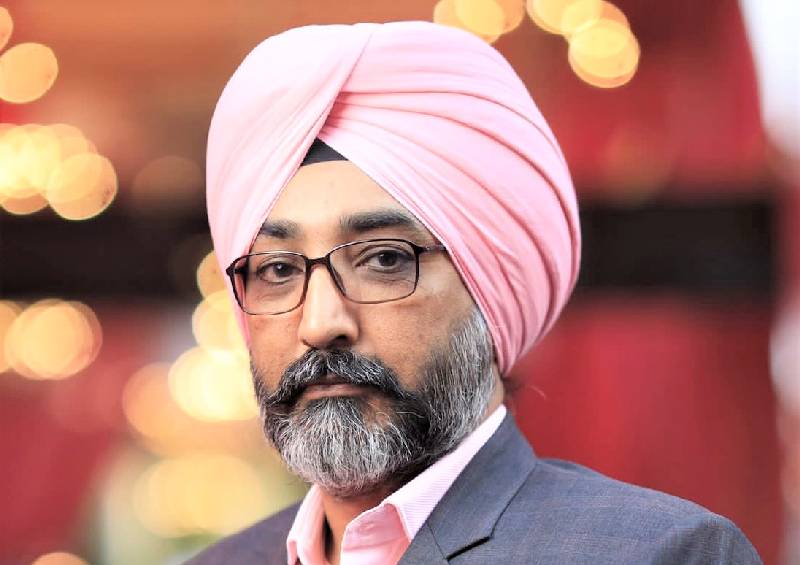
MMCFs play a critical role in the blended textile ecosystem. Their natural touch, superior drapability, enhanced breathability and effective moisture management make them highly relevant, says Manmohan Singh.
The global textile industry is currently navigating demand moderation, inventory corrections and pricing pressures. How do you assess the present market environment for man-made fibres, particularly viscose, and where do you see early signs of recovery?
The demand moderation reflects broader slowdown in consumer sentiment across end markets (apparels, home textiles) largely on account of tariff, trade tensions and macroeconomic softness. This has translated into elevated inventories, cautious purchase, sustaining near-term headwinds for MMF, particularly MMCF. Pricing pressure and inventory corrections are symptomatic of demand moderation and elevated inventories and key core element to current cyclical trough reflecting end-market demand restraint and not structural oversupply.
Cautious optimism in business sentiment is driven by structural drivers – gradual spend on capex, new applications focusing on specialty and sustainable fibre, broader application in niche segments. Current cycle may be approaching a trough, as the demand tailwind aligns towards stabilization and gradual recover.
Consumption trends in key export markets such as the US and Europe remain cautious. How is this influencing order visibility, pricing discipline and capacity utilization in your segment?
The average price realization is under pressure in current export market situation, but differentiation and customer segmentation are increasingly critical to protecting margins. Prices of key raw material (fibre) are dropping – cotton/polyester has come down sharply in the last few weeks. Raw material price stability is linked to utilization discipline, therefore, the current challenges in the US and EU region are making the supply chain more disciplined and selective in taking a strategic positioning ahead of the eventual demand normalization.
Volatility in raw material and energy costs continues to challenge the industry. How does Grasim manage cost competitiveness while ensuring stability for downstream textile manufacturers?
Feed stock security and portfolio balancing through long term supply contracts, diversification of product supplies across geographies through reduction of single source supply, deep focus on yield improvements and input optimization ensure lower volatility at the conversion level, even when absolute raw material price fluctuates.
With polyester and recycled synthetics gaining market share, how is the value proposition of viscose and specialty fibres evolving in today’s market conditions?
Scalability is a critical determinant of cost competitiveness in fibres. Polyester is a clear precedent, its journey to price neutrality required more than a decade of sustained capacity build-up, technology maturation and supply chain integration. A similar trajectory is expected for man-made cellulosic fibres (MMCFs), where increasing scale, process efficiencies and broader adoption will progressively reduce effective costs and narrow the price gap with synthetics.
Inter-fibre coexistence is structural to the textile industry and will continue. No single fibre can meet the full spectrum of end-consumer performance expectations. While 100% synthetic fabrics deliver strength and durability, they often compromise on comfort parameters such as breathability and hand feel. Consequently, blended fabrics combining synthetics with natural or cellulosic fibres have become the preferred solution to balance performance and comfort.
MMCFs play a critical role in this blended ecosystem. Their natural touch, superior drapability, enhanced breathability and effective moisture management make them highly relevant, particularly when sustainability considerations are increasingly influencing material choices. Compared to purely synthetic fibres, MMCFs offer a more sustainable and consumer-preferred alternative without sacrificing functional performance.
Current market trends, especially in sportswear and athleisure, underscore this relevance. Leading brands are increasingly incorporating MMCFs into synthetic blends to achieve the optimal combination of strength, comfort, breathability and moisture control. This positions MMCFs as a strategic fibre of choice in high-growth apparel segments where not only durability, but comfort is equally important.
From a policy perspective, how effective have recent Indian textile initiatives been in supporting man-made fibres and the downstream value chain? What structural gaps still need to be addressed?
Indian textile policy initiatives have delivered measurable progress in strengthening man-made fibres and downstream textile value chains. Targeted interventions have catalysed investments, enabled export growth, expanded domestic capacities and supported incremental value capture across the ecosystem. These measures have materially improved India’s competitiveness in global textile markets.
However, to sustain and accelerate this momentum—particularly in the face of increasingly aggressive global peers—policy focus must now shift towards raw material security and competitiveness. This requires creating a level playing field for Indian raw material manufacturers, who currently compete with global fibre and raw material producers supplying into India under differing regulatory, cost and sustainability regimes.
A critical enabler in this context is the implementation of internationally recognised sustainability standards, such as Forest Stewardship Council (FSC) certification for dissolving wood pulp, a key raw material for man-made cellulosic fibres. Mandating or incentivising such standards will ensure that both domestically manufactured products and imported raw materials adhere to uniform benchmarks of environmental responsibility, traceability and sustainable sourcing. This approach will prevent regulatory arbitrage, reinforce responsible sourcing and strengthen domestic industry competitiveness.
These measures are fully aligned with India’s national leadership priorities, global sustainability commitments and the country’s aspiration to emerge as a trusted global hub for responsible sourcing, sustainable manufacturing and high-value textile production.
In parallel, long-term competitiveness of the Indian textile and fibre sector will depend on systemic enablers, including:
- Infrastructure readiness, particularly in logistics, utilities and waste management;
- Human capital development, spanning technical skills, process innovation and advanced manufacturing capabilities; and
- A robust circular economy framework, supporting fibre-to-fibre recycling, resource efficiency and low-impact production models.
Collectively, these policy interventions will reinforce India’s position not only as a cost-competitive producer, but as a globally credible, sustainability-led textile manufacturing powerhouse.
India’s ongoing free-trade agreement negotiations with EU and other countries are closely watched by the industry. How could these FTAs reshape market access and long-term growth opportunities for Grasim and the broader textile ecosystem? Sustainability regulations and compliance standards are tightening globally. How do evolving environmental and carbon-related policies influence investment and expansion decisions in fibre manufacturing?
Uniform taxation of raw materials and rationalisation of duties and levies across the manufacturing value chain are foundational to restoring India’s global competitiveness in man-made fibres. Today, the persistence of an inverted duty structure materially disadvantages domestic production. In the case of man-made cellulosic fibres (MMCF), finished fibre is taxed at 5%, while key input raw materials attract 18% GST, rendering India-made fibre structurally uncompetitive against imported alternatives—both in the domestic market and in export-oriented supply chains. Correcting this distortion is essential to establish a step towards ensuring a level playing field with global producers supplying into India.
Beyond tax rationalisation, India must strategically leverage its Free Trade Agreements (FTAs) to build a resilient, export-led, and MMCF-driven textile ecosystem. Domestic industry interest are critital and to ensure level playing field. This requires a coordinated policy and industry approach across the following dimensions:
Level playing field with FTA competitors: Countries such as Bangladesh benefit from preferential market access and lower cost structures, enabling strong downstream export competitiveness. Addressing these asymmetries will directly strengthen India’s apparel and textile exports, creating a more stable and sustained demand pull for MMCF products from Indian value chain partners.
Shift from opportunistic to programmatic sourcing: FTA-driven demand certainty can facilitate a transition towards long-term, programmatic sourcing models. This will enable more predictable downstream demand, higher capacity utilisation, improved pricing discipline and stronger justification for investments in capacity expansion and differentiated or specialty fibres.
Value chain upgrading and deeper partnerships: Competitiveness will increasingly be defined by value chain integration rather than standalone cost advantages. Upgrading across spinning, fabric, garmenting and brand interfaces will enable co-development of products, closer partnerships with global customers and fibre-level differentiation aligned to specific end-use and performance requirements.
FTAs as demand-certainty mechanisms, not just trade enablers: FTAs should be viewed not merely as tariff-reduction instruments, but as strategic demand-certainty mechanisms. When aligned with domestic policy reforms, they provide the visibility required for long-term investments, technology upgrades and sustainable growth across the MMF-led textile value chain.
Infrastructure and logistics costs continue to impact export competitiveness. Do you see tangible improvements on the ground, and what policy actions would meaningfully strengthen India’s textile supply chain?
There is visible progress in improving infrastructure and logistics through new ports and hinterland connectivity, multimodal logistics integration and development of textile cluster infrastructure through PM MITRA parks helping to develop the backbone infrastructure.
However, the benefits are unevenly distributed and yet fully translated into end-to-end cost competitiveness for textile exports. Logistics cost remains at 13%-14% of GDP, much higher than global benchmark (8%-9%). High fragmentations between fibre, yarn, fabric and garment clusters lead to multiple handling points and working capital lock-up. Inconsistent pricing of resources across states impact end product cost.
India is clearly moving in the right direction on infrastructure and logistics, to unlock the next level of textile competitiveness. The policy must now shift from asset creation to system optimization – connecting clusters, lowering freight cost and improving reliability and I am confident that, if executed well, these measures will structurally position India as speed-competitive, scale-efficient and compliance-ready textile sourcing destination.
Looking at the next 12–18 months, what key risks and opportunities do you foresee for the man-made fibre segment amid global uncertainty?
The key risks are prolonged demand softness in core export markets, price and margin pressures from excess capacity and synthetic fibre, input cost raw material volatility, prolonged regularity and trade policy uncertainty, which will result in earnings volatility and cautious capital deployment.
Key opportunities are demand stabilization and replenish-led recovery, shift towards usage of more man-made cellulosic base fibre, premiumization through specialty and sustainable fibre, India’s strategic positioning in global textile supply chain, cost and carbon competitive differentiator.
Finally, what policy and market reforms would you like to see implemented to ensure India emerges as a global leader in sustainable man-made fibres over the next decade?
Feedstock (raw material) certainly is foundational for scale, cost competitiveness and investor confidence in man-made fibre capacity for which it is critical that we focus on building 10-15 years national MMF road map covering viscose, specialty cellulosic fibre like Lyocell, Modal, and recycled man-made cellulosic fibre from textile waste.
Policy stability on raw materials (souring pulp from sustainable managed forest) and incentivized domestic production of critical inputs are critical to ensure India emerges as a global leader.