
U.S. Tariff Shock Puts Tamil Nadu’s Export Backbone On The Line

Tamil Nadu’s export economy, long considered the bedrock of India’s global trade competitiveness, has been jolted by the United States’ sudden imposition of a 50% tariff on Indian goods. For a state that sends nearly a third of its exports to the U.S., the move has triggered fears of widespread job losses, collapsing orders and billions of dollars in lost revenue.
A study by Guidance Tamil Nadu estimates that the state could lose up to US$ 3.93 billion in export value. Among the hardest hit is the textile sector, the pride of Tamil Nadu, with potential losses of US$ 1.62 billion. Other industries, including machinery, leather, footwear and auto components, are bracing for sharp downturns with projected declines ranging from 13 to 36%.
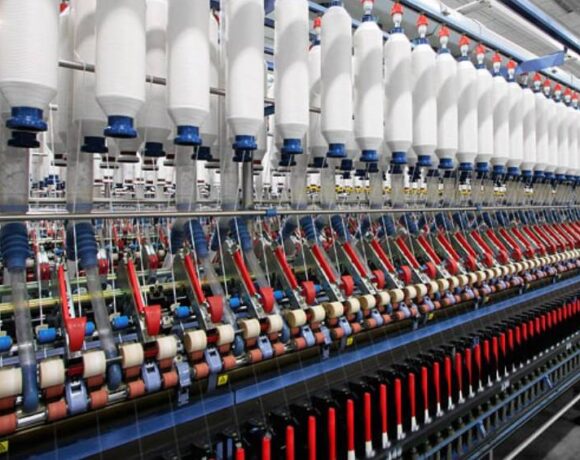
Behind these numbers are millions of workers and families. Tamil Nadu accounts for 28% of India’s textile exports and the industry sustains a vast socio-economic ecosystem. In Tiruppur, the country’s knitwear capital, 65% of textile workers are women. For decades, the industry has been a ladder of upward mobility, transforming rural communities with steady wages and foreign exchange inflows. Last year alone, Tiruppur generated nearly Rs 40,000 crore in foreign exchange. Now, exporters say orders are being canceled, shipments halted and global buyers shifting to competitors. “This is not just about factories and machines,” Chief Minister M.K. Stalin said, “It is about the livelihoods of countless families.”
Stalin, who has repeatedly flagged the risks of tariff shocks, has urged Prime Minister Narendra Modi to move beyond piecemeal relief and launch a coordinated national strategy. In a letter to the Prime Minister earlier this month, he recommended revival packages with interest subvention, collateral-free loans under the ECLGS scheme, higher export rebates, lower GST duties on man-made fibres, yarn and fabrics and an accelerated push for trade agreements with the European Union, the United Kingdom, and Africa to open zero-duty markets. While he welcomed the Union government’s recent suspension of the 11 per cent duty on cotton imports until December, he cautioned that it was only a temporary fix and that unless structural steps are taken, the crisis will persist.
Tamil Nadu has not stood idle. The state government has announced capital subsidies for textile processing units to adopt zero-liquid-discharge wastewater treatment, enabling small and medium firms to meet strict global environmental norms. It has also rolled out the Tamil Nadu Technical Textiles Mission to diversify into high-value exports used in healthcare and infrastructure. Yet Stalin acknowledged the limits of what a state can do. “Trade policy, tariffs and large-scale financial support are in the hands of the Union government,” he said. “Tamil Nadu is ready to work with New Delhi, but the Centre must act decisively.”
The Chief Minister argued that the crisis goes beyond tariffs and trade deals and raises a fundamental question about India’s economic future: should the country allow temporary geopolitical shocks to undo decades of progress, or seize the moment to reform and strengthen its industries? “The resilience of our textile sector gives me confidence,” Stalin said. “But resilience should not be mistaken for invincibility. The Union government must urgently step in, not just to protect today’s exports, but to secure tomorrow’s opportunities.”
For Tamil Nadu’s exporters, the answer cannot come soon enough. In the bustling industrial clusters of Tiruppur, Coimbatore and Chennai, uncertainty hangs heavy. And with every canceled order, the urgency of a national response grows louder.