Vietnam Apparel Industry Bets On Diversification, Sustainability
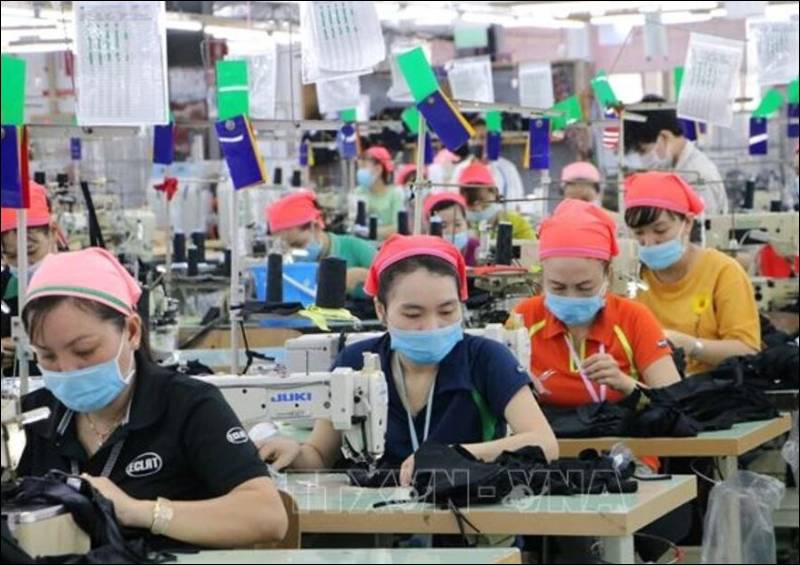
Vietnam’s textile and garment industry is undergoing a strategic reset as it adapts to a volatile global economic environment marked by shifting trade policies, rising compliance costs and mounting pressure on global supply chains. Industry leaders say rapid repositioning is essential to sustain growth and competitiveness amid increasing uncertainty.
Speaking at an industry conference in Hanoi, Vu Duc Giang, Chairman of the Vietnam Textile and Apparel Association (VITAS), said global economic fluctuations, tougher sustainability standards, rising logistics costs, changing sourcing strategies of international brands and the growing use of tariff and non-tariff barriers are fundamentally reshaping the operating landscape. These pressures, he noted, are forcing the sector to urgently rethink its medium- and long-term development strategy.
In response, the industry has built its transformation around three core pillars. The first is market diversification. Once dependent on a limited set of traditional export destinations, Vietnamese textile and garment products are now shipped to 138 markets worldwide, reducing exposure to external shocks and strengthening resilience.
The second pillar focuses on broadening partnerships and customer bases, helping enterprises reduce dependence on a small group of global brands while improving bargaining power and adaptability.
The third pillar centres on product diversification, with companies moving away from basic processing toward higher value-added products aligned with evolving consumer preferences.
Supporting these strategic shifts are five key solution groups, including an industry-wide green transformation programme. According to Giang, sustainability has moved beyond compliance to become a prerequisite for deeper integration into global value chains.
Textile and garment enterprises are also accelerating the adoption of science and technology, automation and robotics, while gradually integrating artificial intelligence into production and supply chain management to boost productivity, quality and long-term competitiveness.
Despite persistent global challenges, the industry has demonstrated strong resilience, said Trần Thanh Hải, Deputy Director of the Import-Export Department at the Ministry of Industry and Trade (MoIT). He noted that heightened global uncertainty in 2025, including the US implementation of reciprocal tariff measures, has acted as a catalyst for restructuring, pushing Vietnamese firms to move up the value chain and diversify export markets.
However, Hải cautioned that challenges are intensifying as importing countries impose stricter technical, environmental and labour standards, alongside growing demands for traceability, carbon reduction, circular economy practices and social responsibility. At the same time, competition is increasing as lower-cost producers and technologically upgraded rivals strengthen their positions.
A key structural weakness remains Vietnam’s low localisation of raw materials, particularly in weaving, dyeing and finishing, which limits domestic value addition and increases vulnerability to external disruptions. Addressing this bottleneck, along with accelerating digital transformation, strengthening human resources and better leveraging free trade agreements, will be critical to sustaining competitiveness.
Looking ahead, the MoIT reaffirmed its commitment to supporting the sector’s development. Hải said 2025 marks a pivotal year for Vietnam’s global integration, with textile and garment export turnover projected to reach US$ 46 billion, up 5.6 per cent year-on-year. This performance has helped Vietnam maintain its position among the world’s top three textile and garment exporters, reinforcing its growing role in the global market as it shifts toward higher quality, technology-driven and sustainable growth.