
Women At The Heart Of Cotton: New Report Reveals Barriers, Breakthroughs And The Path Ahead
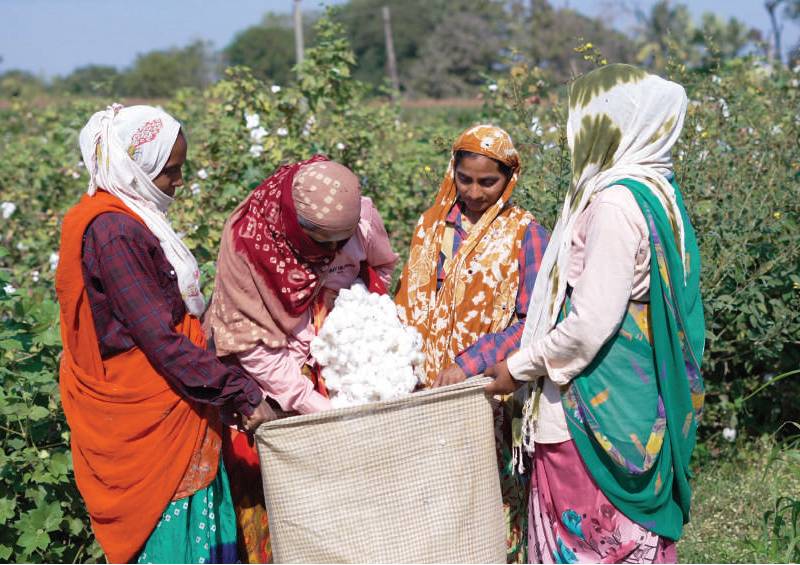
Despite being the backbone of global cotton production, women in cotton farming communities continue to face systemic marginalization and invisibility in agricultural decision-making. A new report released by Cotton Connect, titled “Women In Cotton: Experience From Women Mitigating The Effects of Climate Change” offers a deep dive into the roles, challenges and growing agency of women in the cotton sector across South Asia. The report brings forward compelling stories, real data and practical recommendations to address the gender disparities entrenched in the industry.
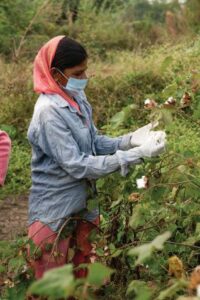 The report highlights that in major cotton-producing countries such as India, Pakistan and Bangladesh, women contribute up to 70% of the labour force, performing essential tasks from sowing and weeding to harvesting and sorting. However, their contributions often go unrecognized, and they remain excluded from formal systems of training, finance, land ownership and decision-making. As a result, the very women who sustain cotton production remain underpaid, undertrained and underserved.
The Women in Cotton report captures stories of women who are gradually reclaiming space in agricultural dialogues through targeted programmes such as Cotton Connect’s REEL Cotton (Responsible Environment Enhanced Livelihoods) initiative. Since its inception, REEL Cotton has trained thousands of women in sustainable agricultural practices, health awareness and financial literacy. These programmes are not only improving livelihoods but also reshaping social norms in deeply patriarchal rural settings.
“Before the training, I didn’t know that using fewer chemicals could save money and protect our health,” says Rukmini from Maharashtra. “Now, my neighbours come to me for advice.”
Women trained under REEL Cotton report improved crop yields, reduced dependence on harmful agrochemicals, better health outcomes and enhanced confidence. Many have also taken up leadership roles within their communities, becoming peer educators and role models for younger generations.
“I used to be afraid to speak in front of men,” says Nazma, a lead farmer in Bangladesh. “Now, I train other women in my village. We share ideas and solve problems together.”
Climate change adds another layer of complexity to their struggles. Erratic rainfall, prolonged droughts, and deteriorating soil health disproportionately affect women farmers, who often lack access to climate-resilient infrastructure and planning. Despite this, women have emerged as key players in adaptation efforts—implementing composting techniques, practicing agroforestry and preserving biodiversity at the grassroots level.
“We’ve learned how to make compost and conserve water. It helps the earth and reduces our costs,” explains Lalita, a farmer in Gujarat. “We are protecting our land for our children.”
The report makes a compelling argument for integrating gender equity into broader sustainability and climate resilience frameworks. It stresses that empowering women is not just a moral imperative, but a strategic one, especially as the industry faces rising climate risks and the need for regenerative agricultural practices.
Despite progress, significant barriers remain. The report outlines a number of persistent challenges, including lack of land ownership, exclusion from supply chain certifications, minimal representation in cooperatives and limited access to credit and technology. These structural issues prevent women from scaling their farming enterprises or participating in larger decision-making bodies.
To tackle these issues, Cotton Connect calls on brands, manufacturers, governments and financial institutions to commit to systemic change. The report recommends specific actions:
- Ensure equal access to training, resources and financial services for women.
- Strengthen legal rights around land tenure and farm labour.
- Embed gender-sensitive indicators in traceability and certification schemes.
- Build gender-responsive frameworks into corporate sustainability reporting and ESG disclosures.
- Amplify women’s voices and leadership across the cotton value chain.
“I am proud of the changes I’ve made. My daughter sees me leading, and she wants to become an agricultural officer,” says Fatima, a farmer from Sindh, Pakistan. “That’s the real impact.”
The report concludes that the future of cotton depends not only on how sustainably it is grown but on who gets to participate in that transformation. As the textile industry contends with climate urgency, biodiversity loss and global inequality, ensuring that women are not just included but empowered becomes essential to achieving true sustainability.
By bringing women’s voices to the forefront and urging collective accountability, Women in Cotton report offers a vision for a more inclusive and resilient cotton sector, one where thriving communities and flourishing landscapes are built on equity, recognition and shared opportunity.