

U.S. Port Imports Set To Slow Down As Holiday Goods Already Stocked
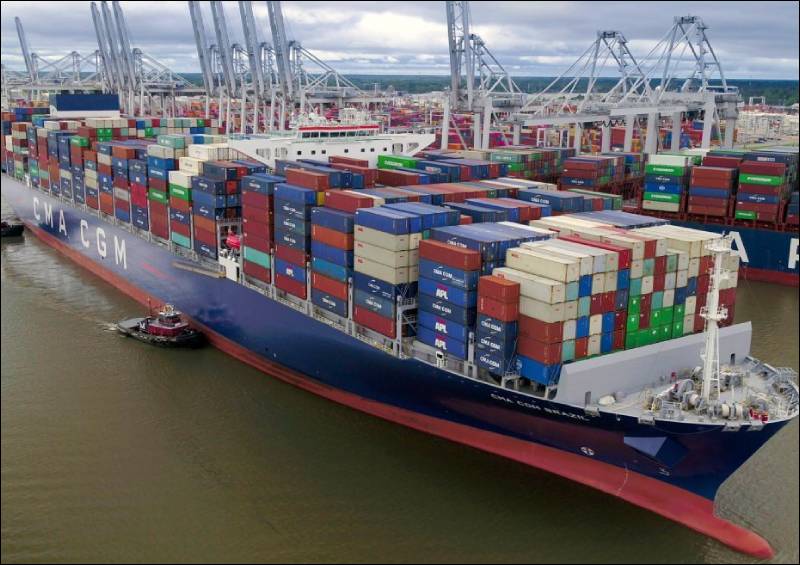
With tariff uncertainty continuing but most holiday merchandise already in stores or warehouses, import cargo volumes at the nation’s major container ports are expected to see their usual end-of-year slowdown in November and December, according to the latest Global Port Tracker report released by the National Retail Federation (NRF) and Hackett Associates. NRF Vice President for Supply Chain and Customs Policy Jonathan Gold said concerns over tariff-driven inflation and supply chain disruptions have eased as retailers successfully frontloaded shipments and absorbed added costs. “Store shelves are well stocked and the effect on prices has been minimized,” Gold said, adding that consumers should find the products they want at favourable prices.
The outlook comes as tariff policies continue to shift. The current 20% “fentanyl” tariff on China will be reduced to 10% on November 10, while a planned increase in “reciprocal” tariffs, twice delayed and set for the same day, has now been postponed for another year. An existing 10% reciprocal tariff under the International Emergency Economic Powers Act remains in effect even as the U.S. Supreme Court this week heard arguments on the legality of imposing tariffs under IEEPA.
Hackett Associates Founder Ben Hackett said the on-again, off-again nature of U.S.–China tariff announcements has complicated long-term planning for both importers and ocean carriers. “These conditions make market forecasting highly uncertain,” Hackett said, noting that imports are expected to see a small decline this year compared with 2024, with a further, larger drop forecast in the first quarter of 2026.

NRF meanwhile expects 2025 holiday sales to rise between 3.7% and 4.2% over last year, surpassing the $1 trillion mark for the first time. U.S. ports tracked by Global Port Tracker handled 2.1 million TEU in September, the latest month with confirmed data, down 9.3% from August and 7.4% year over year. October volumes are projected at 1.99 million TEU, down 11.5%, while November and December are forecast at 1.85 million TEU and 1.75 million TEU, down 14.4% and 17.9%, respectively. Following July’s peak of 2.39 million TEU, the final two months of the year are expected to be the slowest of 2025, with December likely the weakest month since March 2023.
Although November and December are traditionally slower, the sharp year-on-year declines reflect elevated import levels last year due to concerns over port strikes, as well as tariff-related frontloading that pulled forward some late-year cargo in 2025. The first half of 2025 totaled 12.53 million TEU, up 3.7% from the previous year, while the full year is projected at 24.9 million TEU, a 2.3% decline from 2024’s 25.5 million TEU. Looking ahead, January 2026 is forecast at 1.98 million TEU, down 11.1% year over year, with February at 1.85 million TEU, down 9%, and March at 1.79 million TEU, down 16.7%.