
InspirOn Engineering: Five Decades Of Engineering Excellence Powering Textile Industry
In an industry where technology evolves rapidly but trust is earned slowly, very few companies manage to stand tall across generations. InspirOn Engineering Pvt. Ltd., as it completes 50 years of service to the textile industry, belongs firmly to that rare category. What began as a modest, rain-soaked foundation ceremony in the early years of India’s industrialisation has today grown into a globally respected name in Flyer and Stenter manufacturing, synonymous with precision engineering, reliability and uncompromising quality.
The Golden Jubilee celebrations of InspirOn were not merely a ceremonial milestone. They were a reflection of a journey deeply intertwined with the evolution of India’s textile manufacturing ecosystem from the days of License Raj and import dependency to today’s era of global competitiveness, sustainability and self-reliance.
Born in Adversity, Built with Vision
InspirOn’s origins trace back to a time when setting up a manufacturing facility in India demanded extraordinary perseverance. Chairman Prakash Bhagwati, recalling the company’s earliest days, describes a moment that has since become part of InspirOn’s institutional memory: a foundation ceremony conducted in heavy rain, under a plastic sheet, with just four people present.

That humble beginning would soon face formidable challenges. The textile machinery sector in the 1970s was highly dependent on imports, while domestic manufacturing was constrained by complex approvals, scarce raw materials and regulatory bottlenecks. Cement was rationed, import licences were slow, and even essential tooling required layers of government permissions.
Yet, it was precisely within this environment that InspirOn’s core philosophy took shape engineering discipline, technological mastery, world class quality and long-term commitment.
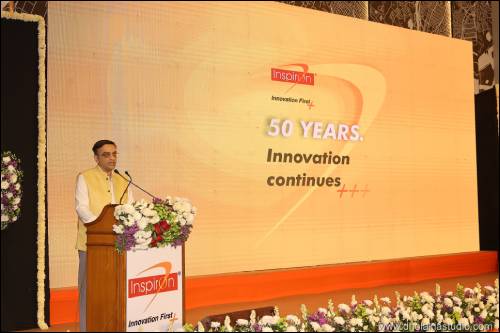
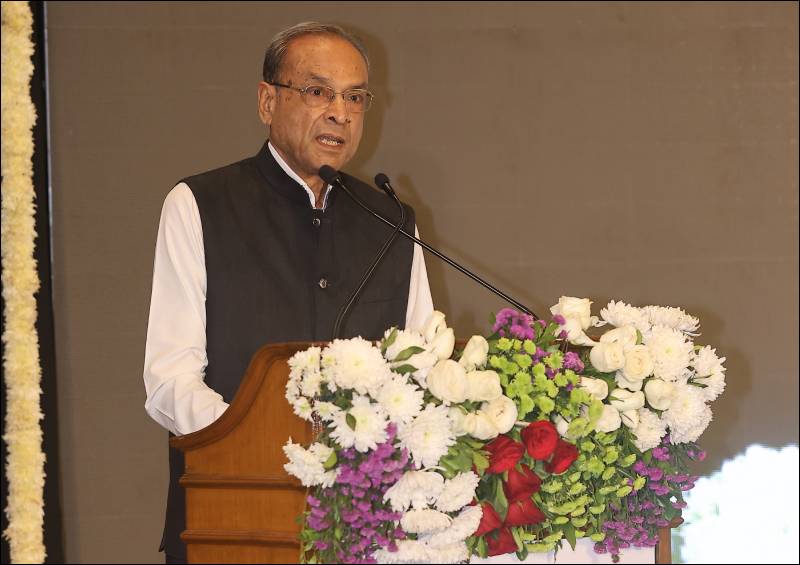
Amol Bhagwati, Managing Director of InspirOn Engineering Pvt. Ltd.
Import Substitution Before It Became a Buzzword
The early direction of InspirOn was strongly influenced by the vision of late Atul Bhagwati, then Chairman of ATE Group, who believed that India could only become globally competitive in textiles if it mastered its own machinery manufacturing. Long before the term Atmanirbhar Bharat entered the national vocabulary, this belief guided strategic decisions at InspirOn.
With technical collaboration from German partners, the company embarked on manufacturing flyers entirely in India, a first for the country at that time. This was not merely about assembling components, it required deep learning in metallurgy, precision casting, dynamic balancing and process discipline.
Prakash Bhagwati, after completing his postgraduate studies in mechanical engineering in the USA, returned to India in 1970 with a clear mandate, transform aspiration into industrial capability.
Foundation of a Manufacturing Culture
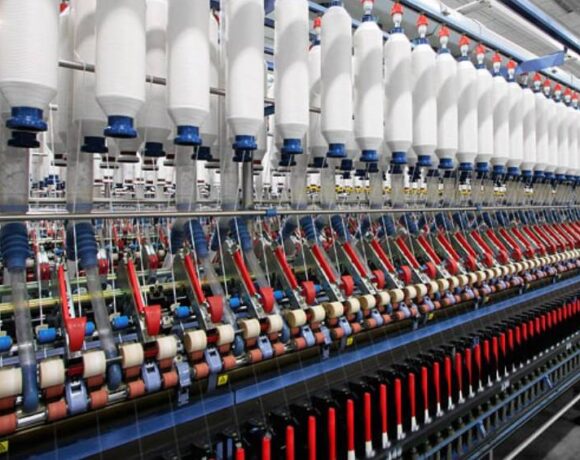
Flyers are among the most critical components in textile spinning, demanding exceptional precision, balance and durability. InspirOn’s flyer journey became, in the Chairman’s words, “a school of technology, discipline and quality.” Articulating the company’s philosophy, Prakash Bhagwati says, “Legacy is not built by speed, but by staying the course with integrity, precision and purpose.”
Indian engineers and technicians underwent rigorous training in Germany. German experts worked on-site in India, ensuring that every worker understood how individual processes affected the final product. The objective was consistency each flyer identical in performance, stability and quality.
A key contributor during this formative phase was Avanindra Desai, a mechanical engineer and associate of Prakash Bhagwati from L.D. College of Engineering. With no prior benchmark for flyer manufacturing in India, Desai underwent six months of intensive training at the Eugen Maier factory in Germany. On his return in 1974, he played an important role in establishing the factory layout and shopfloor disciplines, working closely with German experts to ensure that InspirOn’s early flyers met stringent international quality standards.
When India’s first domestically manufactured flyer rolled out of InspirOn’s factory, a German engineer famously held it up and declared it the ‘World’s Best Flyer.’ That moment was transformative. It validated Indian manufacturing capability and embedded a quality culture that continues to define InspirOn even after five decades, says Mr. Prakash Bhagwati.
Continuous Evolution for Global Demands
From 1974 to 2025, InspirOn’s flyer technology evolved continuously. As spinning speeds increased and customer expectations became more demanding, the company responded through relentless innovation.
A flyer that once operated at 850 rpm today runs smoothly at 1,400 rpm, without compromising balance or lifespan. Over the years, four different flyer models were developed, each aligned to specific customer requirements and global benchmarks.
This progress was not accidental. InspirOn invested consistently in research and development, ensuring that engineering improvements were backed by scientific rigour.
Even after 50 years, the flyer remains the backbone of InspirOn’s textile portfolio, a rare example of a product whose lifecycle has been continuously revitalised through innovation.
Customer-Centric Engineering: A Guiding Philosophy
InspirOn’s approach to business has always been anchored in an unwavering respect for the customer. Drawing inspiration from Mahatma Gandhi’s timeless words “A customer is not an interruption in our work; he is the purpose of it”, the company embedded customer-centricity into its operational DNA.
This philosophy proved critical during challenging phases. By continuously aligning product development with customer feedback, particularly from demanding European markets, InspirOn ensured relevance, reliability and long-term partnerships.
Strategic Diversification into Stenters
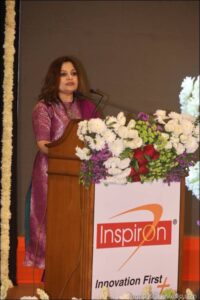
Radhika Bhagwati, Director of InspirOn Engineering Pvt. Ltd.
While flyers defined InspirOn’s early decades, leadership recognised the importance of diversification within textiles. In the mid-1990s, the company entered Stenter manufacturing, acquiring technology from the renowned German company Monforts.
The first InspirOn-manufactured Stenter was supplied to Alok Textile, marking a significant expansion of capabilities. The initial commissioning phase, however, exposed gaps in assembly coordination and logistics, with nearly 65 parts missing during despatch.
Rather than treating this as a setback, InspirOn used it as a turning point.
Systems, Scale and Zero-Defect Execution
Learning from early challenges, InspirOn implemented a robust Enterprise Resource Planning (ERP) system, transforming how parts were manufactured, assembled, packed and despatched. The results were profound.
Today, more than 300 Stenter machines (inclusive of pending orders) have been supplied. In a recent milestone, 10 full containers carrying nearly 58,000 Stenter parts were shipped to a US-based customer with zero shortages, highlighting the maturity of InspirOn’s systems and execution excellence.
After Monforts’ acquisition by Monfongs in 2011, InspirOn invested in developing its own Stenter technology, achieving nearly 15% improvement in heating efficiency in its Montex 15000 model. The innovation earned two patents, reinforcing the company’s position as a serious technology developer rather than a follower.
People: The Invisible Engine of Excellence
Behind InspirOn’s machines lies an equally robust human system. From its earliest days, the company fostered a culture of ownership and dignity, ensuring timely wages, transparent policies and inclusive practices.
Employees, from shopfloor to management, shared common dining spaces, symbolising equality and mutual respect. An employee-run Credit Cooperative Society eliminated dependence on moneylenders and strengthened financial security within the workforce.
As a result, employee loyalty became a defining strength. Eighty-one employees have completed over 25 years of service and productivity per worker has nearly doubled through Kaizen-based continuous improvement initiatives.
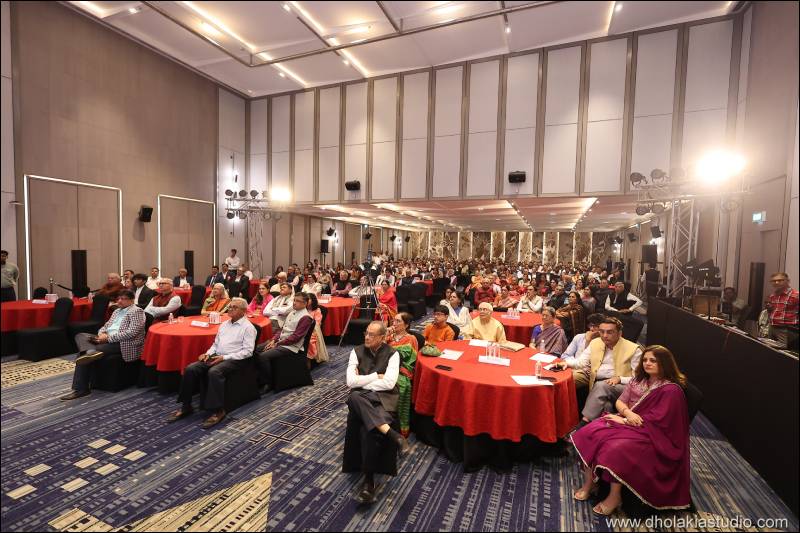
A Golden Jubilee Rooted in Relationships
Speaking at the Golden Jubilee celebration, Managing Director Amol Bhagwati emphasised that the 50-year milestone belongs not just to the company, but to its customers, suppliers and partners who walked alongside InspirOn through decades of change.
The message was clear, the next phase of growth will be driven by innovation, sustainability and collaboration, with the same ethical foundation that has sustained the company so far.
Director Radhika Bhagwati reinforced this sentiment, describing the organisation as a “social order” built on culture, values and empathy, for customers, suppliers and society at large.
Looking Ahead: Engineering the Next 50 Years
As InspirOn Engineering steps into its next chapter, its roadmap is firmly anchored in textiles. With strong foundations in flyer and stenter technology, enhanced R&D capabilities and a deep understanding of global customer expectations, the company is well-positioned to support the evolving needs of spinning and processing mills worldwide.
The Golden Jubilee celebration was not a culmination, it was a reaffirmation. A reaffirmation that world-class textile machinery can be engineered in India, sustained over decades, and respected across continents.
In a rapidly changing textile landscape, InspirOn stands as proof that legacy, when combined with innovation, becomes a powerful force for the future.