Trützschler Launches Fiber Recovery System To Cut Blow Room Cotton Waste
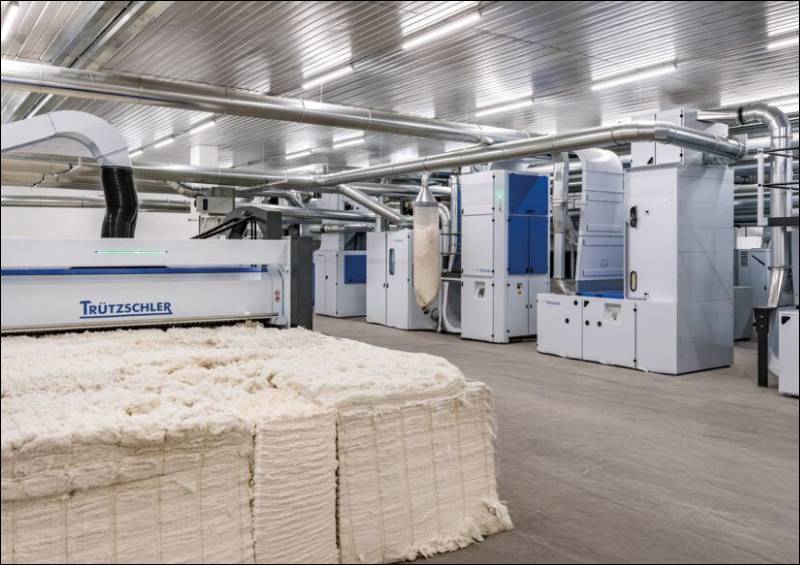
Textile machinery manufacturer Trützschler has introduced an online fiber recovery system designed to reduce cotton waste generated during the blow room and carding stages of spinning. The company says the solution allows mills to recover usable fibers that are typically discarded, resulting in substantial raw material savings and improved sustainability performance.
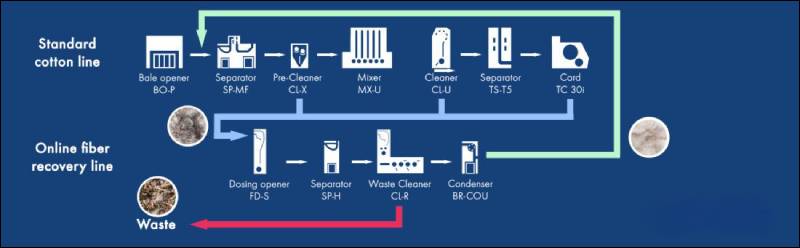
In conventional cotton spinning, blow room waste can account for 3 to 7 percent of raw material loss, depending on fiber preparation and cleaning parameters. For mills processing thousands of tons annually, this leads to significant financial loss. Trützschler’s new system aims to address this gap by collecting waste directly at key points in the line, cleaning it, and feeding recovered fibers back into production.
According to company data, an average spinning mill operating a single blow room line can save up to 160 tons of raw cotton per year, equivalent to €288,000 in raw material savings. The calculations are based on a production rate of 1,000 kg/h, 90 percent efficiency, annual output of 8,000 tons, and a cotton price of €1.80/kg.

The Trützschler Online Fiber Recovery Line can be retrofitted into existing installations and requires “only a small investment,” the company said, adding that mills typically achieve a quick return due to immediate reductions in raw material consumption. The system is positioned as a complement to Trützschler’s existing blow room technology, which is engineered to minimize waste during opening and cleaning.
Industry observers note that fiber recovery is gaining traction as mills face rising cotton costs and increasing sustainability scrutiny from global brands. By reducing material loss at source, spinning mills can lower input requirements and improve resource efficiency without compromising yarn quality.
Trützschler said field results show that recovered material maintains fiber integrity, allowing it to be reintegrated into standard production streams while removing unwanted impurities.
With raw material accounting for a major share of spinning costs, solutions that convert waste into usable fiber are expected to attract strong interest across major cotton-spinning regions. The company emphasized that the sustainability advantages lower waste, reduced environmental impact and better material utilization, add to the economic case for adoption.