Ghana, UNIDO Plan To Establish Circular Economy & Textile Testing Centre
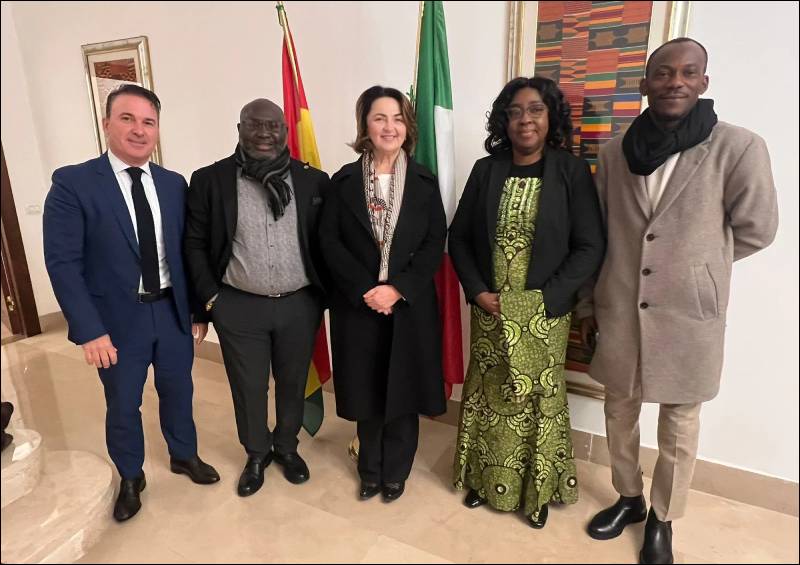
Ghana, in partnership with the United Nations Industrial Development Organization (UNIDO), is moving ahead with plans to establish a Circular Economy Innovation and Textile Testing Centre aimed at tackling textile waste while supporting industrial development.
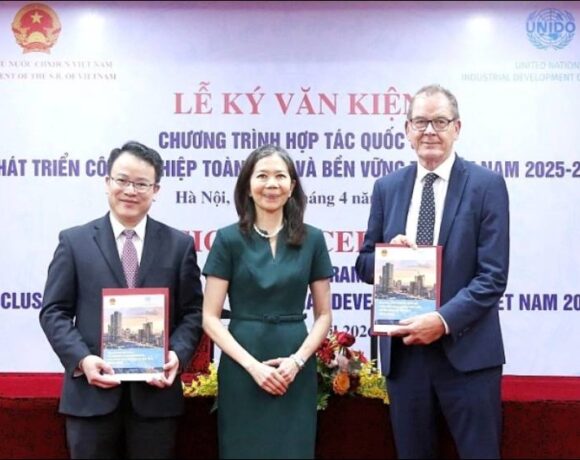
The proposed facility forms a key component of an Italy-funded UNIDO project being implemented with Ghana’s Ministry of Trade, Agribusiness and Industry. The initiative, titled Promoting Business and Technology Development in Ghana’s Circular Textile Sector, is being delivered by UNIDO’s Italian Investment and Technology Promotion Office (ITPO Italy) with funding from the Italian Agency for Development Cooperation (AICS). Progress on the project was recently reviewed during a UNIDO courtesy visit to Ghana’s Embassy in Rome.
According to UNIDO, the centre will provide laboratory testing, quality assurance and technical services to support textile sorting and classification, identify hazardous components and enable second-life industrial applications. Recovered materials could be used in products such as furniture, insulation panels, automotive components, paper and agricultural inputs, helping shift Ghana’s textile sector from waste disposal to value-added recycling.

The initiative comes as Ghana faces mounting environmental challenges linked to secondhand clothing imports. An estimated 15 million garments enter the country each week, largely through Accra’s Kantamanto market, with around 40% ultimately ending up as waste, contributing to drainage blockages, polluted lagoons and coastal marine litter.
A mapping and validation exercise is currently underway to select a host institution for the centre, with Accra and Kumasi under consideration. The Kwame Nkrumah University of Science and Technology (KNUST) has emerged as a leading candidate due to its technical infrastructure and expertise in textile research.
The project complements other international efforts to strengthen Ghana’s circular economy. In 2025, the country launched the Ghana Circular Economy Centre, a five-year, CAD 7.5 million programme implemented by UNIDO in partnership with the Ministry of Environment, Science, Technology and Innovation, and funded by Global Affairs Canada. The programme focuses on policy development, enterprise support and skills training across waste streams including plastics and organics.
Separately, the Borla Taxi and Tricycle Association (BTTA), representing informal waste collectors, recently inaugurated new national executives, highlighting the growing recognition of grassroots actors in waste management. Officials at the ceremony in Accra emphasised the association’s role in urban sanitation, while BTTA leadership pledged to strengthen transparency, inclusivity and partnerships in support of improved waste management.
Together, these initiatives reflect Ghana’s broader push to build a more integrated circular economy, combining innovation, policy support and community-level participation.