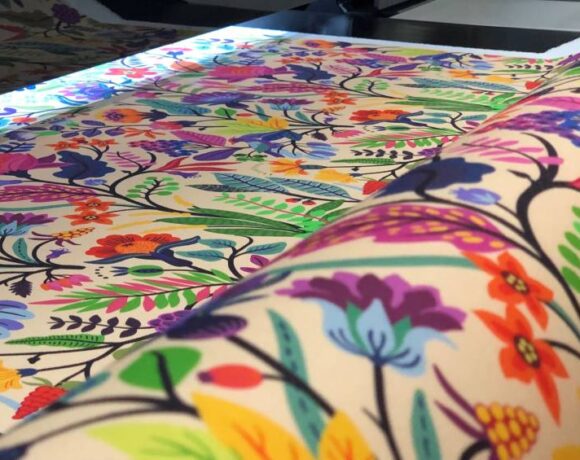
Garment Printing: Sustainability With Improved Durability

The convergence of durability, feel and sustainability has fundamentally reshaped the technical requirements for garment printing, which is defined by its washing fastness standards achieved, writes V R Sai Ganesh.
Globally every brand and merchandisers are now committed to achieve sustainability; specifically addressing materials consumption along with its impact on environment and biodiversity.
Bulk of the garment screen printing are done on knitted fabrics, which are subjected to intensive washing cycles, because of use by babies and kids. One of the challenges is fabric is stretchable and the RSL compliance is pushing the technology to water-based inks. Durability means retaining the look, the feel and the stretch.

The Technique
Garment screen printing is one of the most widely used and versatile technique used to print cotton, polyester and its blends. Many specialty fibres are now being incorporated like Lycra, Tencel, viscose, nylon, etc. to alter the feel and customer comforts. The industry now needs specially formulated inks which are transferred onto fabric through a fine mesh screen using a stencil that defines the design. Each colour in the artwork is applied through a separate screen, allowing for precise control over shade, opacity and texture. The technique blends in with creating specialty effects like puff, glitter and foils, making it the preferred choice for fashion brands, promotional wear, uniforms and large-volume garment production. Over the last two decades, garment printing has shifted from plastisols to water-based inks and have evolved from being a purely decorative process to becoming a highly durable garment which speaks of quality, comfort and brand reputation. The global apparel brands have significantly upgraded their expectations—not only on how a print looks when new, but on how it performs throughout the life of the garment.
Brands today expect printed garments to withstand repeated washing, crock fastness, while retaining colour brilliance, softness and stretch. At the same time, these performance expectations are expected to be met under increasingly strict sustainability and restricted chemical list compliance frameworks.
EU, China and many countries are leading strong effort to address sustainability by regulating the RSL compliance and extending the performance of the garment specifically to address durability.
Digital Product Passport: Durability is part of the information that is recommended to form a component of the digital product passport proposed by the EU. The EU Digital Product Passport (DPP) initiative is one of the key pieces of the EU Green Deal and the Circular Economy Action Plan as the world aims to meet ambitious targets for carbon neutrality by 2050.
Refashion’s 2025 eco-fee rates were adjusted upward or downward based on garment life management, in which garment print durability plays an important role in visual appearance.
Textile durability standards: The European Union has published eco-design criteria for textiles, setting standards for clothing and other fabric applications, and concluded that inferior quality will reduce the lifespan of the product and that consumers should be warned about product durability limitations.
Durable textiles (fashion and household linen) are tested for more durable, longer lasting specifications and are given testing marks. e.g Eurofins Sustainability Services provides “Durable SILVER” for 40 washes and “Durable GOLD” for 50 washes.
This convergence of durability, feel, and sustainability has fundamentally reshaped the technical requirements for garment printing, which is defined by its washing fastness standards achieved.
The Key Drivers of Sustainability
- Changing consumer behaviour
Modern consumers wash garments more frequently and often under harsher conditions—higher mechanical action, stronger detergents and tumble drying. Athleisure and casualwear, which dominate today’s apparel market, are worn and washed far more intensively than traditional fashion garments.
As a result, brands now evaluate:
- How prints behave after multiple wash cycles
- Whether fading, cracking, peeling occurs and maintain crock fastness
- Whether the print continues to feel soft and stretchable
Initial appearance, feel and stretch alone are no longer sufficient.
- Rising expectations for comfort and aesthetics
The global shift toward comfort-driven fashion has made hand feel a decisive quality parameter. Heavy, rubbery or plasticky prints—once accepted for their opacity—are increasingly rejected by brands and consumers alike.
Current expectations include:
- Very soft, smooth handle
- Minimal film build
- Excellent stretch and recovery
As technology has evolved, the inks exhibited residual tack, which leads to increased packaging costs by using release paper and fibres from unprinted surface sticking to the printed portions, when stacked in stores. Currently the best companies have addressed the residual tack issue and eliminated the above issues.
- Sustainability and chemical compliance pressure
Global brands are under constant pressure from regulators, NGOs and consumers to reduce environmental impact. This has translated into:
- Stricter Restricted Substances Lists (RSLs)
- Alignment with ZDHC, OEKO-TEX, and similar frameworks
- Reduced water, energy and effluent footprints
- Strong preference for water-based, PVC-free systems
Printing chemistry must now deliver performance and sustainability together, not as separate objectives.
What Brands Mean by “Durable Prints”
Although individual brand manuals differ, most global brands converge on a common technical intent when defining durable prints.
Wash durability
Brands assess not only colour loss but also:
- Cracking or peeling of the print layer
- Change in surface appearance
- Loss of softness after laundering
- Staining of adjacent fabrics
Rubbing (crocking) resistance
Both dry and wet rubbing fastness are critical, particularly for dark shades and high-contrast prints. Poor crocking remains one of the most frequent causes of customer complaints and garment returns.
Stretch performance
For knitted fabrics, elastane blends and sportswear, brands require:
- No cracking under stretch
- No whitening at stress points
- Retention of elasticity after washing
Retention of hand feel
A print that passes laboratory fastness tests but becomes stiff or harsh after washing is no longer acceptable. Brands now explicitly evaluate post-wash feel, not just initial softness.
Standard Washing and Testing Practices Used by Brands
To verify these requirements, brands rely on internationally recognised testing protocols as well as their own customised wash protocol. While pass criteria vary, the test methods themselves are largely standardised.
Domestic washing simulation
ISO 6330 is widely referenced to simulate domestic washing and drying conditions. It provides a controlled framework for evaluating appearance retention and performance after laundering.
Wash fastness
ISO 105-C06 and AATCC 61 are commonly used to assess colour fastness to laundering. AATCC 61, in particular, is used as an accelerated method to simulate multiple home washes.
Rubbing fastness
ISO 105-X12 or AATCC 8 are standard methods for assessing dry and wet crocking. Wet rubbing requirements are often more stringent, reflecting real-world moisture and perspiration exposure.
For garment printers, alignment with the exact method specified by the buyer is critical. Passing one test does not guarantee acceptance if a different protocol is required.
Limitations of Conventional Printing Technologies
PVC plastisol inks
Plastisol systems have historically provided good opacity and colour strength, but they present several challenges:
- Heavy, rubbery feel
- Limited breathability
- Environmental and compliance concerns
- Growing brand resistance due to PVC content
Achieving sustainability and increasing speed of production have become decisive factors for the choice of inks and auxiliaries used.
Zydex: The Global Leader for highest durability with 100% RSL Compliance
Zydex Industries has approached garment printing from a system-engineering perspective, rather than focusing on inks alone. The objective is clear: achieve durable performance with premium feel, while reducing environmental impact.
Water-Based, RSL-Compliant Printing Solutions
Zydex has been at the forefront of replacing PVC-based plastisol inks with water-based printing systems. The company’s facilities are fully integrated from research to design new grades of polymers, grind dispersions and formulate the best inks to deliver:
- Highest opacity per stroke with softest handle
- Excellent maintainable elasticity for stretchable fabrics
- Best wash and rub fastness
- Printability without chocking on manual and automatic printing machines
These systems align with modern brand expectations for comfort, aesthetics and chemical compliance.
Zydex K2 & K3 inks offered as garment printing solutions comply with leading buyers’ health and safety standards, including RSL, MRSL, and applicable global regulatory requirements. Zydex Whites & Clears package enhances print durability and supports compliance with stringent home-laundering performance expectations specified by international buyers.
| PRODUCT | MACHINE GRADES |
| K 2000 Plus | High performance |
| K 3000 Plus | For Fine lines and small motifs |
| K 7000 | For extremely soft prints and high opacity |
| K3 Clear Plus | Clear |
| M2 Clear | Clear for hot seasons |
| M3 Clear | Clear for hot seasons, fine lines, very small motiffs, and 12-16 colour designs |
Zydex has a technical support staff to guide printers.
Current buyer-wise requirements*
| Buyer | Home Laundry cycles |
| Primark | 45 |
| C&A | 25 |
| H&M | 20 |
| Pharlap | 20 |
| Aditya Birla Life Style | 20 |
| Gap | 20 |
| TESCO | 20 |
| Jockey | 20 |
| LANDS END | 20 |
| celio | 20 |
| Cooperative U | 20 |
| LA HALLE | 20 |
| Auchan | 20 |
| Zudio | 20 |
(* Subject to change)
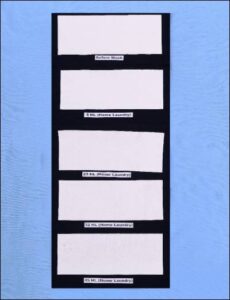
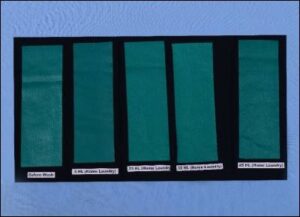 Zydex garment printing solutions meet the durable prints standards, sustaining up to 45 wash cycles.
The Zydex range also addresses common shop-floor issues that affect bulk consistency:
- Levelling and brilliance agents for uniform colour
- Anti-choking additives for smoother screen operation
- Wetting agents for hydrophobic fabrics
- Anti-migration auxiliaries for polyester blends
These solutions help printers deliver repeatable quality, a critical requirement for global brand supply chains.
Compliance, Collaboration and Brand Confidence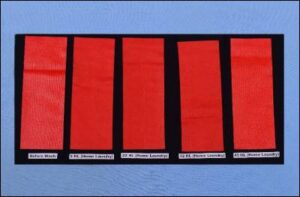
Zydex printing solutions are aligned with major international compliance frameworks and supported by:
- On-site and off-shore technical service
- Hands-on training
- Customised solutions based on fabric, design and buyer requirements
This collaborative approach reduces development time, minimises rejection risk and builds long-term confidence within brand supply chains.
The future of garment printing lies at the intersection of durability, comfort, and sustainability. Global brands no longer accept compromises between these parameters—they expect all three, validated by recognised test standards and delivered consistently at scale.
By combining polymer science, process optimisation and sustainability-driven design, Zydex K2 and K3 series demonstrates how modern printing systems can meet evolving brand expectations—delivering prints that look premium, feel soft and remain durable throughout the life of the garment.