
From Fake Goods To Forced Labour: The Hidden Human Cost Of Illicit Trade
Strengthening labour governance, improving transparency in supply chains and enhancing international cooperation will be critical to breaking the cycle in which fake goods and human suffering are produced side-by-side: OECD–EUIPO study
Illicit trade in counterfeit goods is often discussed in terms of lost revenues, damaged brands and unfair competition. Yet a growing body of research shows that the problem runs far deeper.
A recent OECD–EUIPO study reveals a strong and systemic link between counterfeit production and labour exploitation, including forced labour, hazardous child labour and unsafe working conditions. The findings highlight that illicit trade is not merely a commercial or intellectual property challenge, but also a serious social and human rights concern.

Globally, counterfeit and pirated goods account for a significant share of trade, estimated at up to US$ 467 billion annually, or about 2.3% of world trade. This underground economy thrives by operating outside regulatory frameworks, enabling producers to cut costs through tax evasion, substandard materials and critically, exploitative labour practices.
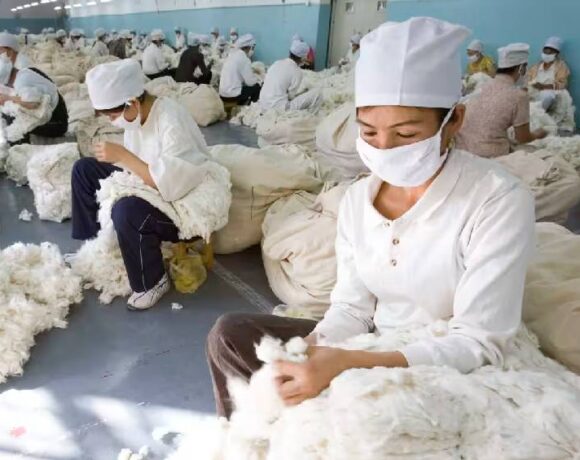
Workers in such supply chains are often drawn from vulnerable populations, including migrants, informal workers and children, who have limited bargaining power and little access to legal protection.
The study finds a clear pattern: countries most frequently identified as sources of counterfeit goods often show higher levels of forced labour, informality and workplace risk. Weak labour governance, limited enforcement capacity and inadequate occupational safety systems create conditions in which both counterfeiting and worker exploitation can flourish. In these environments, businesses operating illegally face minimal oversight, allowing them to evade labour standards and suppress wages to remain competitive against legitimate manufacturers.
Labour exploitation is not incidental to counterfeit production — it is frequently central to the business model. By paying extremely low wages, imposing excessive working hours or coercing workers, illicit producers reduce production costs and increase margins. Econometric analysis in the report suggests that even small increases in forced labour prevalence are associated with measurable growth in counterfeit trade, highlighting the economic incentives that link the two phenomena. Lower minimum wage protections and high levels of informal employment further reinforce this dynamic.
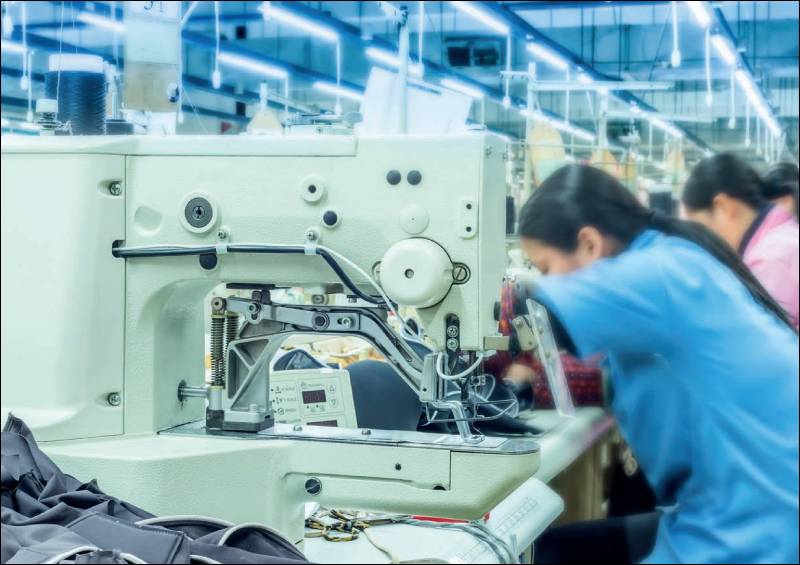
The problem extends across the entire illicit supply chain. Investigations in multiple regions have uncovered clandestine workshops where undocumented migrants work in hazardous conditions, as well as cases of children engaged in packaging or assembling counterfeit products. In some instances, trafficking victims have been forced to sell counterfeit goods in street markets to repay debts imposed by criminal networks. These overlaps illustrate how counterfeiting, human trafficking and other forms of organised crime increasingly intersect, sharing logistics networks, distribution channels and financial structures.
Structural factors play a decisive role in enabling such practices. High levels of informality, weak rule of law, limited labour inspections and low levels of unionisation reduce the likelihood of detection and enforcement. At the same time, poor governance and corruption can allow illicit operators to manipulate documentation or bypass controls. The result is a parallel production system in which exploitative practices become routine and accountability is rare.
Governments are beginning to recognise the need for stronger and more coordinated responses. New regulatory initiatives, including measures to restrict imports of goods produced with forced labour, aim to curb demand for products linked to exploitation. However, the report emphasizes that trade restrictions alone are not sufficient. Effective action requires cooperation among customs authorities, labour inspectorates, law enforcement agencies and financial regulators to identify and dismantle the networks that sustain illicit trade.
For businesses, the findings highlight the importance of robust supply chain due diligence. As global value chains grow more complex, companies face increasing scrutiny from regulators, investors and consumers to ensure that their sourcing practices do not indirectly support forced labour or counterfeit production. International frameworks, including OECD due diligence guidelines, provide tools for risk assessment and mitigation, but implementation particularly in lower-tier suppliers remains uneven.
Beyond its human-rights implications, labour exploitation also distorts markets. Legitimate manufacturers that comply with labour and environmental standards face unfair competition from illicit producers operating at a fraction of the cost. This not only erodes industry profitability but also discourages investment in responsible production and innovation. Addressing labour abuse, therefore, is essential not only for protecting workers but also for maintaining a level playing field in global trade.
The central message of the OECD–EUIPO study is clear: counterfeit trade and labour exploitation are deeply interconnected challenges. Efforts to combat illicit trade must move beyond seizures and intellectual property enforcement to address the underlying social and economic conditions that enable exploitation. Strengthening labour governance, improving transparency in supply chains and enhancing international cooperation will be critical to breaking the cycle in which fake goods and human suffering are produced side-by-side.