NYCU Develops Self-Healing Functional Fabrics To Tackle Fast Fashion Waste
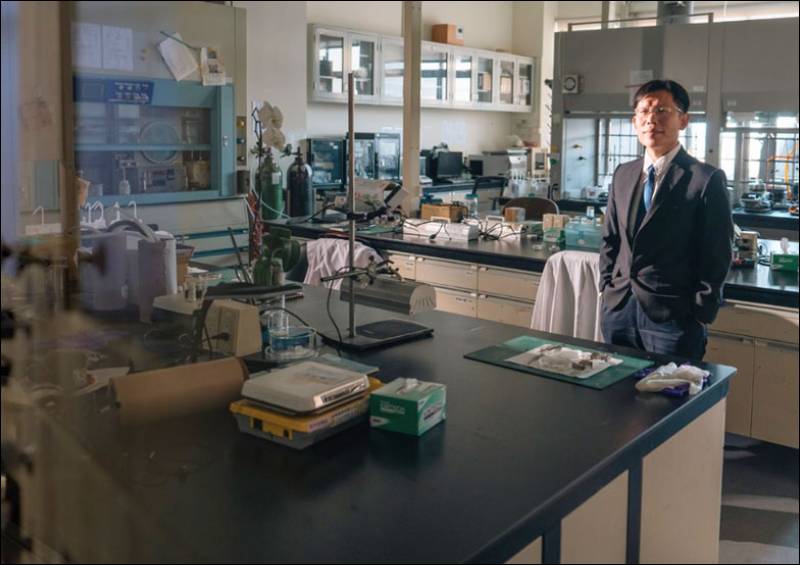
As fast fashion continues to accelerate production cycles and fuel textile waste, researchers at National Yang Ming Chiao Tung University (NYCU) are developing advanced materials that could significantly extend garment lifespans and reduce environmental impact. Led by Prof. Jiun-Tai Chen, Dean of the College of Science, NYCU’s Optoelectronic Polymer Research Group has created self-healing functional fabrics designed to repair damage and curb the growing volume of discarded clothing.
Fast fashion’s rapid turnover has reshaped the global apparel industry but has also intensified concerns around pollution, water consumption and waste disposal. In response, Prof. Chen’s team has leveraged its expertise in polymer materials to develop fabrics capable of repairing tears and damage through controlled activation, allowing garments to be reused rather than discarded. The innovation has secured multiple invention patents and earned recognition through the Future Tech Award and National Innovation Award.
While production costs remain higher than conventional textiles, Prof. Chen notes that self-healing fabrics are particularly suited for high-end functional applications such as ski wear, mountaineering apparel, wetsuits, protective workwear, and camping equipment. “If a garment can be repaired instead of replaced due to a small tear, that is sustainability in practice,” he said.

The technology relies on blending polymers with varying crystallinity and ionic liquids to form ionic gels, which are processed into micro-scale fibres or applied as coatings on conventional fabrics. When damaged fibres are aligned and exposed to specific conditions—such as heat, pressure or light—molecular forces including hydrogen bonding and electrostatic interactions are reactivated, enabling the material to heal itself.
Developing self-healing fabrics suitable for everyday wear has presented significant challenges. Achieving waterproof yet breathable structures without relying on fluorine-based materials, ensuring comfort and skin-friendliness, and maintaining performance after repeated washing cycles are among the key hurdles. Prof. Chen emphasized that healing must only activate under controlled conditions to avoid unintended fabric deformation during normal use.
Progress has been steady. Healing time has been reduced from several hours to around one hour, with restored strength reaching approximately 70% of the original fabric. The materials can now undergo more than ten healing cycles, and additional functionalities are being integrated. By introducing weak conductivity, the fabrics can dissipate static electricity for industrial safety applications, while antimicrobial properties can be added using nano-materials to prevent bacterial growth.
Beyond repair, the team is pushing into smart textile applications under its “3S1A” research framework—Synthesis, Sustainable, Smart, and Application. Self-healing fabrics are being combined with sensing technologies to create responsive garments capable of detecting environmental changes. Potential uses include firefighting suits that change colour in the presence of toxic gases, medical dressings that signal infection through pH-responsive colour shifts, and clothing that monitors sweat and physiological data for health applications.
Looking further ahead, Prof. Chen envisions self-healing fabrics evolving into electronic skin by incorporating conductive and piezoelectric properties. Such materials could enable robots to sense touch, pressure and temperature, improving human–machine interaction, and may one day help patients recover lost tactile sensation.
To accelerate commercialisation, NYCU is actively collaborating with industry and research partners. The team is working with Taiwan’s Industrial Technology Research Institute on recycled PET-based functional fibres, with the Taiwan Textile Research Institute on testing and certification, and with TSMC on nanoscale material design. International collaborations span Germany, the United States, and Japan, forming a growing transnational R&D network.
Prof. Chen believes successful industry–academia collaboration depends on introducing eco-friendly, cost-effective materials that integrate seamlessly into existing textile processes. With rising consumer awareness of sustainability and mounting regulatory pressure such as carbon taxation, he sees strong potential for self-healing functional fabrics to create new high-value opportunities for Taiwan’s textile industry.
“Adding functionality does increase cost,” Chen said, “but more consumers now understand that sustainability itself has value. Self-healing fabrics represent that future.”