
India, GCC Launch FTA Negotiations To Deepen US$ 178 Billion Trade Partnership
India and the Gulf Cooperation Council (GCC) have formally launched negotiations for a comprehensive Free Trade Agreement (FTA), marking a significant step toward strengthening one of India’s most strategic economic partnerships.
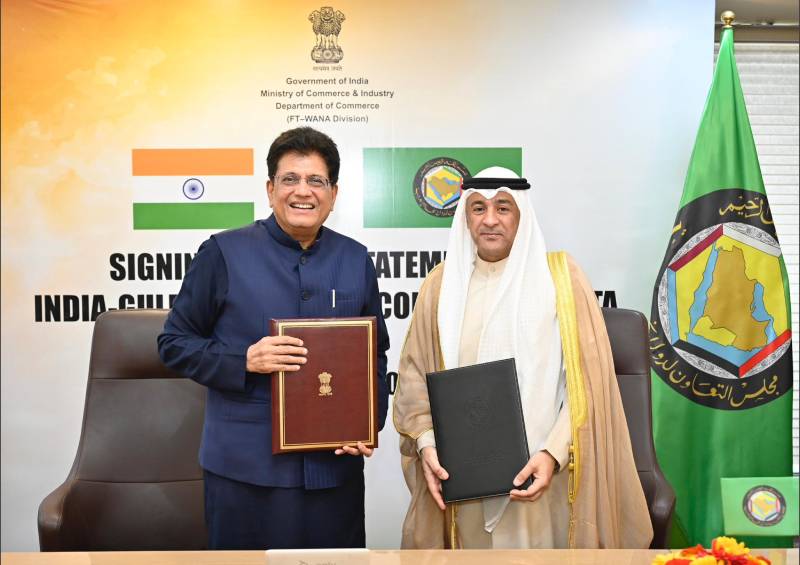
The joint statement on the India–GCC FTA was signed in New Delhi on February 24, 2026, by Piyush Goyal, Union Minister of Commerce and Industry and Jasem Mohamed Albudaiwi, Secretary General of the GCC, in the presence of senior delegations from both sides. The move follows the signing of the Terms of Reference earlier this month and formally sets the stage for detailed negotiations.
Calling the development a significant milestone, Goyal noted that the proposed agreement builds on deep-rooted historical, cultural and commercial ties between India and the Gulf region. At a time of global economic uncertainty and shifting supply chains, he emphasized, a robust and mutually beneficial trade pact can harness complementarities and provide long-term stability to businesses on both sides.

Albudaiwi echoed similar sentiments, stating that the FTA would inject predictability and greater certainty into bilateral trade and investment flows, further reinforcing the region’s economic engagement with India.
The stakes are substantial. The GCC is India’s largest trading partner bloc, with bilateral trade touching US$ 178.56 billion in FY2024–25. Of this, Indian exports stood at US$ 56.87 billion, while imports largely energy-driven reached US$ 121.68 billion. The bloc accounts for over 15 per cent of India’s total global trade and trade between the two sides has grown at an average annual rate of 15.3 per cent over the past five years.
India’s key exports to the GCC include engineering goods, rice, textiles, machinery and gems and jewellery, sectors that stand to gain significantly from improved market access and tariff rationalisation. On the import side, crude oil, LNG, petrochemicals and gold dominate trade flows, underlining the region’s critical role in India’s energy and commodity security.
Beyond trade, the GCC comprising a combined GDP of approx. US$ 2.3 trillion and a population of over 61 million represents a high-income consumer market with strong infrastructure spending and industrial diversification plans. The region is also an important investor in India, with cumulative foreign direct investment exceeding US$ 31 billion as of September 2025.
Equally important is the human dimension. Nearly 10 million Indians live and work across GCC nations, forming a vital economic and cultural bridge that strengthens business linkages and services trade.
For the Indian industry, particularly sectors such as textiles, engineering, food processing and chemicals, the proposed FTA presents a major opportunity to expand footprint in a geographically proximate and high-growth market. For GCC economies, closer integration with India offers access to a vast consumer base, manufacturing ecosystem and skilled workforce.
Once concluded, the India–GCC FTA is expected to act as a force multiplier for bilateral trade, diversify export baskets and enhance supply chain resilience. For trade stakeholders, the launch of negotiations signals a new phase of structured economic engagement between two regions whose commercial ties are both historic and future-focused.