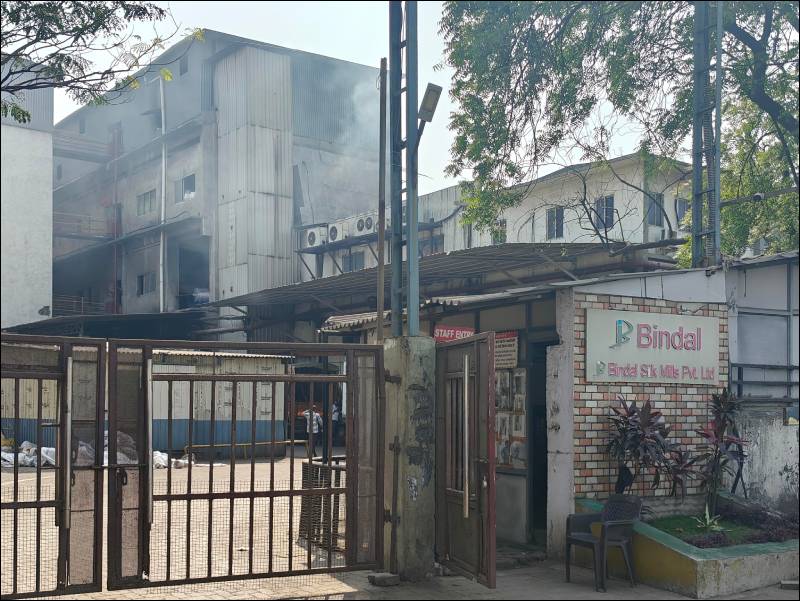
Four Decades Of Precision: How Bindal Silk Mills Built Its Fabric Processing Expertise
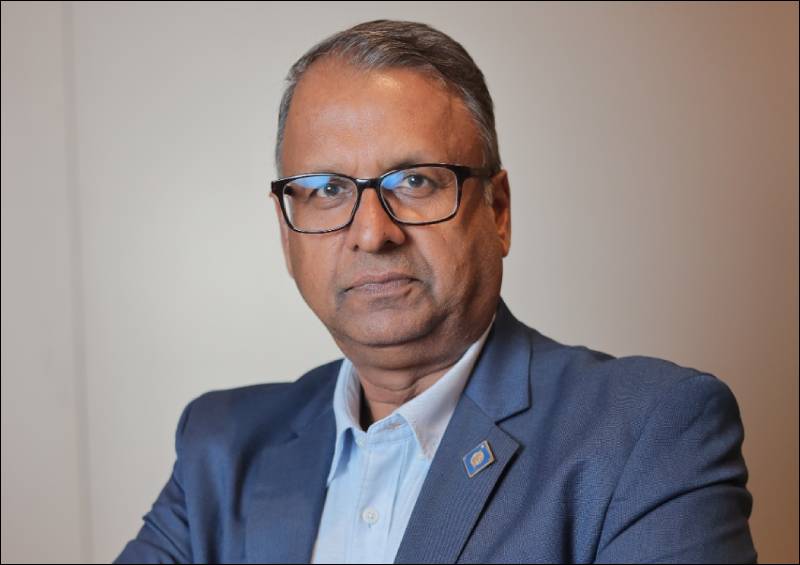
As India’s textile processing sector continues to evolve, Surat-based Bindal Silk Mills Pvt. Ltd., has built a reputation for precision-driven fabric processing and technical expertise. Under the leadership of Chairman and Managing Director Ravindra Arya, the company has steadily expanded its capabilities over the decades by focusing on specialised processing segments, strong compliance standards and long-term partnerships across the textile value chain.
Founded in the early 1980s, Bindal Silk Mills began its journey with a strong emphasis on precision dyeing and printing, an area that required technical expertise and process discipline at a time when advanced processing capabilities in Surat were still developing.
“Our major categories are polyester and rayon fabrics,” says Arya. “We mainly process low to medium weight fabrics up to about 250 GSM. These are used largely in women’s fashion as well as home furnishing applications such as curtains and bedsheets.”

Over the years, the company has built a diversified product portfolio supplying fabrics used for skirts, blouses, kurtis and sarees, along with home furnishing materials for domestic and international markets.
A defining feature of Bindal Silk Mills’ growth has been its strategy of focusing on technically challenging areas of textile processing rather than entering highly commoditised segments. “From the beginning we focused on difficult fields and something different,” Arya explains. “Precision dyeing and precision printing became our strength.”
The company was among the pioneers in Surat to introduce polyester knit dyeing and printing, a significant milestone at a time when such processing capabilities were still limited in the region. This technical orientation helped Bindal establish itself as a reliable processing partner for garment exporters supplying international brands.
Today, Bindal Silk Mills processes around 3 lakh metres of fabric per day, with printing forming the backbone of its operations. Nearly 2.5 lakh metres per day are dedicated to printing, while the remaining capacity focuses on dyeing.
The company’s facilities include rotary printing machines, flatbed printing systems, jet dyeing machines and modern stenter technology. These operations are supported by digital process control systems and structured operational protocols designed to ensure consistency and quality. Bindal Silk Mills has invested extensively in technology and operational management systems to improve process efficiency and product quality. “Our machines are PLC controlled, we operate with ERP systems and every process follows standard operating procedures (SOPs),” Arya notes.
Each production stage is governed by detailed SOPs and monitored through regular system audits. “We conduct monthly audits of all our systems to ensure that every process functions exactly as designed,” he adds.
The company has also modernised its finishing infrastructure by upgrading to new-generation stenters with zero-exhaust technology, improving both efficiency and environmental performance.
While fashion and home furnishings remain core segments, Bindal Silk Mills has also developed specialised capabilities in niche areas such as flag manufacturing. The company produces large volumes of printed flags, including national flags of different countries as well as sports and event flags. “Flags require very precise dimensional control,” Arya explains. “Because of our expertise in precision printing, we are able to manage that requirement effectively.” This segment has emerged as a growing category in recent years, particularly during major sporting events and public celebrations.
Bindal Silk Mills has historically worked closely with global supply chains through garment exporters supplying major international retailers. In many cases, global brands nominate specific processing mills to maintain quality and compliance standards across their sourcing networks.
“Brands such as Walmart, Target and IKEA nominate approved processing mills,” Arya explains. “Garment exporters sourcing for these brands are often required to process fabrics through nominated mills like ours.”
However, the company has observed a gradual shift in market dynamics in recent years. “At one time nearly 80 to 90 per cent of our business was linked to exports,” Arya says. “Today that share has come down to around 30 to 40 per cent.”
While the company continues to meet global compliance standards, export orders in polyester fabrics have slowed due to increasing competition from countries such as Bangladesh, Vietnam and China. As a result, domestic demand has become a stronger driver of growth.
Despite global competition, Arya believes India’s expanding domestic retail market offers strong long-term opportunities for textile manufacturers. “India has a very large domestic market and it is growing rapidly,” he says.
The rise of organised retail brands and large-format fashion stores across the country is creating new demand for processed fabrics. Retail brands such as Westside, Pantaloons and other large domestic labels are increasingly driving consumption across fashion categories.
Sustainability is another area where Bindal Silk Mills is closely engaged, particularly through industry-level initiatives in the Surat textile cluster. Arya currently serves as Chairman of Palsana Enviro Protection Ltd., one of the largest common effluent treatment facilities in the country. The facility serves around 135 member units and treats nearly 150 million litres of effluent per day.
Across Surat, textile processing units are connected to common effluent treatment plants that manage wastewater through multi-stage treatment systems before safe disposal. The industry is also working on a major deep-sea pipeline project, designed to safely discharge treated effluents through scientifically approved marine outfall systems. In addition, a new initiative will enable processing units to use recycled municipal wastewater, significantly reducing groundwater dependence in the region.
While technology and sustainability initiatives continue to progress, Arya believes the industry faces several structural challenges. One of the most pressing issues today is labour availability.
“Labour availability and labour costs have become one of the biggest challenges for the industry,” he says. Seasonal migration of workers, particularly during festival and summer periods, often leads to sudden labour shortages, disrupting production schedules.
Energy transition is another emerging concern. Global brands are increasingly pushing suppliers to move away from coal-based energy sources, even though coal remains the most economical fuel option for many processing units.
Arya also emphasises the need for stronger collaboration across the textile value chain. “There should be stronger integration between yarn producers, weavers, processors and brands,” he says. “Without that coordination, maintaining quality standards becomes very difficult.”
To address technology and product development gaps in the sector, the Surat industry is working on establishing an Innovation Centre and Common Facility Centre (CFC). The centre will support product development and innovation, enabling companies to test and develop new fabrics before scaling production. “Processing is currently one of the weakest links in the textile value chain when it comes to innovation,” Arya notes. “This centre can help bridge that gap.”
Looking ahead, Bindal Silk Mills is preparing for its next phase of expansion.
The company plans to increase its processing capacity by about 1.5 times over the next two years, raising production from around 3 lakh metres per day to nearly 4.5 lakh metres per day. The expansion will focus primarily on increasing dyeing and finishing capacity, while further strengthening operational efficiency across existing facilities.
With its emphasis on precision processing, technology integration and responsible manufacturing practices, Bindal Silk Mills continues to demonstrate how specialised expertise and disciplined growth can create long-term value in India’s evolving textile processing industry.
(Article by Henry Dsouza, Associate Editor Of Textile Insights)