India’s Domestic Textile Demand Triples In 15 Years: Government Report
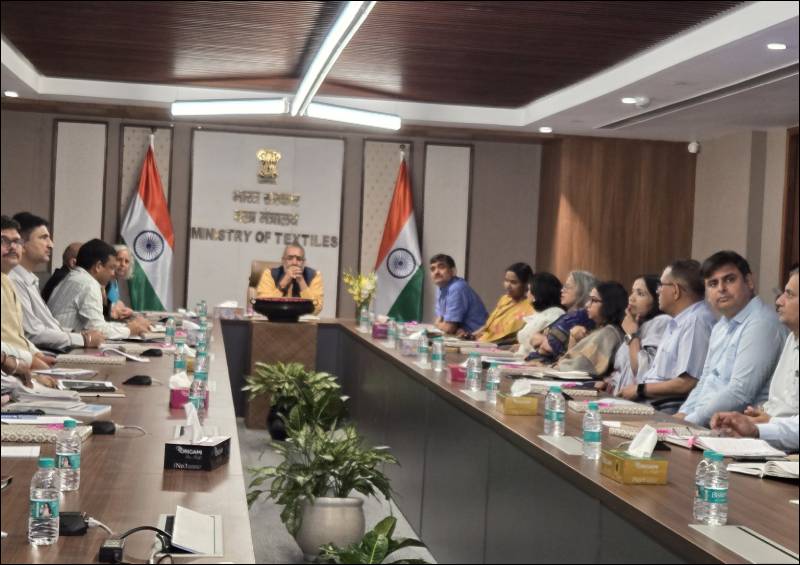
Giriraj Singh has released a comprehensive study titled Market for Textiles and Clothing: National Household Survey 2024, highlighting strong growth in India’s domestic textile demand and evolving consumer trends. The report prepared by the Textiles Committee under the Ministry of Textiles, was unveiled in the presence of Neelam Shami Rao and senior officials.
The study shows that India’s textile market has expanded significantly over the past 15 years, growing from Rs 4.89 lakh crore in 2010 to Rs 14.95 lakh crore in 2024, registering a compound annual growth rate (CAGR) of 8.3%. Household consumption remains the key driver, rising from Rs 4.18 lakh crore to Rs 8.77 lakh crore during the same period.
Per capita textile demand also saw a sharp increase, nearly tripling from Rs 2,119 in 2010 to Rs 6,066 in 2024, reflecting stronger consumption patterns. The domestic textile market currently stands at Rs 12.02 lakh crore, underlining its critical role in the sector’s growth.

In terms of fibre composition, man-made fibre (MMF) and blended products now dominate with a 52.2% share, followed by cotton at 41.2%, while silk and wool contribute 5.2% and 1.3%, respectively. MMF and blended textiles recorded the highest growth in absolute terms, with demand rising to Rs 4.47 lakh crore, while cotton demand reached Rs 3.53 lakh crore.
The report also highlights changing consumer preferences, with increasing demand for MMF-based products alongside continued reliance on cotton. Women account for a larger share of textile consumption at 55.5%, compared to 44.5% by men. Key products driving demand include shirts, sarees, trousers, salwar kameez, T-shirts and innerwear, while men’s jeans have emerged as the fastest-growing category. Among women, leggings have gained significant traction.
A notable trend is the rising adoption of sustainable textiles. Demand for eco-friendly and reused or retailored garments reached Rs 37,000 crore in 2024, with reused and retailored products accounting for nearly 58% of this segment, reflecting growing awareness around circularity.
The study also points to increased adoption of technical textiles in households, including products such as masks, sanitary napkins, wipes, diapers, and automotive fabrics. Rural households account for about 58% of technical textile consumption, compared to 42% in urban areas.
The report is expected to serve as a key reference for policymakers and industry stakeholders in shaping strategies and driving future growth in India’s domestic textile market.