Navi Mumbai Turns Textile Waste Into Livelihoods With Circular Recovery Model
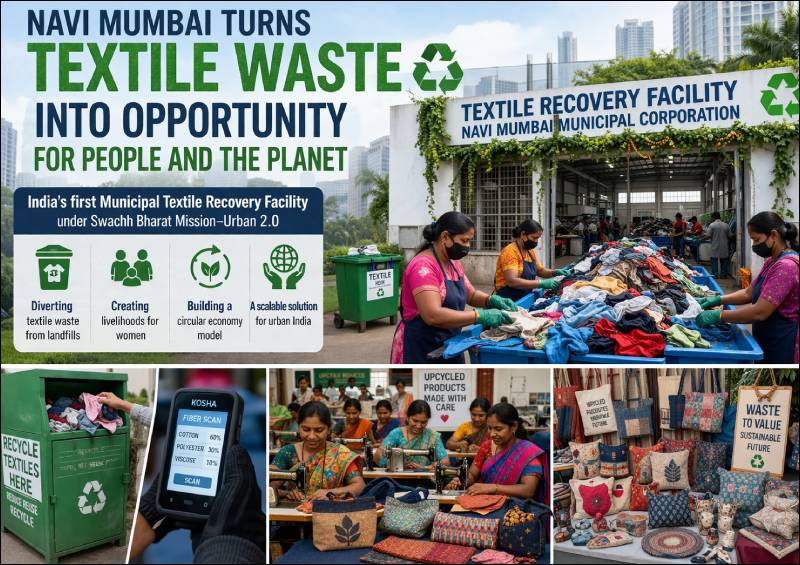
Navi Mumbai is emerging as a frontrunner in textile waste management, transforming discarded fabrics into economic and environmental opportunities through a pioneering Textile Recovery Facility (TRF) set up under the Swachh Bharat Mission–Urban 2.0.
With India generating nearly 7.8 million tonnes of post-consumer textile waste annually, the initiative by the Navi Mumbai Municipal Corporation addresses a critical gap in urban waste systems by creating a structured ecosystem for collection, sorting, recycling, and upcycling. Located in Belapur, the facility integrates decentralised collection through textile bins across housing societies, scientific sorting, and digital traceability to ensure efficient material recovery.
At the core of the model is a circular approach where collected textiles are categorised into reusable, recyclable, upcyclable, and reject streams using fibre-identification technology. Materials are then sanitised and transformed into value-added products such as bags, garments, accessories and home décor items.

The initiative has also become a significant livelihood generator, particularly for women. More than 300 women have been trained in textile sorting and upcycling, with over 150 currently earning between Rs 9,000 and Rs 15,000 per month through self-help group-led operations. The project has enabled homemakers to transition into skilled participants in the circular economy while promoting local enterprise.
So far, the TRF has processed around 30 metric tonnes of textile waste, with over 41,000 items handled and extensive outreach conducted across more than 1.1 lakh households. Public engagement through workshops and exhibitions has further strengthened awareness and market access for upcycled products.
Despite initial challenges such as low awareness and resistance to segregation, the project has gained traction through sustained community engagement and technological interventions. Building on its success, plans are underway to establish a larger, permanent facility in Koparkhairane.
The initiative aligns with broader national and global sustainability goals, including the Smart Cities Mission and Sustainable Development Goal 12, positioning textile waste as a valuable resource within India’s evolving circular economy framework.