
Adoption of Smart Technologies Likely To Mitigate Industry Headwinds
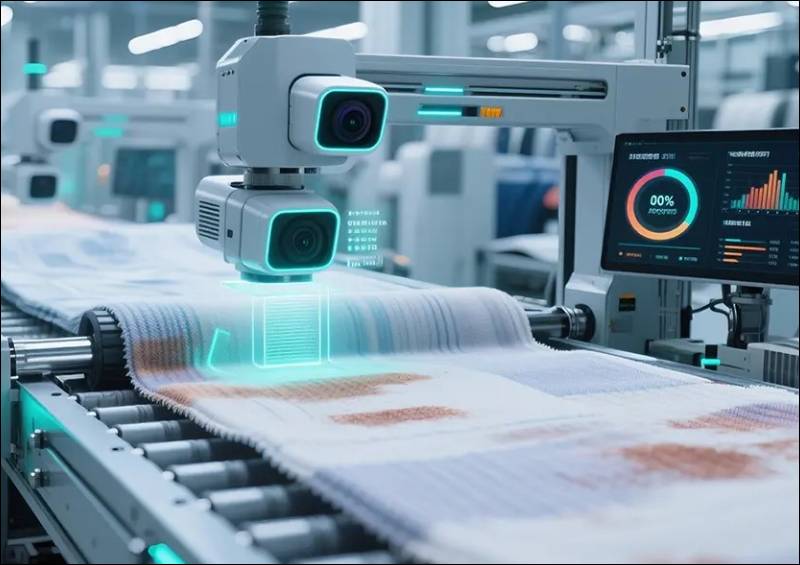
The domestic textile sector is presently passing through highly challenging conditions where untoward incidents like wars, geopolitical tensions, shipping blockades, sanctions and commodity shocks are disrupting raw material supplies, exports, freight routes and energy prices in a big way. While these external factors are beyond industry’s control, experts strongly believe that industry players can increasingly adopt artificial intelligence (AI) and smart technologies (digitalization) to reduce these risks and improve resilience.
“One of the biggest challenges during any conflict is raw material disruption. Indian textile companies depend on cotton, man-made fibres, dyes, chemicals, machinery parts and other imported inputs from multiple countries. AI-based supply chain systems can track global supplier risk, monitor commodity prices and detect early warning signals such as port congestion, sanctions or transport delays. This allows firms to diversify sourcing in advance, identify alternate suppliers and build contingency inventories before shortages occur,” says an industry expert.
“Moreover, AI and other digital technologies can also improve demand forecasting during uncertain times. Wars often create sudden drops or spikes in demand across export markets. For example, European consumers may reduce discretionary spending, while some regions may increase demand for essential textiles. Traditional forecasting methods struggle in volatile conditions. AI models can analyze live sales data, macroeconomic signals, retailer orders, weather and market sentiment to produce more accurate short-term forecasts. This helps textile mills avoid overproduction, excess stock or underutilized capacity,” adds the expert.

Another big advantage is logistics optimization. Conflicts often disrupt sea routes, raise insurance costs and increase transit times. AI-enabled logistics software can compare routes, ports, freight rates and delivery risks in real time. If one route becomes unsafe or expensive, exporters can shift shipments faster to alternative ports or transport modes. For a country like India, where textile exports depend heavily on timely delivery, better routing decisions can protect customer relationships, according to observers.
Smart technologies also strengthen inventory and warehouse management. During disruptions, companies need the right stock of yarn, fabric, trims, packaging materials and spare parts. IoT sensors and AI inventory systems provide real-time visibility across warehouses and factories. Managers can know exactly what materials are available, where shortages may emerge, and how to prioritize production. This reduces panic buying and inefficient stockpiling.
Another avenue is market diversification. AI tools can analyze global trade data and identify alternative export markets when demand weakens in conflict-affected regions. If orders decline in one geography, Indian companies can target growth in markets such as Southeast Asia, Africa or Latin America. This reduces over dependence on any single region.
“Digital platforms improve coordination across the value chain. ERP systems connect procurement, production, finance and dispatch teams, allowing faster decisions during emergencies. Suppliers, manufacturers and buyers can share data instantly rather than relying on slow manual communication. Overall, AI and similar technologies can help the Indian textile sector move from reactive crisis management to proactive resilience. By improving sourcing flexibility, forecasting, logistics, efficiency and market diversification, technology can help Indian textile companies withstand war-related disruptions and emerge as more reliable global suppliers,” says an analyst who is of the view that many of the large progressive Indian companies are increasingly adopting automation through AI and smart technologies to be competitive in the global market.

Deepak Nanda
“In our pursuit of excellence, we have accelerated our journey of Digitalisation 4.0, adopting cutting edge technologies to enhance operational efficiency, real-time monitoring and data-driven decision making across manufacturing and business processes. These initiatives have not only strengthened our competitiveness but also laid a robust foundation for sustainable growth,” says Deepak Nanda, Managing Director, Trident Group.
Trident Group, the leading producer of towels, bed linen and yarn, uses advanced automation and sustainability-focused manufacturing systems. The company has invested in modern looms, process digitization, renewable energy systems and water recycling technology. Smart factory systems allow Trident to improve throughput, while lowering utility costs and waste generation.

Rajeev Gupta
“At RSWM, sustainability is integral to how we are reimagining textile manufacturing. Through our partnership with GreenStitch and the deployment of its AI-powered Sustainability Intelligence Platform, we are embedding enterprise-wide carbon accounting, product-level life cycle assessments, and automated BRSR-aligned ESG reporting into our daily operations. This data-driven approach strengthens transparency, sharpens decision-making and drives measurable environmental impact. The industry increasingly recognises such technologies as critical enablers of responsible, compliant and future-ready growth,” says Rajeev Gupta, Joint Managing Director, RSWM Ltd.
RSWM is using smart manufacturing and modern technologies to improve efficiency, reduce costs and strengthen competitiveness. Through its transformation initiative RSWM 2.0, the company has focused on Industry 4.0 practices such as automation, digital monitoring and energy optimization. The company is moving toward higher-value specialty yarns, which require tighter process control and better quality management. Smart systems support precise blending, traceability and defect reduction, allowing the company to command better margins than commodity yarn producers.
Sutlej Textiles and Industries has strengthened its sustainability measurement and data-driven decision-making framework by implementing advanced life cycle assessment and product transparency tools, including Digital Product Passports (DPPs) for key products. This initiative enables more accurate environmental impact assessment and supports data-led action planning across the organisation. As part of this effort, Sutlej has created DPPs that compile essential product information, including material composition, manufacturing location, environmental impact data and sustainability attributes, in a transparent, accessible format. These DPPs enhance traceability and provide verified sustainability insights for customers and stakeholders increasingly seeking robust environmental data.

Ashish Kumar
“Sustainability is a strategic enabler at Sutlej, essential for long-term competitiveness, resilience and value creation. We are embedding a robust, data-led framework to move beyond intent, transforming sustainability into a driver of innovation and enduring value. GreenStitch is a key partner in this journey, delivering credible methodologies and intuitive digital tools. Through AI-powered LCA, GHG accounting and DPPs, we now have clear visibility into product-level environmental footprints. This empowers us to make smarter decisions, target high-impact reductions, increase stakeholder transparency, and accelerate our shift to truly sustainable manufacturing,” states Ashish Kumar, CEO and Wholetime Director, Sutlej Textiles and Industries.

Narendra Makwana
“Sutlej is among the front-runners in operationalising sustainability at scale, with a clear focus on translating data into business-relevant action. Their adoption of product-level LCA and structured sustainability measurement shows strong leadership in moving from compliance to value creation. We are excited to work with a partner that is embedding sustainability into core manufacturing decisions and setting a benchmark for the industry,” adds Narendra Makwana, co-founder and CEO of GreenStitch, which is a cutting-edge SaaS platform focused on driving sustainability within the fashion and textile industry.
In fact, textile companies are increasingly looking to enhance usage of AI, automation, IoT and digital systems to modernize operations for smart manufacturing and setting up efficient supply chain. Arvind Ltd uses advanced manufacturing systems across denim, woven fabrics, garments and technical textiles. Its vertically integrated model—from fibres to finished apparel—helps improve coordination across the supply chain. Arvind also operates an Innovation Lab focused on developing new materials, process improvements, and sustainable production methods. By combining automation, design software and real-time production planning, the company reduces delays and improves responsiveness to customer demand.

Sanjay Lalbhai
“Our strong sustainability credentials continue to attract premium global clients. In a macroeconomic climate defined by both headwinds and opportunities, Arvind has sustained momentum toward becoming an integrated textile powerhouse,” says Sanjay Lalbhai, Chairman, Arvind Ltd.
Welspun India is another major adopter of smart technology. A global supplier of towels, bed linen and home textiles, Welspun has invested in automated plants, digital quality monitoring and traceability systems. The company uses data analytics to monitor production efficiency, inventory flow and export logistics. Smart factory systems help reduce wastage, improve consistency and ensure faster despatch to global retailers. Its technology-led operations are especially important because the company serves demanding overseas markets where delivery timelines and quality standards are strict.
Raymond Ltd has also embraced innovation in fabric engineering and smart manufacturing. Known for suiting fabrics, Raymond has introduced performance-oriented fabric lines such as Technosmart. These products combine textile science with comfort, durability and wrinkle resistance. The company has modernized mills with automation tools that improve precision, reduce defects and increase output consistency. Digital retail systems also help connect demand trends with manufacturing decisions.
Alok Industries operates integrated businesses in yarn, fabrics, garments and home textiles. Large-scale integrated plants benefit from automation, centralized planning software and digital logistics systems that connect production with domestic and export demand. Such integration helps reduce delays and optimize capacity utilization.
“The company’s vertically integrated facilities and flexibility of operations enables it to produce cotton and cotton blended fabrics in various counts and construction and a wide range of finishes. Alok’s global scale integrated plants, modern manufacturing flexibility, product development team and competent marketing force facilitates a deep understanding of customer needs and its satisfactory fulfillment,” says the company’s annual report.
Beyond large corporate players, textile clusters such as Tiruppur in Tamil Nadu are adopting AI-enabled sewing machines, CAD-CAM systems and predictive maintenance tools. Industry groups report that AI has improved production efficiency by around 10 per cent in some units. Sensors and machine learning systems help detect loom failures early, reducing downtime and missed delivery schedules.
All said and done, no doubt large corporates have shown proactive approach in adopting smarter technologies. However, medium to smaller players are lagging behind due to multiple reasons. It remains to be seen how they gear up to execute their plan of action going ahead. AI and similar technologies can immensely help the industry move from reactive crisis management to proactive resilience. By improving sourcing flexibility, forecasting, logistics, efficiency and market diversification, these technologies can help companies to withstand disruptions more effectively.