Tipping The Scale: How Mass Balance Is Rewiring Textile Recycling
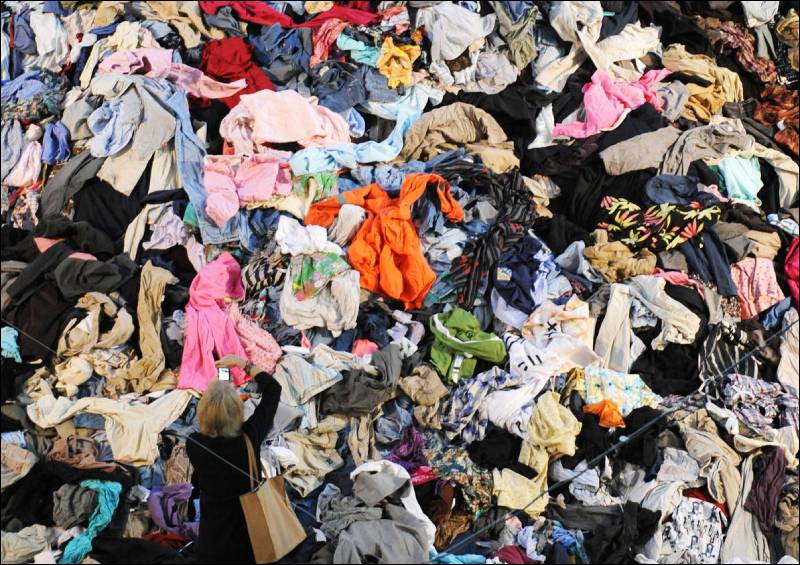
The textile industry is standing at a turning point. Built on speed, scale and global integration, it has delivered growth which few sectors can claim, but at a cost that is now impossible to ignore. Every year, an estimated 90 to 110 million tonnes of textile waste is either landfilled or incinerated, exposing a system that produces far more than it can recover. What makes this crisis more complex is not just the volume, but the nature of modern textiles themselves blended, treated and engineered for performance, yet incredibly difficult to recycle.
For years, mechanical recycling has been the industry’s primary solution, but it has clear limitations. It works well for certain clean, single-fibre streams, but struggles with blended fabrics and post-consumer waste. As a result, a vast majority of textiles never make it back into the value chain. This is where chemical recycling is beginning to change the narrative.
Unlike traditional methods, chemical recycling breaks textiles down to their molecular level, recovering monomers, polymers and pulp that can be used to create new fibres with near-virgin quality. It opens the door to recycling complex materials like polyester-cotton blends that dominate global textile production but have long been considered nearly impossible to process at scale. More importantly, it offers a pathway to true textile-to-textile recycling, where waste is not downgraded but reborn into high-performance materials.

However, scaling this solution is not as straightforward as the technology itself. The textile industry does not operate on neat, segregated streams of raw materials. It thrives on blending, whether it is cotton from multiple origins or polyester combining recycled and virgin inputs to meet cost and quality benchmarks. Expecting a perfectly segregated recycling system in such an environment is impractical, both operationally and economically.
This is where mass balance emerges as a critical enabler. Rather than requiring physical separation of recycled and virgin materials, mass balance allows them to be processed together while ensuring that the recycled content is accurately tracked and accounted for. It is essentially a system of verified attribution, where the input of recycled material is balanced with the output across the value chain. The result is a model that brings flexibility without compromising on accountability.
The importance of this approach cannot be overstated. Today, less than one per cent of textile waste is recycled back into textiles, highlighting the urgency for scalable solutions. Mass balance enables the industry to integrate recycled content into existing infrastructure, avoiding the need for entirely new systems while accelerating adoption. It allows chemical recycling to grow within the realities of current supply chains, rather than waiting for ideal conditions that may take decades to materialize.
The concept is not new. Industries such as plastics, energy and paper have already adopted mass balance to scale sustainable inputs across complex supply networks. In these sectors, it has proven to be a practical way to combine efficiency with traceability, enabling companies to meet sustainability targets without disrupting operations. For textiles, the parallels are clear, particularly in synthetic fibres like polyester that share similar chemical pathways with plastics.
For brands and manufacturers, this creates a tangible opportunity. Mass balance allows them to increase recycled content, meet regulatory expectations and respond to consumer demand, all the while maintaining product performance and cost competitiveness. It also accelerates time to market, which is critical in an industry where speed often defines success.
Yet, the model is not without challenges. The biggest hurdle is trust. Because recycled content is allocated rather than physically segregated, robust tracking systems, third-party certification and clear communication are essential. Without these, the risk of misleading claims becomes significant. Building credibility will depend on transparent standards and consistent verification mechanisms.
Policy will also play a decisive role. While regions like the European Union are moving toward recognizing mass balance within sustainability frameworks, global alignment is still evolving. Harmonized regulations and clear guidelines on how recycled content is calculated and communicated will be key to unlocking large-scale adoption.
Looking ahead, the convergence of chemical recycling, mass balance and digital traceability tools is set to reshape the industry. Advances in sorting technologies, artificial intelligence and blockchain-based tracking systems are improving both feedstock quality and transparency. Together, they are laying the foundation for a system where circularity is not just an ambition, but an operational reality.
Mass balance, in this context, is more than an accounting method. It is a bridge linking today’s complex, imperfect supply chains with the future of circular textiles. It allows the industry to move forward without waiting for perfection, enabling progress at scale while maintaining integrity.
For a sector that has always adapted to change, this may be its most defining shift yet. The challenge is immense, but so is the opportunity to transform waste into value and build a system where textiles are no longer disposable, but continuously renewed.