

Changing Pricing Strategies in Dyes & Chemical Industry

Continuing with traditional pricing methods is no longer sustainable. The industry now requires a more dynamic, strategic and disciplined approach to pricing, writes Bharat Trivedi in this exclusive article for Textile Insights
The dyes and chemical industry has always operated in a highly competitive and cost-sensitive environment. However, in recent years, the pressure on pricing has intensified significantly. Rising raw material costs, volatile supply chains, increasing compliance requirements and changing customer expectations are reshaping the way businesses must approach pricing.
Continuing with traditional pricing methods is no longer sustainable. The industry now requires a more dynamic, strategic and disciplined approach to pricing.

Changing Industry Dynamics
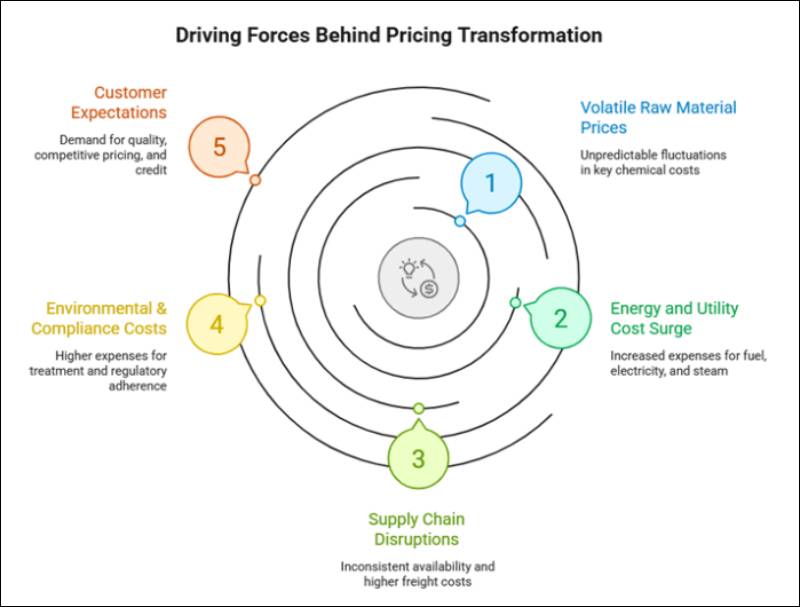
Several structural shifts are driving the need for change in pricing:
- Volatile Raw Material Prices
Key intermediates and base chemicals are witnessing frequent and unpredictable price fluctuations. Dependence on imports further increases risk. - Energy and Utility Cost Surge
Manufacturing dyes is energy-intensive. Rising fuel, electricity and steam costs directly increase production expenses. - Supply Chain Disruptions
Global uncertainties have led to inconsistent availability and higher freight costs. - Environmental & Compliance Costs
Stricter regulations have increased treatment, disposal and compliance expenses. - Customer Expectations
Customers demand consistent quality, competitive pricing and extended credit periods—putting additional pressure on margins.
These factors have collectively made pricing a strategic function, rather than just a transactional decision.
Limitations of Traditional Pricing Models
For years, many companies in the dyes and chemical sector have relied on cost-plus pricing or market-price linked approaches. While these methods worked in stable conditions, they are now proving inadequate.
Key issues include:
- Delayed price revisions despite rising input costs
- Over-dependence on competitors’ pricing rather than internal cost structures
- Inconsistent pricing across customers and regions
- Excessive focus on volume over profitability
This often results in shrinking margins, cash flow stress and weakened financial stability.
Why Pricing Strategy Must Change
Pricing is no longer just about covering costs—it is about ensuring long-term sustainability.
A well-defined pricing strategy helps businesses:
- Protect margins in volatile markets
- Maintain product quality and consistency
- Ensure business continuity
- Strengthen financial discipline
Failing to align pricing with actual costs can lead to serious consequences, including compromised product quality, delayed operations or increased financial risk.
Key Elements of a Modern Pricing Strategy
- Dynamic Pricing Approach
Pricing must be reviewed regularly, not periodically. Quick adjustments in response to raw material changes are essential.
- Cost Transparency
A clear understanding of cost components—raw materials, utilities, logistics and compliance—is critical for accurate pricing decisions.
- Segmented Pricing
Not all customers should be priced the same. Factors such as volume, payment terms and long-term relationships should influence pricing.
- Strong Payment Discipline
Profitability is not just about price—it’s about realization. Delayed payments can erode margins significantly.
- Value-Based Pricing
Instead of competing only on price, companies should emphasize:
- Product consistency
- Technical support
- Reliable supply
- Internal Alignment
Sales, finance and procurement teams must work together to ensure pricing decisions are aligned with overall business goals.
Overcoming Market Resistance
One of the biggest challenges in implementing price changes is customer resistance. However, this can be managed effectively through:
- Transparent communication about cost increases
- Advance notice of price revisions
- Consistent policy across customers
- Focus on long-term relationships rather than short-term transactions
Customers are more likely to accept price adjustments when they understand the reasons and see consistency in approach.
The Role of Leadership
Pricing transformation must be driven from the top. Leadership needs to:
- Take firm and timely decisions
- Avoid unnecessary delays in price revisions
- Support sales teams in difficult negotiations
- Prioritize profitability over unsustainable growth
A reactive approach is no longer enough—pricing must be proactive and data-driven.
Conclusion
The dyes and chemical industry is at a turning point. Rising costs and market uncertainties have made it clear that old pricing models are no longer viable.
The need of the hour is a structured, disciplined and flexible pricing strategy that reflects real costs and market conditions.
Businesses that adapt will not only survive but grow stronger. Those that delay will continue to face margin pressure and operational challenges.
Pricing is not just a number—it is a reflection of business sustainability.