Beyond Fabric: Teejay India’s Role In Driving Speed And Agility Across Brandix’s Supply Chain

In the fast-fashion era, success is measured not just by quality but by speed. Located at the heart of Brandix Apparel City, Teejay India has emerged as a critical link in the integrated manufacturing ecosystem, enabling faster lead times, greater supply chain agility and enhanced competitiveness for global apparel brands. Upul Nallaperuma, Chief Operating Officer – Teejay India, shares how proximity, technology and vertical integration are reshaping textile manufacturing.
The journey of a garment does not begin on a sewing line. It begins much earlier with yarn being transformed into fabric through knitting, dyeing, finishing and testing before it reaches a garment factory. While apparel manufacturers often bask in the spotlight, fabric manufacturers quietly determine one of the most critical factors in today’s fashion industry, i.e. speed.
As global brands demand shorter production cycles and quicker replenishment, reducing lead time has become just as important as maintaining quality.

At Brandix India Apparel City, Teejay India Pvt Ltd plays precisely that role. Located only minutes away from Brandix’s garment manufacturing facilities, the company has become a strategic pillar of the integrated manufacturing ecosystem, ensuring that fabric reaches production lines almost immediately after completion.
Proximity is more than a logistical advantage, it is a strategic one. In today’s market, no one can succeed in isolation – the entire supply chain must operate as one connected ecosystem. This philosophy defines not only Teejay India’s role within Brandix India Apparel City but also the future direction of global apparel manufacturing.
Why Proximity Has Become A Competitive Advantage
Traditionally, garment manufacturers have depended on fabric sourced from distant locations. Fabric shipped from China, for instance, can take three to four weeks to reach an apparel factory. Every delay adds inventory costs, increases uncertainty and extends delivery schedules.
At Brandix India Apparel City, that equation changes dramatically. With Teejay India located within the same industrial ecosystem, fabric can move from the textile mill to the sewing floor within hours rather than weeks.
“Lead time has become one of the biggest competitive advantages. Having the fabric supplier next door eliminates transit delays, making production faster, more responsive and far more reliable,” Upul explains.
For international brands serving fast-moving retail markets in the United States, Europe and Japan, such responsiveness has become indispensable.
More Than A Fabric Mill
Established in 2007, Teejay India has evolved into one of the country’s advanced knitted fabric manufacturing facilities, producing nearly 45 to 50 tons of fabric every day.
The plant manufactures fabrics primarily for lingerie, intimate wear, athleisure and casual apparel segments where precision, consistency and performance are critical. The facility offers a vertically integrated manufacturing process covering knitting, dyeing, finishing, printing and comprehensive laboratory testing.
Raw cotton yarn is sourced from leading Indian spinning companies such as Vardhman, Ambika Cotton Mills and Sportking, while specialised synthetic yarns are currently imported to meet demanding quality specifications.
“We continue evaluating Indian suppliers for synthetic yarn,” Upul says. “The capability is improving, but consistency and contamination control remain areas where further progress is needed.”
Despite these challenges, he believes localisation of raw materials will continue expanding as India’s textile value chain matures.
Vertical Integration Is Redefining Manufacturing
Upul believes that the textile industry is undergoing a structural shift. Manufacturers can no longer operate as isolated businesses. Instead, brands increasingly prefer vertically integrated supply chains where fibre, fabric and garment manufacturing function as one coordinated system.
“No one can sustain independently anymore,” he says. “Brands are looking for partners who can offer an integrated solution rather than individual manufacturing capabilities.”
Within Brandix India Apparel City, this model enables faster communication, improved planning and greater operational flexibility.
Instead of waiting weeks for fabric deliveries, garment factories can receive material almost immediately, significantly reducing production risks while improving customer responsiveness. The ecosystem benefits both Brandix and Teejay.
For Brandix, it shortens garment lead times. For Teejay, it provides a stable manufacturing base with close collaboration across the value chain.
Technology Driving Precision
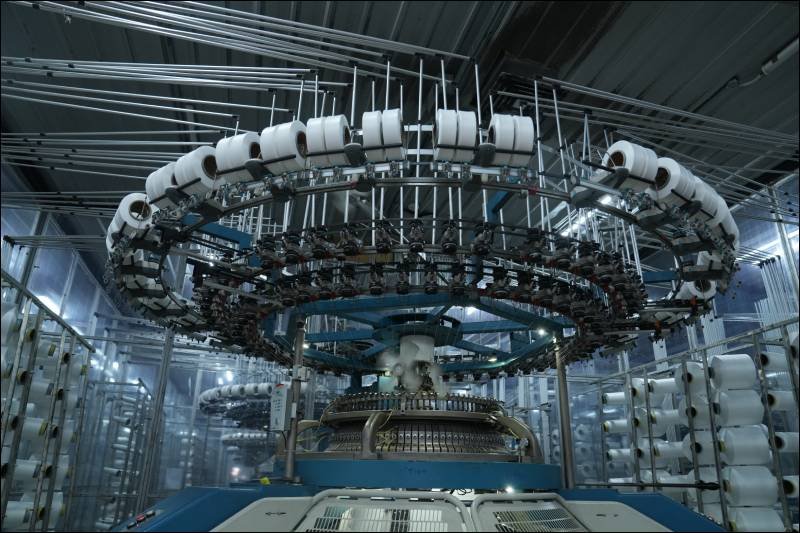
While speed remains a key differentiator, Teejay has also invested heavily in automation and digital manufacturing. Modern knitting machines continuously monitor needle performance, immediately identifying defects before they impact production.
Automated stenters now streamline the finishing process from fabric drying through packing, reducing manual intervention while improving consistency. Within the dye house, digital recipe management systems automatically dispense dyes and chemicals with exceptional precision, minimising variations between batches.
The next phase of transformation is already underway. The company is evaluating AI-powered fabric inspection systems that use high-resolution cameras to identify defects far more consistently than manual inspection.
“Automation helps reduce human error while improving quality and productivity,” Upul explains. “It allows people to focus on higher-value activities rather than repetitive tasks.”
Sustainability Is Now A Business Imperative
Supplying global apparel brands requires much more than manufacturing capability.
Environmental compliance, chemical management and product safety have become essential business requirements.
Teejay India operates accredited physical and chemical testing laboratories while maintaining certifications demanded by international customers.
The company also benefits from the common infrastructure within Brandix India Apparel City, including centralised effluent treatment facilities and shared environmental management systems.
These common utilities simplify compliance while enabling manufacturers to meet increasingly stringent sustainability expectations from global brands.
Upul, however, offers a realistic perspective on sustainability. “Brands expect the highest standards of compliance,” he says. “Meeting those expectations is essential for remaining competitive.”
India’s Free Trade Agreements Offer Fresh Opportunities
As India expands its network of Free Trade Agreements, Upul sees significant opportunities for export-oriented textile manufacturers. The India–Japan trade relationship has already created promising opportunities for supplying fabrics used in apparel for brands such as Uniqlo.
Future agreements with additional markets could further strengthen India’s competitiveness as a global sourcing destination. Yet Upul believes the next phase of growth will require more than favourable trade policies. It will depend on attracting additional garment manufacturers into integrated textile parks.
“The infrastructure is already here,” he says. “What we need now is more stitching partners to become part of the ecosystem.” Such expansion, he believes, would unlock even greater efficiencies while reinforcing India’s position within global apparel supply chains.
An Ecosystem Built For Speed
Walking through Teejay India’s production facility, one quickly realises that the factory’s greatest strength is not simply its knitting machines, dyeing lines or laboratory capabilities.
Its biggest advantage is location. Every metre of fabric produced here moves almost seamlessly into garment manufacturing, eliminating delays that have traditionally challenged global apparel supply chains. For Upul Nallaperuma, that is the true value of Brandix India Apparel City.
It is not merely a collection of factories operating within the same industrial zone. It is a manufacturing ecosystem where collaboration replaces fragmentation, proximity replaces delay and integration becomes a competitive advantage.
In an industry where every day saved can determine whether a fashion collection reaches stores on time, that advantage may prove more valuable than ever before.
(Article by Henry Dsouza, Associate Editor Of Textile Insights)