Surat Textile Industry Flags Worker Demands, Rising Costs At SGCCI Meeting
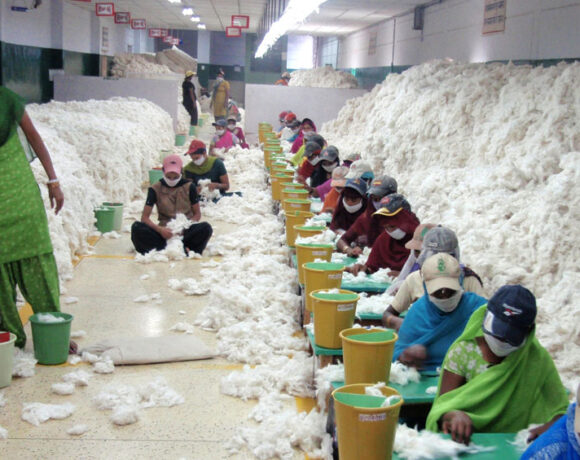
The ongoing protests by textile workers in Surat over demands for a weekly Sunday holiday and an eight-hour workday have raised concerns among industry representatives, with Southern Gujarat Chamber of Commerce and Industry (SGCCI) President Ashok Jirawala saying the demands may not be feasible for the embroidery sector in their present form.
Speaking at a meeting of textile industry representatives at the SGCCI office in Sarsana on September 22, Jirawala said workers in embroidery units had sought Sundays off and shorter working hours. However, he pointed out that many factories currently adjust holidays based on power outages rather than following a fixed weekly holiday system.
“In many areas, workers are accustomed to working 12 hours a day. If an eight-hour shift is implemented, embroidery units alone would require an additional 5 lakh workers,” Jirawala said.

The issue has triggered protests across Surat. The agitation began in Amroli on August 16 and later spread to areas including Anjani Industries, Katargam, Sachin GIDC, Pipodara and Kadodara. The protests have resulted in work stoppages and demonstrations at several factories.
The SGCCI meeting was attended by representatives of various textile associations and labour officials. The participants discussed a range of issues affecting the industry, including rising yarn prices, high electricity costs, frequent power interruptions and the implementation of labour laws.
Jirawala said SGCCI would take up the industry’s concerns with the Centre. “In the upcoming days, we will present our concerns to the Ministry of Textiles, Ministry of Industries, and Ministry of Power of the Government of India, ensuring they are informed about the topics discussed in our meeting,” he said.
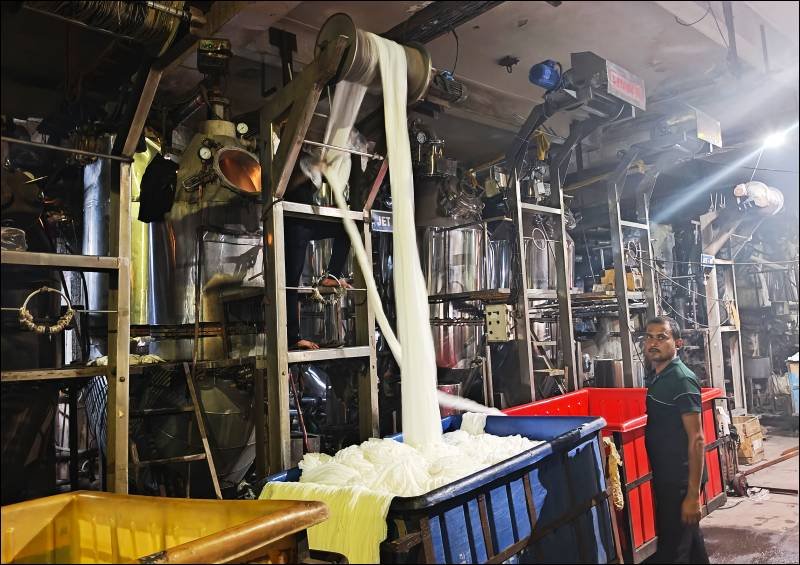
The impact of rising international crude oil prices on textile manufacturing was also discussed. Industry representatives said higher crude prices were pushing up the cost of polyester, man-made fibres, transportation and other production inputs. They also called for yarn prices to fall in line with any reduction in crude oil prices.
Labour compliance emerged as another key issue. Factory owners indicated that they were prepared to comply with the revised Provident Fund (PF) and Employees’ State Insurance Corporation (ESIC) requirements. However, they said some workers continued to prefer receiving wages in cash instead of through bank transfers.
Among the suggestions discussed at the meeting were linking worker compensation to productivity, making workers bear 50% of the cost of damages caused by negligence and restricting mobile phone use inside factories to improve productivity.
The industry and worker representatives are expected to continue discussions as the protests over working hours and weekly holidays continue to affect textile manufacturing activity in Surat.