
Shopify Brings Conversational AI Into Store Design With Canvas
AI-powered tool allows merchants to customise storefronts through natural-language instructions and live visual previews
Shopify has introduced Canvas, an AI-powered website-building tool that enables merchants to create and customise online stores through conversations with its Sidekick AI assistant.
The new tool integrates conversational AI directly into Shopify’s store-design environment, allowing users to describe the changes they want rather than manually arranging predefined sections or editing theme code.

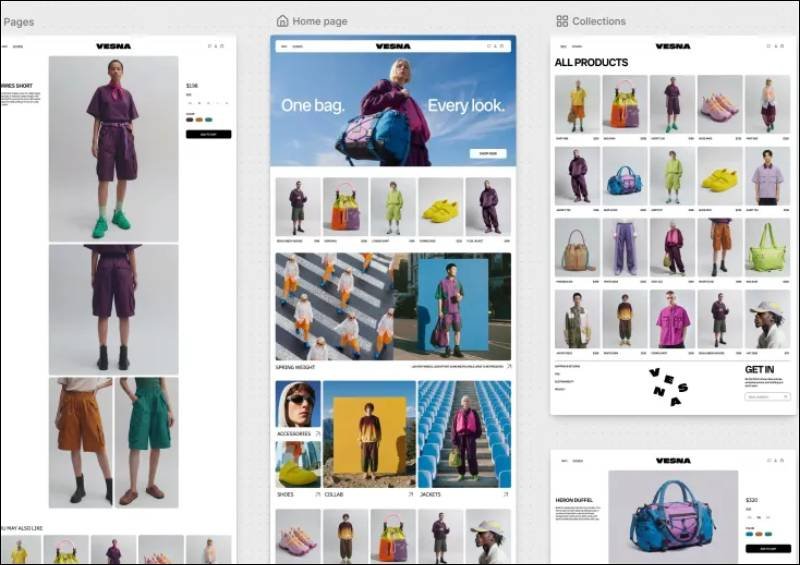
With Canvas, merchants can ask Sidekick to modify elements of their storefront and immediately view the results in a visual workspace. Users can zoom into specific areas, inspect individual elements and continue refining the design through additional instructions.
The tool is aimed particularly at smaller businesses that may not have dedicated design or development teams. It could make more advanced storefront customisation accessible without requiring merchants to directly work with code.
Live preview connects AI with the storefront
A key feature of Canvas is its live visual workspace, which Shopify says renders the actual storefront code rather than simply generating a static design mock-up.
Merchants can see how changes affect layouts, animations and interactive elements across different screen sizes. They can also make direct edits by selecting individual elements or ask Sidekick to make changes through natural-language instructions.
Sidekick can additionally capture screenshots of its work and use the visual output to assess the changes. This allows the AI to work through a cycle of making changes, reviewing the result and refining the design.
The approach is significant because effective website design involves more than generating functional code. Layout, spacing, navigation, responsiveness and visual hierarchy all affect the customer experience.
However, merchants will still need to review and test significant changes before publishing them, particularly across product pages, navigation, cart functions and other critical customer journeys.
Sidekick works directly with theme files
Canvas builds on Shopify’s existing Sidekick capabilities, which include writing code, building apps and customising themes.
Shopify has enabled Sidekick to work directly with theme files and has simplified its theme architecture to make the storefront structure easier for the AI to understand and modify.
This allows Canvas to move beyond the limitations of traditional no-code editors, where merchants are generally restricted to the sections and blocks available within a theme.
Direct access to theme files, however, also increases the importance of reviewing AI-generated changes. Modifications to shared components or theme logic could affect multiple pages or functions across a store.
Initial release has limitations
Canvas is currently an early-stage release and does not support several features, including third-party themes, app blocks and extensions, markets, translations, rollouts and theme updates.
These limitations could restrict adoption among larger or more complex merchants that rely heavily on third-party integrations or operate across multiple markets and languages.
Shopify is expected to expand Canvas’s capabilities over time, although the company has not provided timelines for each missing feature.
Shopify targets the next generation of AI-powered commerce
Canvas enters a growing AI website-building market that includes platforms such as Wix, Squarespace, Webflow and Framer, as well as AI development tools such as Lovable and Replit.
Shopify’s differentiation is its focus on e-commerce storefronts rather than general-purpose websites. By integrating Canvas with Sidekick and its existing theme architecture, the company is attempting to make AI-assisted design part of the day-to-day merchant workflow.
For small businesses, the biggest potential benefit could be a lower barrier to storefront customisation. Instead of switching between a store editor, code environment and separate AI tools, merchants can describe a change, see the result and refine it within the same workflow.
Canvas is still limited in scope, but its launch signals a broader shift in e-commerce towards natural-language interfaces that allow merchants to manage and customise digital storefronts without directly handling code.