
Centre Plans To Add 5K-10K Textile Exporters Through District Hubs
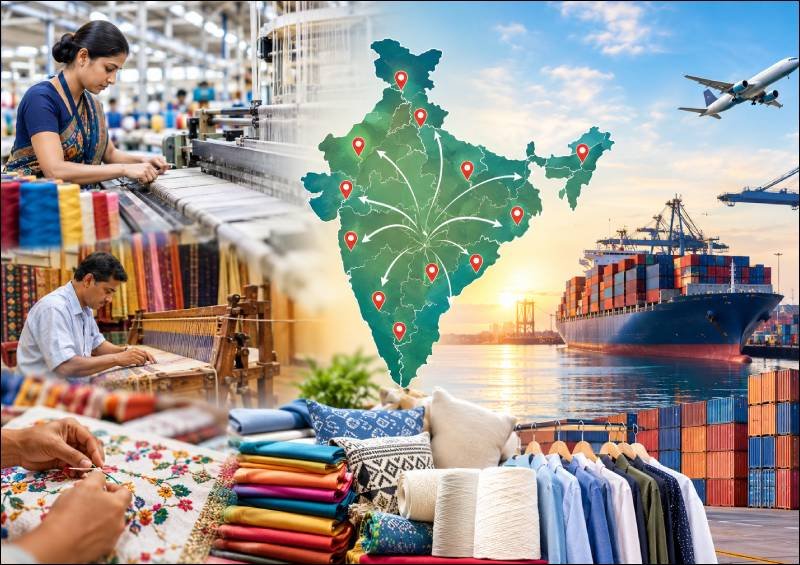
The Centre is working to add 5,000-10,000 new textile exporters over the next two to three years by strengthening district-level export ecosystems and developing production centres into export hubs.
The initiative is part of the government’s efforts to expand India’s textile export base beyond established clusters and bring more businesses into international markets.
Around 530 districts currently contribute to textile exports. The government is now working with state governments to implement district-level export road maps based on local production capabilities, infrastructure needs, market opportunities and institutional requirements.

Officials said 100 aspirational districts and the bottom 25 districts among the champion districts will be a key focus of the next phase.
The government has identified 100 champion districts and 100 aspirational districts to strengthen their participation in global textile trade. Champion districts generally have established textile clusters and higher export activity, while aspirational districts have a smaller export base but potential to expand their presence in textile and allied sectors.
The focus will cover handloom, handicrafts, apparel, cotton textiles, man-made fibre products, home textiles and traditional textile clusters.
Among the districts identified under the aspirational category are Nanded in Maharashtra, Bhagalpur in Bihar, Junagadh in Gujarat, Yamunanagar in Haryana and Kozhikode in Kerala.
The district export road maps have been prepared according to local requirements and development potential. The Centre is now working with state governments to facilitate their implementation and address infrastructure and institutional gaps.
A major focus will be on building the capacity of potential exporters and businesses that export intermittently. The programmes are expected to help enterprises understand overseas markets, improve export readiness and develop capabilities to meet international buyer requirements.
The government also plans to strengthen access to market intelligence by sharing information on global demand, consumer trends and international best practices with states and districts.
Sustainability and technology upgradation have also emerged as key areas in the district strategies. Several districts are looking at ways to showcase sustainable manufacturing capabilities to overseas buyers, while machinery modernisation is being considered to improve productivity, quality and compliance with international requirements.
The government is also considering export facilitation centres to provide businesses with information on overseas markets, consumer behaviour, export opportunities and market-promotion support.
The district-based approach is aimed at connecting smaller textile clusters and emerging businesses with global markets while strengthening the international presence of established production centres.
Officials said the proposed addition of 5,000-10,000 exporters over the next two to three years could significantly widen the geographical base of India’s textile exports. Implementation, however, will depend on coordination between the Centre, state governments, districts and industry.