Crafting The Future: LMW & HAMI Weavelon Pioneer Compact Spinning In Polyester

Introduction
 Manmade fibres today form the backbone of the global textile industry, driven by their versatility, performance, and ability to meet the rising demand for both everyday and specialized applications. Among them, polyester stands out as the most widely used fibre, available in both virgin and recycled forms. Virgin polyester continues to power high-volume segments such as fashion, sportswear, and home textiles, while recycled polyester—produced from post-consumer waste such as PET bottles—has emerged as a sustainable alternative, enabling mills to combine performance with environmental responsibility. LMW’s range of smart spinning machines has been instrumental in enabling mills to efficiently process these fibres—delivering consistent quality, high productivity, and superior yarn performance across both virgin and recycled polyester applications.
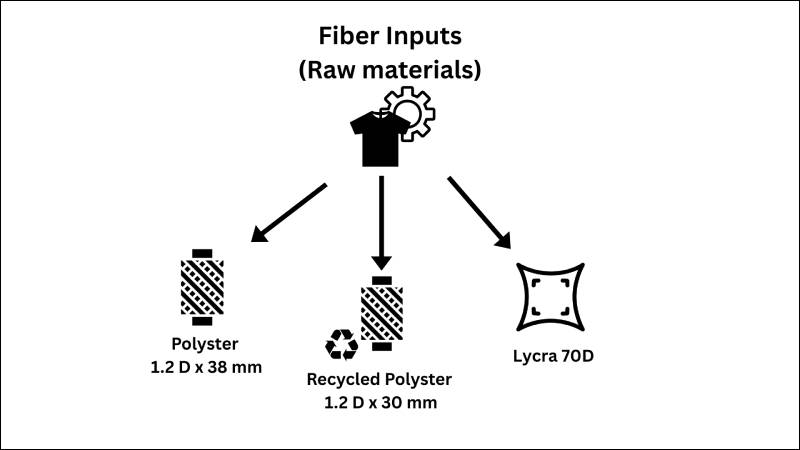
In this evolving context, HAMI Weavelon Pvt. Ltd., Surat, has strategically embraced both virgin and recycled polyester fibres to cater to diverse end-use segments. The company produces high-quality compact yarns—both SIRO and single.
This synergy of sustainability and performance, enabled by LMW’s technology, has empowered HAMI Weavelon to set new benchmarks in polyester and recycled polyester yarn processing and take a transformative leap in the manmade fibre value chain by deploying LMW’s advanced SIRO Compact Spinning Technology.
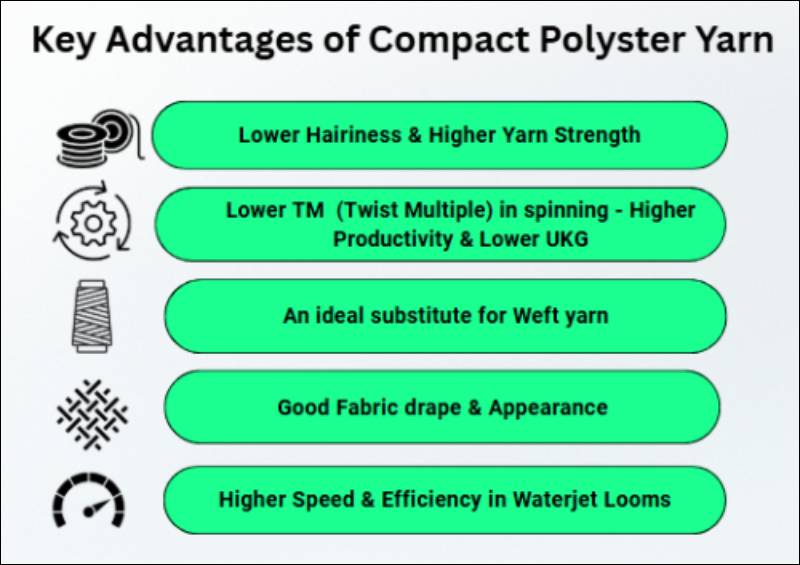
The result is yarns that deliver superior uniformity, smoothness, and strength—tailored for premium apparel, uniforms, and fashion fabrics. The single and SIRO compact polyester yarns offer distinct efficiency and production benefits in the downstream weaving process.
The Beginning of a Vision
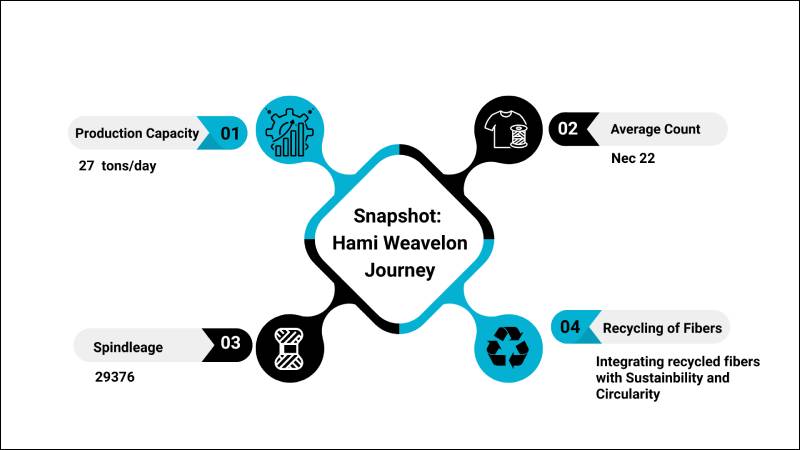
Established in 2021, HAMI Weavelon Pvt. Ltd. emerged as a dynamic name in Surat’s textile landscape. Known for producing high-quality woven fabrics using advanced shuttle-less looms, the company initially relied on outsourced compact and slub yarns. However, to ensure complete quality control and supply flexibility, the management envisioned an integrated spinning-to-weaving setup.
With this forward-thinking approach, HAMI Weavelon partnered with LMW —a global leader in spinning technology—to establish a state-of-the-art spinning facility capable of producing a wide range of yarns.
Chirag Saharia, Director, HAMI Weavelon Pvt. Ltd.
“From the very beginning, LMW team has been by our side — when we were new to spinning, they patiently explained every aspect of the process, guided us on how to move forward, and advised us on the right machines and configurations for our requirements. What truly sets LMW apart is their unwavering commitment even after installation; whenever we face a challenge, their support team is always just a call away and at our doorstep without delay. It has been a remarkable experience working with LMW.” says Chirag Saharia, Director, HAMI Weavelon Pvt. Ltd.
Partnership with LMW
LMW’s spinning expertise empowered HAMI Weavelon to strengthen backward integration from fabric to yarn manufacturing. Their spinning plant covers the entire process — from LMW’s Blowroom to Ring Frame — ensuring superior quality, consistency, and flexibility for varied applications.
| Department | Model | Plant Configuration |
| Blowroom | LA 23 | 1 |
| Card | LC363 | 22 |
| Draw Frame (Breaker) | LDB 3 | 8 |
| Draw Frame (Finisher) | LDF3 S | 8 |
| Speed Frame | LF4280 A | 6 |
| Ring Frame | LRJ 9/SXL | 18 |
Count Range Produced:
- 8 RP Ultima Slub, 10 RP Ultima Slub, 10 S Ultima Slub
- 20 Lycra
- 2/60 Poly SIRO Compact, 2/76 SIRO Compact, 2/40 SIRO Compact, 2/30 SIRO Compact
- 30 RP Compact, 30 PSF Compact
- 10 RP MS SLUB, 15 KW RP
The LMW Advantage: Excellence in MMF Spinning Performance
Key Achievements
The Ne 2/40 Siro Compact yarn exhibits the highest productivity at 412 GPSS, making it the most efficient among the five types. The productivity of Ne 2/60 Siro Compact is at 230 GPSS, and the Ne 2/76 Siro Compact yarn has the productivity at 157 GPSS. The Ne 30 Recycled Compact and Ne 30 Compact yarns shows similar productivity levels at 289 and 270 GPSS respectively.

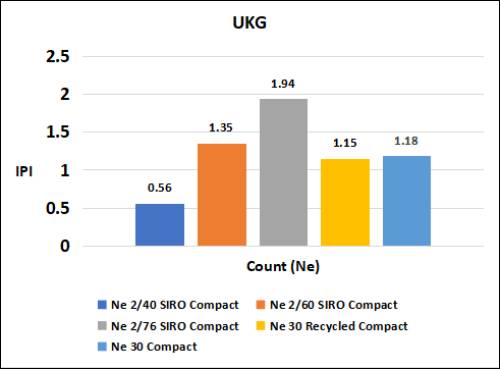
The Ne 2/40 Siro Compact yarn achieves a UKG of 0.56, reflecting steady output at this finer count. Moving to slightly coarser and more specialized counts, the Ne 2/60 Siro Compact records a UKG of 1.35, while the Ne 2/76 Siro Compact reaches 1.94, showcasing the mill’s ability to handle higher-count yarns with consistent productivity. In the compact and recycled yarn segment, Ne 30 Recycled Compact and Ne 30 Compact maintain UKGs of 1.15 and 1.18, respectively, showing efficient processing and optimal machine performance.
For the Ne 2/40 Siro Compact, the IPI stands at 15, highlighting smooth and uniform yarn at this finer count. As the yarn count increases, the Ne 2/60 Siro Compact records an IPI of 20, while the Ne 2/76 Siro Compact reaches 40, reflecting the natural variation challenges in higher-count yarns. In the Ne 30 range, the Recycled Compact yarn maintains an IPI of 35, while the Standard Compact yarn shows 25, demonstrating good quality control even in recycled and coarser yarns.

Conclusion
HAMI Weavelon’s evolution reflects the future of textiles — where innovation, sustainability, and smart integration redefine growth. Together with LMW, the company is building not just yarns and fabrics, but a stronger, greener, and globally competitive textile ecosystem.