Egypt Cotton Output Set To Rise On Strong Demand And Textile Investments
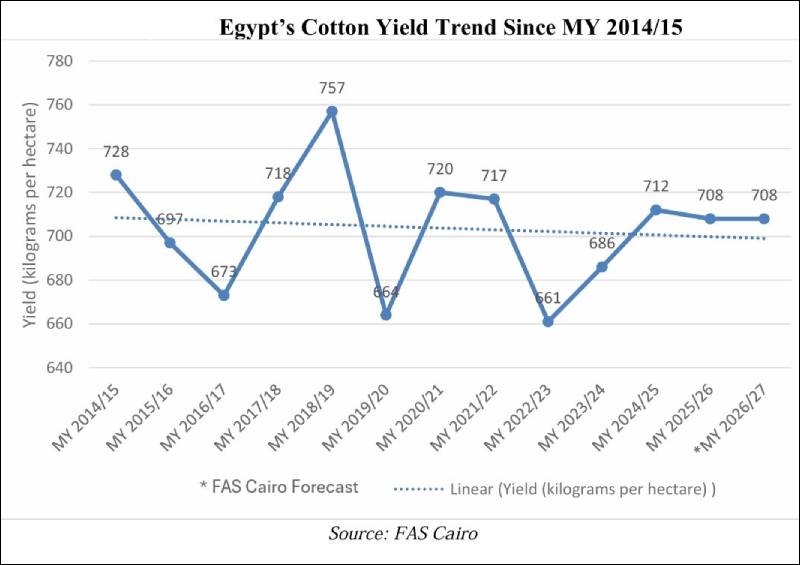
Egypt’s cotton sector is set for a recovery in the 2026/27 marketing year, with production projected to reach 325,000 bales, driven by a 20–25% increase in cultivated area and steady yield conditions. The expansion is largely supported by strong demand from key markets such as China and India, along with improved farmer sentiment following recent pricing reforms.
The government’s shift to a liberalised auction system, replacing guaranteed floor prices with market-linked pricing, has resulted in more competitive returns for farmers and encouraged higher planting.
At the same time, Egypt’s cotton imports are expected to rise to 1.2 million bales, reflecting expanding spinning capacity backed by foreign investments in the textile sector. Brazil and Greece continue to dominate as suppliers due to competitive pricing and logistical advantages, while U.S. cotton remains preferred for quality but faces challenges due to higher costs and longer transit times.
The textile industry is witnessing steady growth, supported by low labour costs, competitive energy pricing and favourable trade agreements, positioning Egypt as an emerging hub for export-oriented textile manufacturing. Cotton consumption is projected to remain stable at around 1.2 million bales, while exports are expected to increase to 350,000 bales on sustained demand from Asian markets.
However, rising energy costs, higher freight rates and ongoing logistical disruptions are weighing on the sector. Egypt’s natural gas import bill has surged amid regional geopolitical tensions, adding to cost pressures for manufacturers. At the same time, structural challenges such as contamination from manual harvesting and fragmented farm sizes continue to impact productivity and competitiveness.
Despite these headwinds, the sector is expected to remain resilient, supported by continued investments, policy reforms and stable global demand, as Egypt looks to strengthen its position in the global cotton and textile value chain.