
Egypt’s Exports To China Nearly Triple, Cotton And Textile Fibre Shipments Gain Traction
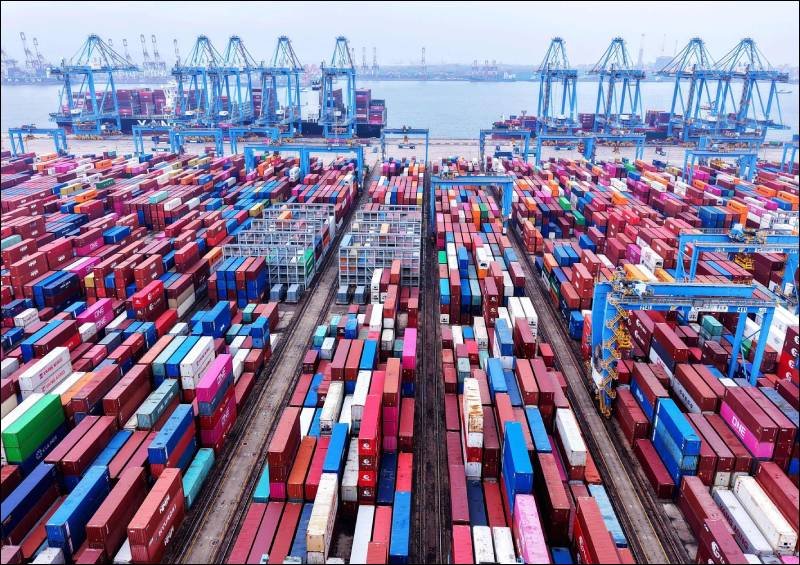
Egypt’s exports to China nearly tripled in the first half of 2026, with cotton and vegetable textile fibres emerging as one of the country’s key export categories to the Chinese market, even as the bilateral trade deficit continued to widen.
Egyptian exports to China jumped 199.8% year on year to US$ 840.8 million between January and June 2026, compared with US$ 280.5 million in the corresponding period last year, according to data from the Central Agency for Public Mobilization and Statistics (CAPMAS).
Within the export basket, cotton and vegetable textile fibres accounted for US$ 76.4 million, placing the category among Egypt’s leading non-fuel shipments to China. The strong growth in overall exports highlights the potential for Egypt to expand its presence in China through raw materials and products linked to its textile and apparel value chain.

Fuels, mineral oils and distillation products remained the largest Egyptian export category to China at US$ 494 million during the six-month period. Vegetables and fruit followed at US$ 150.6 million, while natural calcium phosphates accounted for US$ 31 million and organic and inorganic chemicals for US$ 21 million.
The textile-related trade is particularly significant for Egypt, which has been seeking to strengthen its cotton and textile value chain and increase the value generated from its domestic fibre resources. Greater access to the Chinese market could create opportunities for Egyptian cotton and other natural textile fibres, as well as for downstream textile and apparel products.
However, Egypt continues to rely heavily on China for machinery and manufactured inputs used across its industrial base. Imports from China rose 14.3% to US$ 10.4 billion in the first half of 2026, from US$ 9.1 billion a year earlier.
Electrical and mechanical machinery and equipment accounted for the largest share of Egyptian imports from China at US$ 4.1 billion. Vehicles, tractors and bicycles followed at US$ 1.2 billion, while iron and steel products were valued at US$ 930.7 million. Plastics and related products accounted for US$ 524 million and organic and inorganic chemicals for US$ 423.7 million.
Several of these categories are closely linked to manufacturing and the broader textile and apparel supply chain, particularly machinery, plastics, chemicals and metals used in industrial production.
Total bilateral trade between Egypt and China increased 21.5% to US$ 11.3 billion in the first half of 2026, compared with US$ 9.3 billion during the same period in 2025.
Despite the sharp rise in exports, the trade imbalance remained substantial. Based on CAPMAS figures, Egypt’s trade deficit with China widened to around US$ 9.6 billion during the first half of 2026, from approximately US$ 8.8 billion a year earlier.
The deficit nevertheless narrowed significantly in relative terms as Egyptian exports grew much faster than imports. China exported roughly US$ 12 worth of goods to Egypt for every US$ 1 Egypt exported to China during the first half of 2026, compared with around US$ 32 for every US$ 1 a year earlier.
For Egypt’s textile and apparel industry, the figures point to both an opportunity and a challenge. The increase in cotton and vegetable fibre exports indicates scope to build stronger trade links with China, but the country’s much larger imports of machinery, chemicals, plastics and other industrial products underline the dependence of domestic manufacturing on imported inputs.
Increasing exports of higher-value textile products rather than primarily raw or semi-processed materials could help Egypt capture a larger share of the value generated across the textile and apparel chain. Expanding trade in yarn, fabrics, home textiles and garments could also provide a broader export base if market access and competitiveness improve.
The wider economic relationship is also supported by rising remittances. Remittances from Egyptians working in China increased to US$ 23.3 million in the 2024/25 financial year from US$ 19.5 million in 2023/24. Remittances from Chinese workers in Egypt rose to US$ 3.5 million from US$ 3.1 million over the same period.
The latest trade figures come as Chinese President Xi Jinping is expected to visit Egypt in the coming days. The visit could provide an opportunity for both countries to deepen cooperation in manufacturing, energy, logistics and trade, with potential implications for Egypt’s textile and apparel sector.
For Egypt, sustaining the rapid growth in exports will be crucial. While fuel and agricultural products currently account for a large share of shipments to China, expanding cotton, textile and apparel exports could help diversify the export basket and generate greater value from the country’s textile industry.
The first-half figures therefore signal stronger Egyptian access to the Chinese market, but the longer-term opportunity will depend on whether the recent export surge can evolve from a largely commodity-led increase into sustained growth across higher-value manufacturing sectors, including textiles and apparel.