
ICC Sharpens Its Edge For A Changing Fibre Landscape
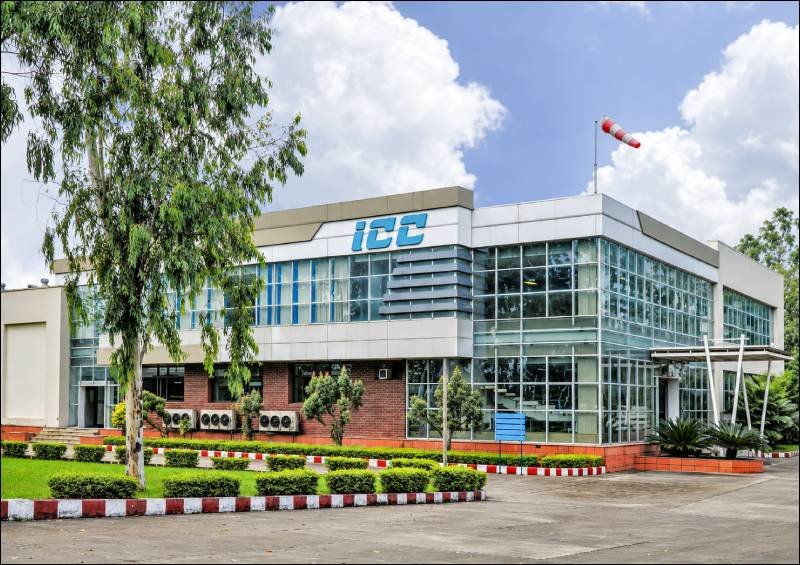
With award-winning stainless steel card clothing and its new ReFPro series for recycled fibres, The Indian Card Clothing Co. Ltd. is focusing on a critical manufacturing challenge: adapting carding technology to increasingly demanding raw materials.
A textile’s journey towards quality begins long before it reaches the loom or knitting machine. At the carding stage, the interaction between fibre and wire helps establish the foundation for everything that follows. When the raw material changes, that interaction becomes even more important.
For The Indian Card Clothing Co. Ltd. (ICC), this is where its latest developments find their purpose. From specialised stainless steel card clothing for medical textiles and synthetic fibre processing to a new series engineered for recycled fibres, the company is directing its expertise towards applications that challenge conventional solutions.

These developments reflect a wider shift in textile manufacturing. Producers are working with more varied fibre inputs while seeking consistent processing and reliable performance. Card clothing must respond to the specific demands of those materials.
Recognition Rooted In Application
ICC’s development of stainless steel card clothing has received the TMMA R&D Award 2025–26, recognising its work on a product intended for specific applications, including medical textiles and synthetic fibre processing.
The development, for which a patent has been applied, addresses applications where conventional materials and designs may not deliver the required performance. Its significance lies in the combination of customer insight, indigenous engineering, specialised metallurgy and focused research.
For ICC, the award highlights an approach to innovation shaped by processing requirements. The starting point is a customer’s challenge; the engineering response follows from understanding what the application demands.
This application-led thinking is also central to the company’s work in recycled fibre processing, where the condition and composition of the raw material can present a different set of difficulties.
Recycling’s Challenge At The Card
Recovering textile fibres is only one part of making circular manufacturing work. Those fibres must then move through production with sufficient consistency to become useful textile products.
Compared with virgin fibres, recycled inputs can contain shorter and more variable fibre lengths, reduced strength, higher levels of neps and entanglement, and residual trash. Mixed fibre types, dyes, chemical finishes and thermoplastic components add further complexity, while hard particles and abrasive contaminants place additional demands on card clothing.
At the card, these characteristics can contribute to uneven webs, further fibre shortening, choking or loading, and increased wire wear. Batch-to-batch variation makes the task more demanding still.
The processing challenge is therefore twofold: opening and handling the recovered material effectively while managing the stresses it places on the carding system.
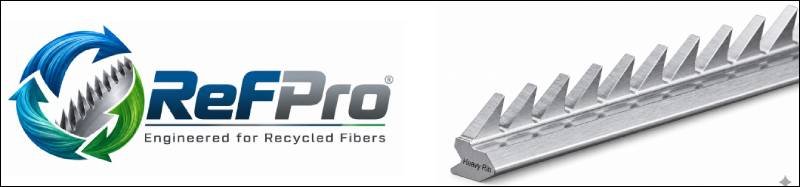
ReFPro: Engineering Around The Fibre
ICC has developed its ReFPro series specifically for recycled fibre processing. The development brings together the expertise of its UK group company, Garnett Wires Ltd., with ICC’s manufacturing capabilities and engineering knowledge.
The series combines four design elements aimed at the demands of recovered fibres. A special raw material is intended to provide the required balance of wear resistance and processing performance. Sharper tooth geometry supports effective fibre penetration and controlled opening, while higher tip hardness is designed to improve resistance to wear under demanding operating conditions.
A chemically polished tooth surface provides a smoother working surface to support fibre processing.
Together, these features show how ICC is approaching recycled fibres as a distinct engineering requirement. Rather than treating recovered material as a uniform input, the development responds to the variability, contamination and wear challenges that can accompany it.
Seven Decades Of Adaptation
Founded in 1955, ICC’s development has spanned successive changes in carding technology. Its milestones include helping pioneer metallic clothing for cotton carding, acquiring a stake in the UK-based Garnett business, and opening its Nalagarh manufacturing facility.
Subsequent developments have included the THM and Maxus products, ProLyf heat-treatment technology, and an expanded offering of nonwoven products and card service machines.
Stainless steel card clothing and ReFPro extend that progression into more specialised applications. They also support ICC’s evolution from a card clothing manufacturer towards a broader carding solutions provider.
As textile producers work with new fibre combinations and recovered materials, the demands placed on carding will continue to change. ICC’s latest developments place its focus firmly on that point of contact between fibre and wire—where a small component carries a substantial processing responsibility.