
‘Indian Fabric-Forming Market Is Experiencing A Massive Structural Shift’
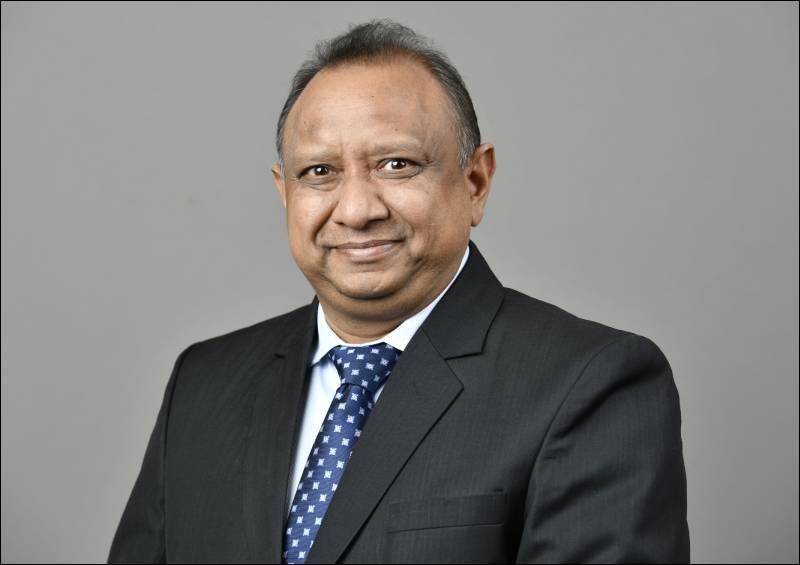
Indian manufacturers are rapidly transitioning from conventional, labour-intensive setups to automated, data-driven environments focused on efficient production, high-margin technical textiles, performance wear, and man-made fibres, says Navin Agrawal
How do you view the current state of India’s textile industry, particularly the weaving and fabric-forming sector, in this changing global demand and increasing competition from other textile producing countries?
India’s fabric-forming sector is at a crucial turning point. Historically dominated by a fragmented powerloom setup-based fabrics, the industry is evolving since a few decades to meet shifting Indian and global demands for man-made fibres (MMF), technical textiles, knits and zero-defect fabrics. With intense competition from Vietnam, Bangladesh and China, India can no longer rely solely on traditional methods or labour arbitrage to maintain its export share.
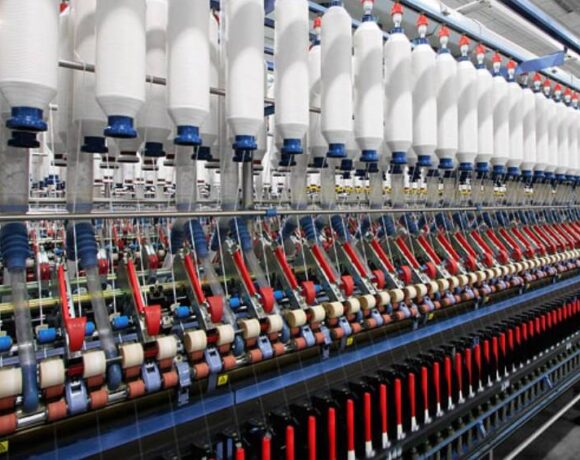
To remain competitive in an evolving global market, Indian manufacturers must accelerate modernisation efforts to enhance productivity, sustainability and speed-to-market. This makes the advanced machinery portfolio represented by A.T.E. highly strategic. The adoption of high-speed warp knitting and warp preparation technologies from Karl Mayer, which enable the production of world-class fabrics and warp beams, along with Rabatex solutions for commodity fabric manufacturing and versatile circular knitting machines from Unitex, is essential for driving operational excellence. Furthermore, Seyounth as an automation integrator, plays a critical role in enabling Industry 4.0 solutions, the Craftsman logistic solution further adding to the automated storage solutions, this will be improving process efficiency and advancing manufacturing excellence.

Technical textiles are one of the fastest-growing segments in the industry. Demand for filament fabrics, e-glass fabrics in the technical and PCB sector is increasing, and we expect this trend to continue in the future. At the same time, warp-knitted technical textiles for geotextile and composite applications are gaining significant traction. With its advanced warp preparation and warp knitting technologies including biaxial, multiaxial, and weft insertion technologies, Karl Mayer is well-positioned to deliver high-quality fabrics that meet the evolving requirements of these technical applications.
We are well-geared to offer complete solutions in carpet manufacturing with yarn heat seating from PHS, digital printing of carpet from Zimmer, back coating and carpet shearing by Sellers with confections lines from Matthys.
In the nonwoven sector, we provide complete solutions from Truetzschler Nonwovens mainly Spulace, air-through bonding and needle punch lines. We also offer Ramina for meltblown and spunmelt line while Proptuim for the production monitoring solutions. VB Set is well-accepted by all our filament spinners and masterbatch makers for their pilot and lab models.
By investing in these cutting-edge technologies, Indian textile producers can eliminate production bottlenecks, drastically reduce defect rates and successfully diversify into high-margin fabrics. Upgrading from outdated setups to these advanced fabric forming solutions is the definitive path for India to bridge the quality gap and emerge as a globally competitive textile powerhouse.
What are the major challenges currently confronting Indian weaving and fabric manufacturers and how are these challenges shaping their technology and machinery investment decisions?
Indian weaving and fabric manufacturers face severe margin squeezes driven by volatile yarn prices and escalating energy costs. Furthermore, they are mainly confronted with delayed payment cycles, fragmented domestic infrastructure, chronic skilled labour shortages, and fierce global competition from China, Bangladesh and Vietnam. Simultaneously, global demand is rapidly shifting from traditional cotton toward man-made fibres (MMF), technical textiles and zero-defect fabrics requiring fast turnaround times.
These compounding challenges are fundamentally reshaping machinery investment strategies. To remain globally competitive, manufacturers are prioritising high-speed automation. They are investing heavily in advanced equipment such as Karl Mayer’s warp preparation machines for high speed shuttleless weaving machines, warp knitting for a variety of fabric structures, Unitex’s circular knitting technologies and Seyounth automation solutions to counter labour capacity and capability shortages, eliminate bottlenecks and drastically improve productivity.
Additionally, to prevent waste of expensive raw materials, there is a strategic focus on flawless warp preparation systems, like those from Rabatex and Karl Mayer. Ultimately, investment capital is flowing toward versatile, automated machinery that enables Indian producers to manufacture high-margin synthetic and technical fabrics efficiently, bridging the quality gap and ensuring long-term profitability in a demanding global market.
From A.T.E.’s perspective, what are the major shifts you are witnessing in the fabric-forming market and how is the company adapting its solutions to meet the evolving requirements of Indian customers?
From A.T.E.’s perspective, the Indian fabric-forming market is experiencing a massive structural shift. As mentioned earlier, manufacturers are rapidly transitioning from conventional, labour-intensive setups to automated, data-driven environments focused on efficient production, high-margin technical textiles, performance wear, and man-made fibres (MMF).
To help Indian customers navigate this evolution, A.T.E. is adapting its strategic offerings across three core areas through its partnerships with VB Set, Karl Mayer, Rabatex, Unitex, Truetzschler Nonwoven and carpet solutions from Power-Heat-Set and Zimmer. First, A.T.E. is deploying highly versatile, advanced machinery, including high-speed warp and knitting systems alongside precision warp preparation equipment. This ensures manufacturers can efficiently diversify product lines while maintaining the zero-defect quality demanded by global buyers.
Our customers’ needs are shifting from standalone machines to integrated, smart factory ecosystems. We strengthen our technology partnerships by aligning with global leaders who address specific, emerging industry demands. To address the critical need for Industry 4.0 adoption, we proactively seek out and forge new partnerships. Our recent tie-ups with Seyounth Automation (for auto creeling of yarn packages in warp preparation, automated material transfer, advanced garment and textile automation lines, smart /dark factory systems) and Craftsman Automation (for material handling and storage) are prime examples. By bringing these innovators into the A.T.E. fold, we ensure our portfolio comprehensively covers digitalisation and shop floor automation.
What are the key technologies and machinery solutions in A.T.E.’s fabric-forming portfolio that are currently generating interest among Indian textile manufacturers?
Indian textile manufacturers are highly interested in A.T.E.’s portfolio of sustainable, high-speed, and automated fabric-forming solutions. A major focus is on Karl Mayer’s advanced warp knitting machines, which cater to the booming demand for apparels and athleisure, sportwear market along with technical textiles, performance fabrics, geogrids and composite materials. Furthermore, Karl Mayer’s energy-efficient warp preparation lines, particularly the Prosize sizing machine with the patented size box and Cascade system and Warpdirect warping machine, are highly sought after for drastically reducing steam consumption and improving weaving efficiency. Rabatex products are also highly gaining market share through us due to continuous innovations.
Indian manufacturers are also upgrading to Unitex’s agile circular knitting machinery, such as the Single Jersey Three-Thread Fleece machine, to meet increasing fast-fashion and athleisure demands. To optimise shop-floor efficiency and address labour shortages, there is a strong shift toward Industry 4.0 manufacturing paradigms. This includes Automated Storage and Retrieval Systems (ASRS) from Craftsman Automation and robotic material handling solutions from Seyounth Automation. Finally, A.T.E. sees growing interest in specialised applications like carpets and synthetics through Zimmer and VB Set, as well as comprehensive nonwoven technologies like spunlace and needle-punch from Truetzschler Nonwoven.
A.T.E. has a long-standing presence in India’s textile machinery industry. How has the company’s approach to technology, application support and after-sales service evolved as customer expectations have become more sophisticated?
A.T.E. has evolved from a traditional buyer-seller dynamic to functioning as a consultative, comprehensive technology partner to meet the demand for integrated, smart factory ecosystems.
This evolution is reflected across three key areas:
Technology approach: A.T.E. has shifted its focus from selling standalone machines to providing “Industry 4.0” paradigms that integrate high-speed machinery with comprehensive digitalisation and automation. To achieve this, the company has forged new strategic partnerships with innovators like Seyounth Automation and Craftsman Automation to offer robotic operations and Automated Storage and Retrieval Systems (ASRS).
Application support: The company has deepened its consultative relationships to guide manufacturers into high-margin segments like technical textiles, sportswear and athleisure. To inspire new product development, A.T.E. showcases trendy application examples—such as woven-like warp knits, seamless body-mapping concepts and shoe fabrics with diverse jacquard patterns—alongside direct personal interaction with technology experts.
After-sales service: A.T.E. is digitising and streamlining its service capabilities to ensure high operational efficiency.
West and North India are important markets for the fabric-forming business. What differences are you seeing in customer requirements across these regions and what opportunities do you see for A.T.E. in these markets?
A.T.E. has a massive opportunity to guide regional manufacturers in diversifying away from saturated traditional apparel into lucrative, high-margin sectors like technical textiles, sportswear and performance fabrics using advanced machinery.
Second, as textile mills transition away from labour-intensive operating models, A.T.E. can integrate comprehensive smart factory ecosystems. Deploying automated material handling and robotics from partners like Craftsman Automation and Seyounth Automation significantly enhances overall shop-floor efficiency and turnaround times.
Finally, driven by strict global sustainability compliance, A.T.E. can meet rising customer demands for resource optimisation by providing energy-efficient technologies significantly lowering operational costs.