Indonesia Warns Textile Producers On Imports, Transparency Gaps
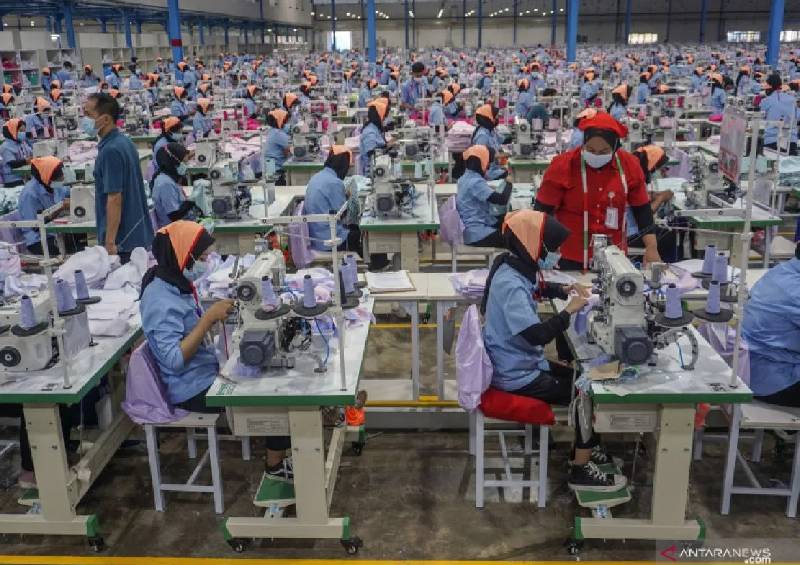
To maintain the competitiveness of Indonesia’s textile industry, the Ministry of Industry (Kemenperin) has called on upstream producers to strengthen transparency, administrative compliance, and strategic consistency. The appeal was specifically directed at members of the Association of Indonesian Filament and Filament Producers (APSyFI).
According to data from the National Industrial Information System (SIINas), reporting compliance among APSyFI members remains below expectations. Out of 20 member companies, only 15 submitted their industrial activity reports, while five others failed to comply.
“There are still large APSyFI member companies that do not report their performance at all. Reporting obligations are a form of industrial accountability to the state. Weak administrative commitment undermines the association’s claim of being the vanguard of the national textile industry,” said Ministry of Industry spokesperson Febri Hendri Antoni Arif, as quoted by ANTARA.
Kemenperin also highlighted anomalies in APSyFI members’ performance data. Despite the association’s frequent appeals for stricter import controls, several of its members significantly increased their own imports. Data shows yarn and fabric imports by APSyFI companies surged 239% within a year, rising from 14.07 million kilograms in 2024 to 47.88 million kilograms in 2025.
“Some APSyFI members exploit bonded zone facilities and general import licenses (APIs) to carry out massive imports. On one hand, they demand government protection, but on the other, they actively import. This contradicts the spirit of building industrial self-reliance,” Febri emphasized.
The Ministry reminded the industry that the government has consistently provided protective measures for the upstream textile sector. These include safeguard duties and fiscal instruments such as the anti-dumping import duty (BMAD) on polyester staple fiber (PSF), which has been in place since 2010 and will remain valid until 2027.
With the sector under pressure from rising imports and global competition, the Ministry stressed that genuine compliance, accountability, and policy alignment are crucial for sustaining Indonesia’s textile competitiveness.