
Microtex Processors: Bridging The Gap Between Raw Fabric And World-Class Finishing
Ichalkaranji in Kolhapur district of Maharashtra has long been a hub for greige fabric manufacturing. For decades, however, manufacturers in this textile-rich belt had to depend on processors in Mumbai or Ahmedabad for advanced dyeing, printing and finishing. Spotting this gap, Microtex Processors Pvt. Ltd., entered the market with a forward-integration vision, to bring world-class processing capabilities closer to the country’s weaving heartland.
“Microtex was built to bridge the gap between raw fabric and world-class finishing, bringing advanced textile processing closer to India’s greige hub.”, says Kishorekumar Mundra, Managing Director of Microtex Processors.
Microtex’s journey is rooted in the ambition to transform Ichalkaranji’s textile ecosystem. What began as a response to the absence of local processing facilities has evolved into a large-scale operation with an installed capacity of 1,00,000 metres per day, scalable to 2.5 lakh metres. One of its earliest milestones was the commissioning of state-of-the-art infrastructure equipped with continuous bleaching, mercerization and pretreatment ranges, alongside advanced dyeing and printing capabilities.
Unlike many traditional family-run enterprises, Microtex has built its business on corporate governance and professional management. This approach has enabled it to compete with established players while strengthening its reputation for transparency, quality and timely delivery.
“Our strength lies not just in technology, but consistency in quality that speaks louder than price,” stated Sanjay Patni, Director of Microtex Processors.
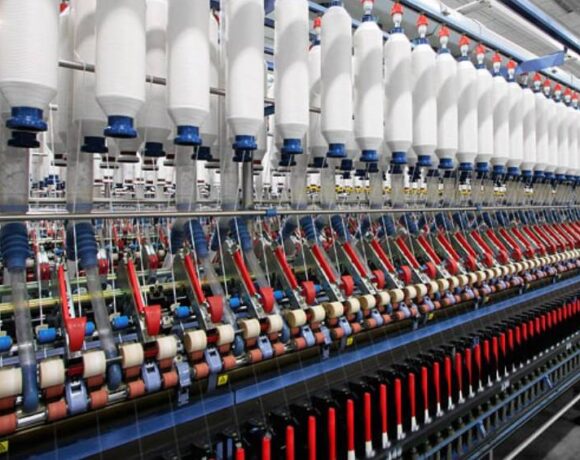
Microtex’s processing plant reflects its commitment to scale and precision. The facility houses rotary screen-printing machines capable of 12-colour outputs, jet and soft-flow dyeing machines for polyester and viscose and advanced finishing equipment from leading international suppliers. Two high-end stenters, a sanforizer and aero finishers provide customers with versatile finishing options, ranging from peaching and calendaring to specialized performance treatments.
What sets Microtex apart, however, is its focus on automation. The company has integrated SCADA-based systems that monitor chemical usage, utilities and production parameters in real time. This not only enhances operational efficiency but also ensures precise cost management and sustainability tracking. Plans are also underway to establish full digital integration, enabling remote monitoring and better production transparency.
Microtex has carved a niche in shirting and suiting fabrics across cotton, polyester–cotton blends, viscose, linen, and lycra-based fabrics. The company has also expanded into technical fabrics such as nylon, broadening its reach. On the finishing front, peaching, aero and calendaring remain key strengths.
While the international market has seen volatility in recent years, Microtex has prioritized the Indian market, which alone provides sufficient demand to absorb its current capacity. A dedicated design and R&D team ensures that the company stays ahead of market trends with fresh prints, innovative blends, and contemporary finishes tailored to consumer preferences.
“Our customers are our partners, their growth fuels our growth and we ensure every delivery strengthens that trust,”, noted Sachin Zanvar, Director of Microtex Processors.

In an industry increasingly defined by compliance and sustainability, Microtex has moved early to establish credibility. The company is OEKO-TEX and BCI certified and is in the process of obtaining ISO certification. Its 100% Zero Liquid Discharge (ZLD) plant underscores its commitment to environmental responsibility, while its use of eco-friendly fuels such as briquettes, palm shells and nut shells in the boiler house reflects a shift toward greener energy.
“Profitability and responsibility go hand in hand at Microtex, every metre we process carries both quality and care for the environment.”, says Sandeep Patani, Director of Microtex Processors.
Microtex has also invested in pollution control systems, including wet scrubbers and air preheaters, ensuring adherence to environmental norms. On the risk front, the company focuses on consistent quality and diversified distribution through its nationwide network of agents, allowing it to remain competitive even in volatile market conditions.
At the core of Microtex’s strength is its people. The company has successfully built a culture where skilled manpower is nurtured through training and mentorship. Many employees have remained with Microtex for over a decade and leadership plays a direct role in encouraging innovation and accountability. The result is an organizational structure that balances discipline with flexibility, crucial for meeting customer timelines without compromising on quality.
“Innovation at Microtex is not about chasing trends, but about anticipating the future needs of fabric and fashion.”, said Chogalal Vadera, Director of Microtex Processors.
Microtex positions itself as a differentiated player in India’s textile processing sector through its combination of scale, technology and sustainability. Its ZLD plant, extensive finishing capabilities and 25+ years of experience in greige fabric manufacturing give it a strong competitive edge. Rather than engaging in price wars, the company has built its brand on quality-driven, sustainable solutions that justify premium pricing.
Looking ahead, Microtex envisions becoming one of India’s finest integrated textile processors. The roadmap includes expanding its processing capacity, exploring composite solutions across grey fabric, finished fabric and yarn and eventually taking the company public. The management also intends to integrate renewable energy sources such as wind and solar to further strengthen its sustainability footprint.
Like its peers, Microtex faces challenges in rising energy costs, raw material fluctuations and tightening global environmental regulations. However, the company views these pressures as opportunities to differentiate itself. By aligning investments in renewable energy, advanced machinery and sustainable fabrics like hemp, Microtex positions itself at the forefront of innovation while catering to the growing demand for eco-friendly textiles.
As India’s domestic textile market continues to grow, Microtex Processors is well placed to capitalize on the demand for high-quality processed fabrics. Its forward-integration strategy, technological strengths and focus on sustainability give it both resilience and scalability. With clear plans for capacity expansion, digital integration, and eventual public listing, Microtex is not just processing fabrics, it is weaving a future-ready business model for India’s textile industry.
(Article by Henry Dsouza, Associate Editor Of Textile Insights)