Mother Of All Deals: India–EU FTA Opens New Doors For Textile Exporters
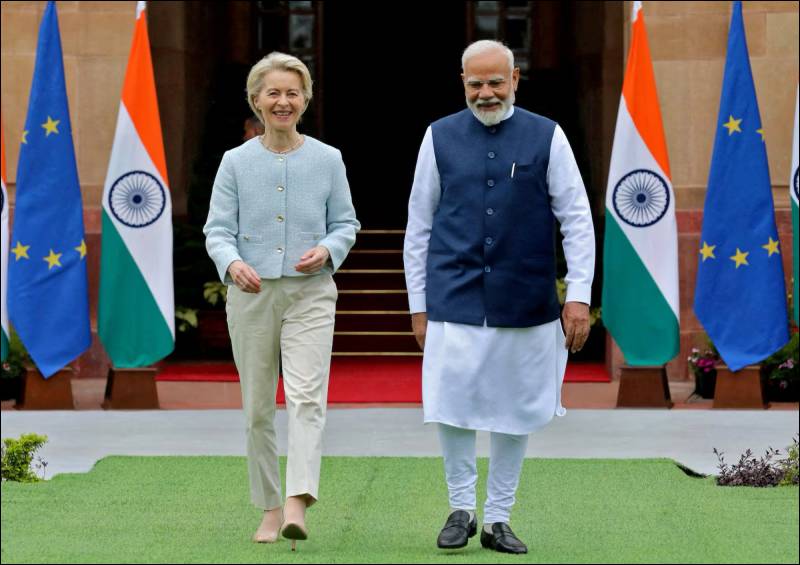
Today, India and the European Union concluded negotiations on a landmark Free Trade Agreement (FTA), hailed by leaders on both sides as the mother of all deals. The agreement was announced in the presence of Prime Minister Narendra Modi, European Commission President Ursula von der Leyen and European Council President António Luís Santos da Costa, marking the establishment of one of the world’s largest trade partnerships.
The pact spans economies representing nearly one-third of global trade and close to 25% of global GDP, encompassing a market of almost two billion consumers. Speaking virtually at Indian Energy Week, Prime Minister Modi described the agreement as a major strategic milestone that opens significant opportunities for Indians and Europeans alike. Von der Leyen echoed the sentiment, stating that Europe and India are making history today and emphasizing that both sides are set to benefit from deeper economic and strategic cooperation.
A major gain for India lies in improved market access for textiles and apparel, alongside other labour-intensive sectors such as leather and marine products. Indian textile exporters have long sought preferential access to the European Union, which remains one of India’s most important destinations for yarn, fabrics, apparel and home textiles. The agreement is expected to offer duty-free or preferential tariffs for a range of Indian textile categories, enhancing competitiveness against countries like Bangladesh and Vietnam that currently enjoy tariff advantages in the EU market. This shift is seen as strategically important for Indian exporters seeking to expand value-added shipments into Europe in areas such as fashion apparel, made-ups and home textiles.
In return, India is expected to provide calibrated tariff concessions in sectors of interest to the EU including automobiles, wines, spirits, processed foods and machinery. European Commissioner for Trade and Economic Security Maroš Šefčovič said that the objective was to achieve full or partial tariff elimination on 97–99% of traded goods, while balancing sensitivities in areas like agriculture and dairy. He noted that the manufacturing ecosystems of both sides are complementary, creating opportunities to strengthen supply chains, reduce risky dependencies and generate employment.
Negotiations for the pact ran for more than 18 years and regained momentum in 2024. Commerce Secretary Rajesh Agrawal described the final document as a balanced, forward-looking deal for better economic integration, projecting a strong boost in trade and investment flows. A streamlined version of the agreement text will be finalized within two weeks and will undergo legal scrutiny for five to six months before moving to the European Parliament for ratification. The pact is expected to enter into force by early 2027 and will not require approval from individual EU member states.
During the India–EU Summit, both sides also launched an EU–India Security and Defence Partnership, strengthening the geopolitical dimension of the relationship. On the trade front, the EU announced that tariffs on 96.6% of EU goods exported to India will be reduced or eliminated, a move expected to save European companies up to €4 billion annually. The agreement will also remove tariffs on European fruit juices, processed foods, and olive oil, reduce duties on spirits to 40%, eliminate tariffs on 90% of optical, medical and surgical equipment and largely remove duties on aircraft, spacecraft, machinery, chemicals and pharmaceuticals. The EU additionally pledged €500 million over two years to support India’s climate transition efforts, highlighting the pact’s broader sustainability component.
The final push to conclude the agreement accelerated in the backdrop of global tariff realignments, including reciprocal duties under former U.S. President Donald Trump, encouraging both sides to compromise on long-standing sensitivities. Bilateral trade in goods currently stands at roughly US$ 136 billion, and policymakers expect the FTA to meaningfully expand trade in both goods and services throughout the next decade.
For Indian textiles and apparel, the agreement represents a rare market-opening opportunity in a large consumer region increasingly focused on ethical, traceable and sustainable supply chains. With India investing in circularity, recycled fibres and clean manufacturing, the sector is well positioned to leverage improved access and regain competitiveness in the European market. As ratification progresses, textile stakeholders are expected to focus on compliance, product diversification and supply chain integration to fully capitalize on the deal when it takes effect.