
NITMA Seeks Rollback Of 50% RoDTEP Cut
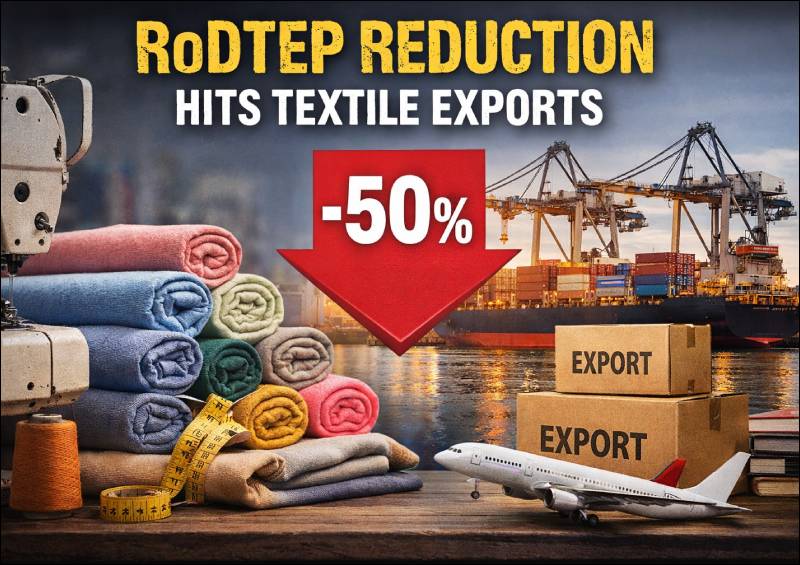
The North India Textile Mills’ Association (NITMA) has urged the Centre to immediately roll back the sharp reduction in RoDTEP benefits, warning that the move could severely hurt the competitiveness of India’s textile exports.
In representations sent to the Ministers of Finance, Commerce & Industry and Textiles, the association raised serious concerns over notification no. 60 dated February 23, 2026, which slashes the Remission of Duties and Taxes on Exported Products (RoDTEP) rates and value caps by 50 per cent with immediate effect.
NITMA said the abrupt halving of remission rates without any reduction in the underlying embedded taxes, would put intense financial pressure on exporters operating on thin margins. It cautioned that fixed-price export contracts currently under execution could become unviable, exposing companies to potential losses.
The association also flagged the risk of erosion in India’s global competitiveness. With reduced price support, Indian exporters could lose cost advantage in key markets, potentially leading to permanent loss of market share to competing countries.
Expressing concern over policy unpredictability, NITMA said sudden changes at a time when global supply chains are undergoing realignment send negative signals to investors and weaken long-term export momentum. The current RoDTEP validity only until March 2026 has further compounded uncertainty, making pricing and incentive planning difficult. Exporters may be forced to quote orders without factoring in RoDTEP benefits, increasing the likelihood of order cancellations, it added.
Seeking urgent intervention, the association has requested the government to restore the earlier RoDTEP rates and value caps with immediate effect. It has also urged an extension of the scheme’s validity until March 31, 2030, aligning policy support with the national target of achieving US$ 100 billion in textile exports by 2030.
“The sudden withdrawal of export support at this scale threatens livelihoods across the textile value chain and undermines India’s strategic export objectives,” the association’s President said, urging the government to provide a stable and long-term policy framework to enable exporters to plan, price and compete effectively.