
Philippines Tackles Textile Waste With Circular Economy Push Through TexRev Project

The growing issue of textile waste in the Philippines has reached a critical point. Each year, the country generates thousands of tonnes of textile waste, much of which ends up in landfills, contributing to environmental degradation. In 2023 alone, Filipino households spent ₱232 billion on clothing and footwear, a figure that reflects not just economic growth, but also a mounting waste management crisis.
Globally, the problem is even more staggering. Textile production surged from 58 million tonnes in 2000 to approximately 109 million tonnes by 2020 and is projected to hit 160 million tonnes by 2030. The United Nations Environment Program (UNEP) estimates that the fashion industry is responsible for 2–8% of global carbon emissions and is the second-largest consumer of water.
A Homegrown Challenge Meets Innovation
Homegrown fashion brand Bayo Manila is no stranger to this challenge. The company generates an estimated 16 tonnes of textile waste annually. Without an efficient recycling system, this waste adds to landfill overflow and environmental damage. In search of a long-term, sustainable solution, Bayo partnered with the Department of Science and Technology – Philippine Textile Research Institute (DOST-PTRI) through the DOST’s CRADLE Program.
Their collaboration gave rise to the Textile Revitalized (TexRev) Project, officially launched at the 2025 National Textile Convention (TELACon). TexRev aims to revolutionize the textile industry in the Philippines by converting post-industrial fabric scraps into high-quality sustainable yarns — helping drive circularity in fashion.
Closing the Loop: How TexRev Works
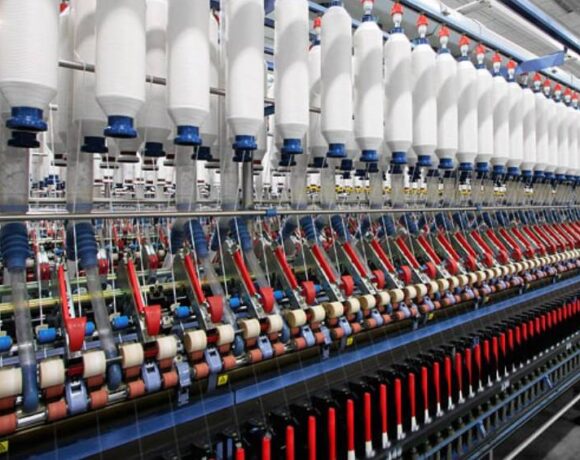
TexRev disrupts the traditional linear production model by reintroducing textile waste into the manufacturing process. The system begins with collecting and sorting discarded fabrics by colour and material type. These are then cut and shredded into fibres, tested for quality, and cleaned through carding. The recycled fibres are spun into yarns, often blended with virgin fibres to enhance strength and durability. The resulting yarns are woven into new fabrics and treated with finishing processes like dyeing, water repellency, and antimicrobial coating — making them suitable for both fashion and home textiles.
Compared to traditional virgin fibre production, this process consumes significantly less water and energy and helps keep textile waste out of landfills.
Currently, TexRev targets garment manufacturers, offering them a responsible and scalable alternative to conventional textiles allowing them to reduce environmental impact without compromising product quality.
Leadership in Circular Fashion
“Through our commitment to the UN Global Compact and our collaboration with PTRI, we are proving that a Filipino fashion brand can lead in circular fashion, creating impact both locally and globally,” said Anna Losanta Marie A. Lagon, co-CEO of Bayo Manila Inc., during the TexRev launch. “We believe the future of fashion is truly circular.”
Driving Systemic Industry Change
Beyond waste reduction, the TexRev Project aims to ignite systemic change across the fashion and textile industry. During the launch at TELACon, a panel of industry leaders explored how sustainability can reshape the broader creative sector.
Discussions centered on integrating eco-conscious innovations into mainstream fashion and creative industries.
“The creative industry is a powerful catalyst for promoting sustainable production and responsible material use. Filipinos are deeply visual and experiential — when sustainability resonates, it inspires real change,” said Dr. Leaño.
He added, “TexRev is more than a recycling initiative; it’s a movement toward a circular economy, proving that waste can be transformed into opportunity.”
As global fashion faces increasing scrutiny over its environmental footprint, the TexRev Project offers a blueprint for how innovation, collaboration and commitment can turn challenges into sustainable change.