Polyester Power: It’s High Time For Surat To Go Global
By Henry Dsouza, Associate Editor of Textile Insights
At a time when India’s textile industry is searching for its next big leap, Sanjay Jain, Managing Director of TT Ltd, delivered a sharp and forward-looking address that placed Surat at the centre of a massive global opportunity. Speaking at SGCCI – Bhilosa Textile Conclave 2026, Jain’s message was clear, Surat has the speed, scale and entrepreneurial strength to lead India’s man-made fibre (MMF) revolution, but only if it shifts its mindset from domestic dominance to global ambition.

Sanjay Jain, Managing Director, TT Ltd
However, Jain said that while Surat has dominated the domestic market, competing within India is no longer enough. The real growth lies outside the country. In the domestic space, Surat largely competes with itself, no other Indian cluster matches its scale in MMF. But to grow from strength to leadership, exporters must look at global markets.
The global trade in man-made fibres today stands at roughly US$ 500 billion and is growing at 7-8 per cent annually, significantly faster than cotton’s modest 1-2 per cent growth. Yet India’s share remains disproportionately small. For years, the country relied heavily on cotton, but consumer preferences worldwide have shifted dramatically. Performance fabrics now dominate retail shelves. In stores of brands such as Nike and Adidas, polyester-based activewear has replaced cotton basics. Even within TT Ltd, Jain revealed, garments that were once entirely cotton have shifted overwhelmingly toward polyester blends and performance textiles. The global consumer today prioritises moisture management, stretch, durability and easy-care functionality, attributes where polyester excels.
Jain also pointed the significance of tariff dynamics, particularly in the United States, the world’s largest apparel market with trade exceeding US$ 120 billion. While China continues to dominate, its tariffs remain higher than India’s in key categories, creating a strategic window. Rather than focusing solely on competing with Bangladesh or Vietnam, India can capture market share directly from China where tariff advantages exist. But such an opportunity demands competitiveness in quality, consistency and scale.
In Jain’s calculation, Surat’s biggest weakness is not knitting capacity but processing and quality consistency. Export markets demand uniform dye lots, shade stability, accurate GSM, consistent fabric width and reliable colour fastness. Domestic buyers may overlook minor variations, but global buyers will not. Many of these issues, he emphasised, do not require massive capital expenditure; they require discipline, systems and attention to detail. Investing in robust quality control mechanisms and establishing more accredited testing laboratories in Surat would significantly elevate credibility. When testing becomes standard practice, quality naturally improves.
Scale is another critical factor. Global brands do not want fragmented sourcing. A buyer who needs half a million T-shirts prefers to deal with a single integrated supplier. China’s dominance stems not only from cost but from its ability to execute large, consistent orders seamlessly. India must move beyond fragmented expansion and encourage integrated growth, especially in raw materials and processing. Backward and forward linkages within the cluster are essential to build global trust.
On compliance, Jain acknowledged tightening regulations in Europe but cautioned against using compliance as an excuse to avoid exports. While certain markets demand high standards, vast opportunities exist in Africa, the Middle East, Asia, South America and even segments of the US where price-quality balance outweighs exhaustive compliance certifications. The world market is vast and opportunities are diverse.
He urged industry bodies to move from discussion to action. Rather than merely participating in exhibitions, clusters must conduct structured market studies, identify two to five product categories where Surat can become globally competitive and actively bring international buyers to the city. One-to-one engagement builds sustainable business far more effectively than passive trade fair participation. Collaboration within the cluster, rather than relentless price competition, will determine future success.
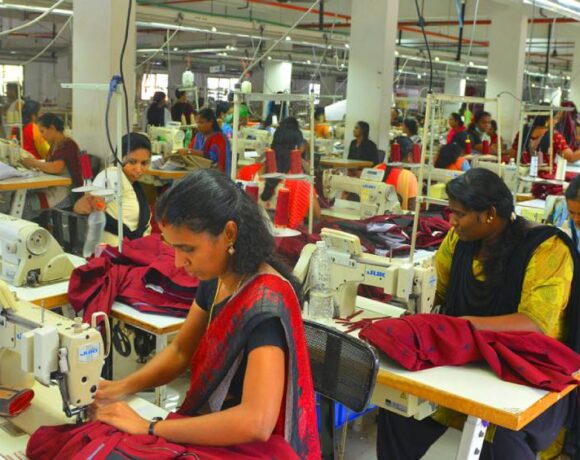
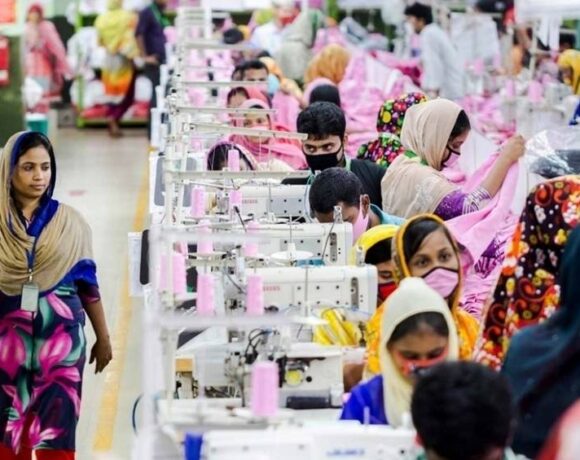
Jain also underlined India’s demographic advantage. The country’s large workforce, particularly its underutilised female labour force, represents immense potential. However, competitiveness is determined by productivity, not wage levels alone. A higher-paid but efficient worker can be more cost-effective than cheaper but less productive labour. Skill development initiatives offered by central and state governments must be fully leveraged. Automation and artificial intelligence, he argued, should not be feared. AI-driven design, production planning and efficiency optimisation can dramatically increase speed and precision without eliminating jobs.
Jain cautioned that labour advantages do not last indefinitely. Countries move through manufacturing cycles and India’s window of opportunity is open now. Surat already possesses the raw materials, infrastructure, entrepreneurial drive and financial strength needed to lead in MMF. While Ahmedabad and Rajkot remain largely cotton-centric, Surat holds the crown in man-made fibres.
Jain stated that the responsibility now rests with industry stakeholders to act decisively, improve quality, build scale, integrate operations and embrace global ambition. Surat stands at a pivotal moment. Whether the city evolves from a domestic powerhouse into a global textile leader will depend on collective execution.