Recycling Fashion’s Waste Comes At A Cost For India’s Invisible Workforce
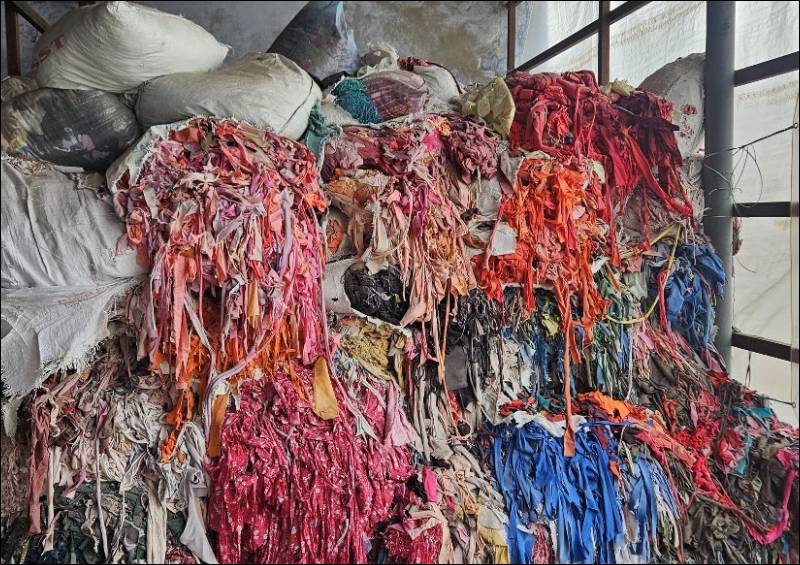
As global fashion brands accelerate their shift toward recycling and circularity, fresh attention is turning to the workers who power this transformation. In India, one of the world’s largest textile recycling hubs, millions of people sort, shred and respin discarded clothing, often under informal and challenging conditions that remain largely out of public view.
Recycling has become central to fashion’s sustainability narrative. Brands promote garments made from recycled fibres, introduce take-back programmes and encourage consumers to return used clothing. Yet behind this environmentally driven push lies a labour-intensive system that has received comparatively little scrutiny.
India processes vast quantities of textile waste each year, including both domestic discards and imported used clothing. The country generates an estimated 7.8 million tonnes of textile waste annually around 8.5% of the global total, with roughly a quarter feeding into recycling operations. Over decades, specialised clusters have emerged, most notably in Panipat in Haryana, along with hubs in Tirupur, Amroha and parts of Gujarat, Maharashtra and Rajasthan.
The industry’s scale is significant, employing an estimated four million workers across sorting units, dismantling operations, shredding facilities and spinning mills. However, much of this activity takes place in small, unregistered units operating outside consistent regulatory oversight.
For many workers, conditions remain demanding. Dust-heavy environments, poor ventilation and limited access to protective gear are common concerns. Long hours and modest wages are widely reported, while informal employment arrangements often mean no contracts, no social security coverage and no legal recourse in cases of injury or withheld wages. The absence of formal structures also makes reliable data difficult to obtain, obscuring the full extent of occupational risks.
India also imports substantial volumes of used and residual textiles. In 2024 alone, imports exceeded 700 million kilograms. Although regulations restrict the entry of re-wearable second-hand clothing outside designated zones, enforcement challenges and mislabelling practices allow significant quantities to move into domestic resale or recycling channels. These flows sustain the recycling economy but also increase the volume of material handled by workers.
As global brands expand the use of recycled fibres to meet sustainability targets, industry observers argue that environmental progress cannot be separated from labour standards. Recycling may reduce landfill waste and reliance on virgin materials, but without safeguards, it risks perpetuating economic vulnerability within the supply chain.
India’s recycling sector illustrates the complexity of the circular economy. The process that turns discarded garments into new yarn is central to fashion’s green ambitions, yet the human dimension remains critical. Ensuring safe working conditions, fair wages and basic labour protections will determine whether the transition to circular fashion is not only environmentally sound, but socially responsible as well.